City AM’s 10 stock picks for 2026

2025 was a rollercoaster year for the stock market.
Equity indices fell off a cliff in April when the unveiling of US president Donald Trump’s “Liberation Day” tariffs spooked investors and triggered a widespread sell-off.
They have since made a strong recovery, helped along by enthusiasm for the innovative potential of AI and the stocks associated with its development – though with valuations running hot, concerns over a tech bubble abound.
Amid all the whipsawing across the pond, UK shares have proven a more dependable asset, with London’s FTSE 100 outperforming New York’s S&P 500 over the course of the year.
Banks have led the rally in Blighty, with the likes of Lloyds and Barclays both up by around 75 per cent. After European commitments to re-arm, defence stocks have also outperformed, with BAE Systems shares up by around 50 per cent and Babcock’s stock more than doubling.
So if you’re sticking with the London Stock Exchange in 2026, how are you balancing your portfolio? The team at City AM have offered some of their favourite picks – small and large – for the year ahead.
Large-cap stocks
1. Diageo

Ali Lyon, chief reporter
2025 has been an annus horribilis for Diageo. Since being carried to a succession of all-time highs by our collective embrace of functioning alcoholism over the pandemic, its share price has fallen by over 50 per cent, thanks to fears around a drinks giant’s licence to operate and a series of several self-inflicted wounds.
Enter Dave Lewis – or ‘Drastic Dave’, to his friends and financial journalists, who was appointed to head up the Guinness maker last month. His turnaround track record is exemplary, having transformed Tesco from high-street stain to Britain’s number one grocer. It would be a brave person to bet against him doing the same trick here.
There are some structural tailwinds that will help it on its way, as well. Rumours of Generation Z’s abstemiousness – held up as a major bear signal for the booze giant – are looking more like hogswash with every day. So too is the prediction that the mass rollout of Ozempic will bring with it an age of global sobriety.
Add to all that the fact that – in this humble reporter’s eyes – 2026 will have an altogether much more risk-off feel than its frothy predecessor. Diageo – the steady, cashflow generating, dividend delivering stock that it is – can only benefit from that (and who knows, maybe the impending AI crash will be so ugly, that we all turn to the bottle anyway).
Tipped at: 1,603p
2. M&S

Simon Hunt, City editor
It’s worth remembering that before its cyberattack, M&S had been a roaring success. The supermarket’s stock tripled in value in the two years to the end of 2024, as chief executive Stuart Manchin breathed new life into the 140-year–old brand and brought back billion-pound profits. The firm had been nominated for company of the year in City AM’s business awards ceremony.
Then disaster struck: M&S became the latest major corporation forced to suspend its online operations after cyber criminals invaded its systems. The firm lost shedloads of cash, but unlike fellow victim Jaguar Land Rover, was at least prescient enough to have taken out an insurance policy, from which it recovered £100m.
With all of that now behind it, I’m betting that M&S can now continue on its rudely-interrupted upward path. After all, companies seldom suffer big cyber attacks twice in two years.
Tipped at: 330p
3. Unilever

Maisie Grice, investment reporter
It’s been a rocky road for FTSE 100 company Unilever this year, after the group completed the demerger of its ice cream business and unveiled sweeping job cut plans.
But growing fears over the future of AI and investors increasingly looking to protect their assets from volatile market conditions in 2026, could leave ‘steady Eddie’ Unilever nudging its way back into investors’ eyelines.
Analysts are bullish on consumer staples in 2026, viewing them as a safe haven due to food, beverages and household goods being essential products with inelastic demand regardless of economic conditions.
The London headquartered businesses’s status as a reliable stock pick with stable cashflow also grants investors the knowledge that a steady dividend will be coming their way each quarter.
Take note also of Unilever’s strong brand portfolio including bodycare favourite Dove, the nation’s favourite mayonnaise Hellmans and in particular night time staple Horlicks (if worries over a looming AI crash are keeping you up at night).
Tipped at: 4,860p
4. Lloyds

Samuel Norman, banking & fintech reporter
With 2025 the year bank stocks soared, Lloyds was the jumbo jet in this mission, rising over 70 per cent. But despite this strong take-off, you’d be a fool to think you’d missed boarding time. That’s because all signs are pointing towards a shareholder return bonanza in 2026.
The bank is tipped by analysts to move towards a half-year buyback next year – a move which would add around £1bn to returns.
But it doesn’t stop there. Jefferies predict the blue-chip banking titan will hand over £17bn to investors by 2027.
It’s the bank’s structural hedge that’s set to help drive these fortunes, with Lloyds expected to benefit from old earnings hedged on lower rates maturing and set to be replaced with new ones at the present higher interest rates. The boost from this strategy could add over £1bn to Lloyds’ profit in both 2027 and 2028 – another hefty pump of gas set to fuel the Lloyds’ Banking jet.
Tipped at: 98.2p
5. Sage
Saskia Koopman, technology reporter
It is a curious quirk of the London market that while the FTSE has spent the past year in a fit of exuberant rallying, veterans like Sage have been left slightly under the radar.
Do not mistake this stillness for stagnation. Under Steve Hare, the Newcastle-born giant has successfully overhauled its business this year, trading its dusty desktop past for a more modern cloud engine.
Crucially, Sage remains refreshingly insulated from the tremors of the AI bubble; while Silicon Valley’s so-called “hype-merchants” peddle vague promises, Sage is busy focusing on practical automation. The software giant has already fired the starting gun on a £300m share buyback set to wrap up in March, a clear sign to the City that its valuation remains a bargain.
With profits per share set to keep climbing, Sage’s long story of rising dividends becomes ‘fuel’ for its engine, rewarding patient investors while the firm pivots to AI-powered software.
As investors look for tangible value in 2026, I’m wagering that this cash machine will prove that while market fads come and go, compounding returns remain permanent.
Tipped at: 1,083p
Small-cap stocks
1. Beauty Tech Group
Ali Lyon, chief reporter
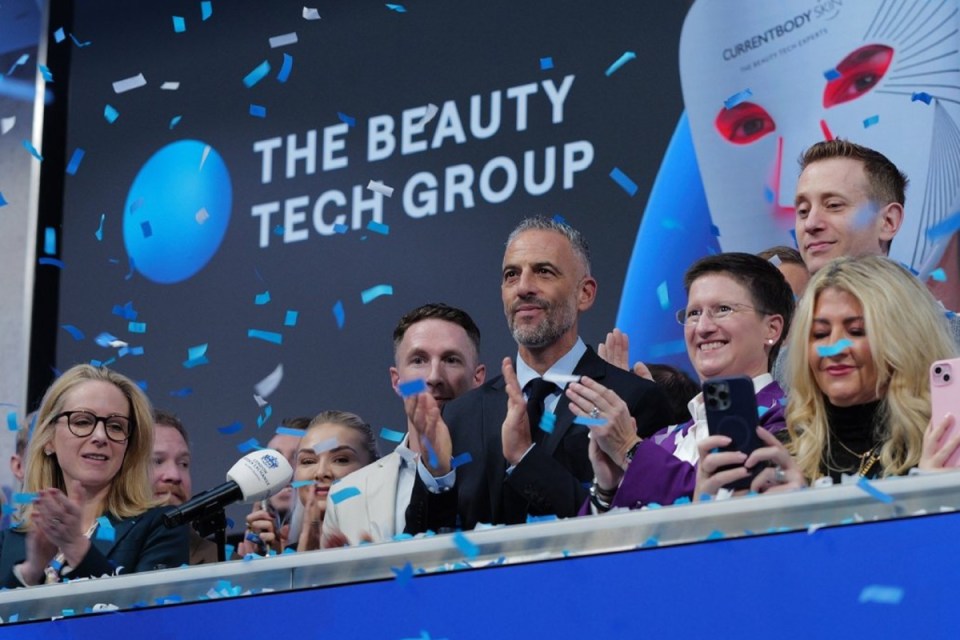
I will confess to having had slightly mixed emotions when Treasury ministers and stock exchange officials celebrated Beauty Tech Group’s October IPO. On the one hand, here was a fast-growing, founder-led company that is at the avant-garde of a burgeoning industry: all too rare a sight on our beleaguered bourse. On the other, the sight of people hailing one £300m IPO as a sign of life in our capital markets was more than a little demeaning.
But – since its float just three months ago, the company, which among other things makes infra red and LED wellness products that people can use at home, has already raised its sales guidance by some £11m. For a company that turns over £128m, that’s no small bear.
Should it continue to impress, FTSE 250 admission beckons. and funds that track the index will be obliged to buy up a share of the firms’ stock. That will give this fast-growing firm’s stock another boost, even if – in my humble opinion – its light-up face masks make its customers look like characters from a horror film.
Tipped at: 287p
2. Cirata
Simon Hunt, City editor
With a market cap of under £30m, you’d be forgiven for not knowing that Cirata was once a billion-dollar tech firm.
The Sheffield-based business, formerly known as Wandisco, saw its shares suspended in 2023 after it turned out to have massively overstated its sales forecasts. That sparked the resignation of the chief executive and an investigation by the Financial Conduct Authority, as well as a collapse in the firm’s share price.
But in November, Cirata could finally breathe a sigh of relief, after the two year long saga was drawn to a close when the FCA said its investigation had ended and it would not be taking any further action, clearing a path for a return to growth.
The company’s new chief, Stephen Kelly, is a seasoned turnaround specialist. He previously ran accounting software giant Sage and was instrumental to its journey to becoming the £10bn behemoth it is today.
Tipped at: 18.9p
3. Amcomri
Maisie Grice, investment reporter
Amcomri is a business that few investors have heard of, with the group only entering the AIM market one year ago.
But its lack of mainstream attention is exactly why this company is one for investors to look out for.
The under the radar engineering firm posted an impressive maiden performance, with its share price climbing a staggering 116.9 per cent to 128 pence this year to date, and doesn’t seem to be showing signs of slowing down.
The London based company reported £31.8m in revenue in its latest set of results, off the back of its main strategy of acquiring undervalued small engineering businesses from retiring owners.
With management eyeing a pipeline of further acquisitions and subsidiaries having long term contracts with clients such as BAE Systems and Transport for London, the group is poised to continue growing in value in 2026.
Tipped at: 126p
4. Trufin
Samuel Norman, banking & fintech reporter
Trufin rallied in the second half of the year, and it looks like there could be more to go. The UK-based fintech holding company has a number of profitable subsidiaries, but one likely to lead the pack on future gains is Playstack.
The indie game publisher exceeded market expectations delivering pre-tax profit of £7m for the year. Trufin shares shot up on the news earlier this month, but it’s Playstack’s back catalogue and scheduled releases that could perk up Trufin’s stock price in the year to come.
The group is set to release a hotly-anticipated sequel to its action game Mortal Shell in 2026, a title which sold over a million units as of September 2023.
Tipped at: 118p
5. Defence Holdings

Saskia Koopman, technology reporter
Investing in Defence Holdings lately would have felt rather like riding a rollercoaster designed by a test pilot – a sequence of white-knuckle drops followed by sudden, gravity-defying surges.
But while the stock’s wild swing between 0.14p and 5p might tempt the faint-hearted to look away, doing so would mean missing the firm’s eye-opening transformation from video games tournament operator into defence contractor. The company has lately successfully tidied its balance sheet, swinging from a worrying deficit to a healthy £2.6m surplus.
The real catalyst looks set for 2026, driven by ‘Project Ixian’ – the firm’s in-house AI platform. While attention has been duly fixed on shiny US tech giants, Defence Holdings has pushed this system through its final commercial stages.
With the UK government planning to spend over £61bn on digital defence, Defence Holdings stands as one of the few British players offering home-grown, trusted tech, suitable for national security. Backed by £2.2m in cash, the long wait may be coming to a grinding halt. I’m betting that as the market pivots from AI hype toward software that actually has to work, this underdog looks well placed for a very loud debut on the global stage.
Tipped at: 1.75p