Barclays boss calls for political ‘stability’ as banker’s pay packet swells to £15m

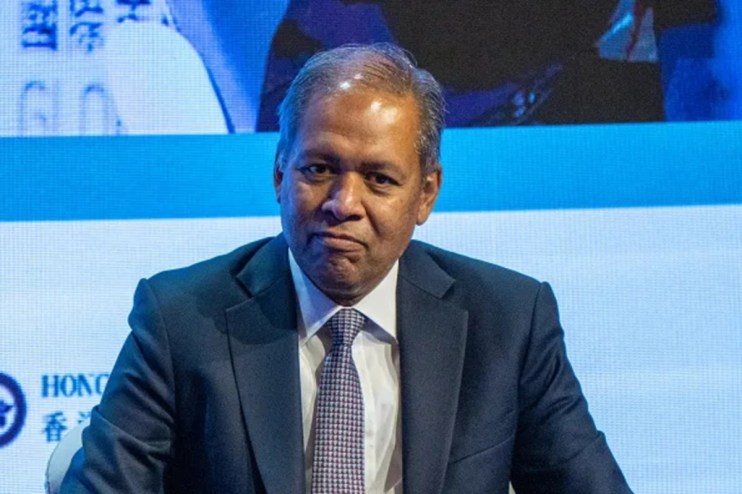
The boss of British banking giant Barclays has called for “stability” across the political landscape as the Labour government’s future faces uncertainty.
CS Venkatakrishnan, the bank’s chief executive who is known as Venkat, faced questions on the turmoil in Number 10 after Barclays published its full-year earnings report.
“From the point of view of businesses and financial markets and financial industry, what we like to see is stability and predictability,” Venkat said on Tuesday.
The American banker received a 29 per cent increase to his pay packet in the group’s annual report.
Venkat pocketed £15m after Barclays beat profit expectations for the full-year after raking in £9.1bn.
The package is expected to be the biggest for a Barclays’ chief since 2011, where Bob Diamond landed £17m.
The banker’s comments come as Prime Minister Sir Keir Starmer faces increased scrutiny over his leadership following the resignation of his chief of staff Morgan McSweeney on Sunday, quickly followed by Downing Street’s director of communications less than 24 hours later.
The departures triggered jitters across the bond market with the 10-year gilt yield – a key benchmark for the government – jumping as much as 10 basis points to 4.62 per cent in the early afternoon.
As Starmer’s cabinet members rallied around him, quelling questions around a leadership challenge, the market reaction eased.
Fears had heightened that Starmer would be ousted and replaced with a member of the soft-left wing of the party with looser fiscal restraint, who may be less favourable to the banking sector.
When questioned on this, Venkat said: “It is really important for the country to have growth, and it’s really important for the country to have productivity”.
Barclays boss pushes back on Farage’s windfall tax
Earlier this year, Nigel Farage took aim at the banking industry calling for a windfall tax on bank profits from interest on reserves at the Bank of England.
The Reform UK leader – who is on track to become the next prime minister as Reform lead polls – said “some of the banks won’t like it… well I don’t like the banks very much because they debanked me didn’t they?”
The remarks referenced a scandal led to the resignation of Natwest boss Alison Rose after Coutts – a private bank part of the Natwest group – identified the politician as a politically exposed person (PEP).
PEPs refer to those who hold public office and as a result are subject to extra due diligence by financial firms. Farage has said his account was shut down unfairly because the bank disagreed with his personal and political beliefs.
Venkat defended the interest payments to banks, arguing they had been “studied deeply by economists” and the Bank of England had noted an “important linkage” between the payments and the “transmission of monetary policy in a modern economy”.
‘Careful’ consumer spending to persist
Barclays’ finance boss Anna Cross said cautious customer behaviour was set to continue amid the political jitters and cost pressures.
The latest consumer spending data from the bank showed Brits opened their pockets a touch more in January with spending rising 0.8 per cent.
“Consumers remain very, very careful,” Cross said.
She added this pattern of behaviour had been exhibited for “several, several quarters now, and we’d expect to continue to see it”.
In December, S&P Global researchers said consumer confidences had slumped to a two-year low amid “deteriorating conditions” as Brits feel the crunch of rising cost pressures.
The figures came just after the Autumn Budget in a stark indication Chancellor Rachel Reeves had failed to persuade voters that cost of living pressures would be eased.
“Not surprisingly, spending intentions have worsened in this deteriorating financial environment, suggesting consumers are unlikely to provide much of a boost to the economy as we head into 2026,” S&P said.