Banks cool on interest rate cut expectations amid forecasting clash

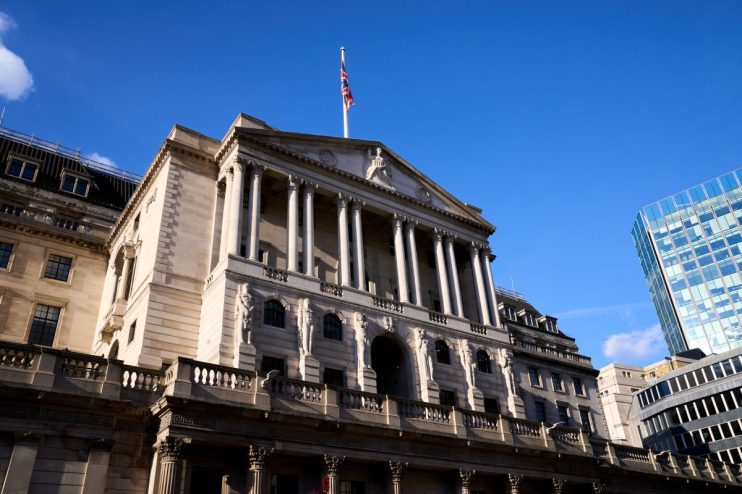
Top City banks have pushed back their predictions for the Bank of England’s next interest rate cut as forecasters are split on whether high inflation could upend monetary policy decisions.
UBS Investment Bank economist Anna Titareva pushed back a call for the Bank’s next cut from February to March after the Office for National Statistics (ONS) said price growth ticked up to 3.4 per cent in the year to December 2025.
Titareva, who believes interest rates will fall from 3.75 per cent to 3.25 per cent this year, had predicted the Bank’s monetary policy committee (MPC) would support a cut as early as next week.
She maintained that the next vote in early February will be close as Governor Andrew Bailey could make the deciding call for the third meeting in a row.
“In December, we flagged the MPC’s cautious tone, particularly the fact that despite voting for a cut, Governor Bailey and Deputy Governors Breeden and Ramsden referred to the strength of forward looking wage growth indicators as a risk factor for inflation,” Titareva said.
“Our new call assumes that after a pause next week, the Bank will cut again by 25 basis points to 3.5 per cent on 19 March, at which point the MPC will have the January inflation print, which we expect to show the first significant step down in inflation.”
Analysts at US banking giant Morgan Stanley also pushed back their predictions for an interest rate cut from February to March after inflation overshot forecasts.
But competing forecasters are split on the number of interest rate cuts to be made this year, with economists attempting to measure the impact Rachel Reeves’ Budget measures will have on price growth and people’s expectations.
The Bank of England and the Office for Budget Responsibility (OBR) have suggested that Budget measures to strip energy subsidies from household bills could lower inflation by as much as 0.5 percentage points.
Forecasters argue on interest rates path
Researchers at Barclays said the short-term impact of the policy measures would not be “sufficient” to encourage MPC members analysing the future of the UK economy on a longer time scale to vote for further interest rate cuts.
Barclays is joined by NatWest, Nomura and Pantheon Macroeconomics in predicting just one interest rate cut this year.
However, economists at Berenberg, HSBC and Capital Economics have pencilled in three interest rate cuts this year as inflation eases to the target 2 per cent rate.
“We think the effects of the weak labour market will keep inflation at 2 per cent or below thereafter,” Capital Economics chief UK economist Paul Dales said.
“So even though we no longer expect the Bank to cut rates on 5th February, we don’t think it will be too long before rates are reduced again – perhaps in April.”