As Starmer heads to China, Brits rush to buy Chinese EVs

A couple of years ago, I was invited to the launch of a new Chinese EV brand called Omoda. Myself and a handful of journalists showed up to an inauspicious press event in the basement of a Covent Garden hotel.
In the room was parked (I’m still not sure how they got it down there) the firm’s new SUV. I have no training in motoring journalism, so suffice to say it looked spacious and luxurious, with comfortable seats and shiny interior panelling. A bit like a Land Rover except – as I was shocked to soon discover – an awful lot cheaper.
We were given a presentation in which Omoda’s UK chiefs laid out some ludicrous sales projections. The kind you might see someone balance on an easel in a Dragon’s Den pitch, before facing a firing squad of noes. Within a year, they said, Omoda would go from zero to 10,000 sales in the UK. Nonsense, I thought. How wrong I was.
Fast-forward two years and Chinese carmakers have more than just gained a foothold in Britain. Data recently published by the DVLA bears this out.
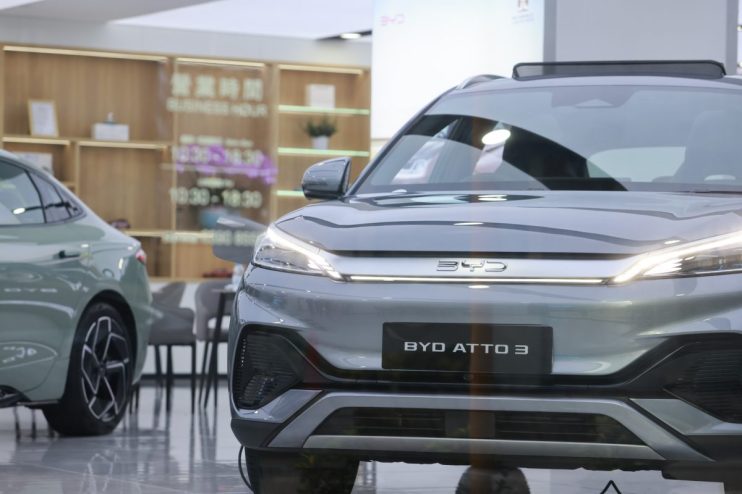
In Omoda’s first quarter after entering the UK – the three months to the end of September 2024 – the company sold just 194 vehicles. A year later it has already rocketed to 3,225, and by now has likely motored past that 10,000 target. Its sister brand Jaecoo notched up 7,194 sales in the third quarter of 2025, but both of those brands have been dwarfed by Chinese giant BYD, which registered more than 16,000 vehicles.
By comparison, BYD already exceeded Tesla sales in the UK in 2025 and in terms of EVs, was only marginally behind venerable global marques Ford and Volkswagen. The next DVLA release will almost certainly show they have both now been overtaken. And Chinese car sales in Britain could soon eclipse both European and American rivals.
It’s a remarkable transformation, even though – at least if Jeremy Clarkson’s recent BYD review is anything to go by – most Brits are buying these cars for the price, not the driver experience.
This is the context in which Keir Starmer makes the first prime ministerial visit to China in nearly a decade. Starmer has stopped short of resorting to the kind of tariffs on China that other world leaders like Trump have, somewhat erratically, applied. He deserves credit for staying out of tit-for-tat tariff tantrums. But now we must find out whether his careful diplomacy gets us something back in return – beyond cheap cars.