Is this the Green Party’s worst policy yet?

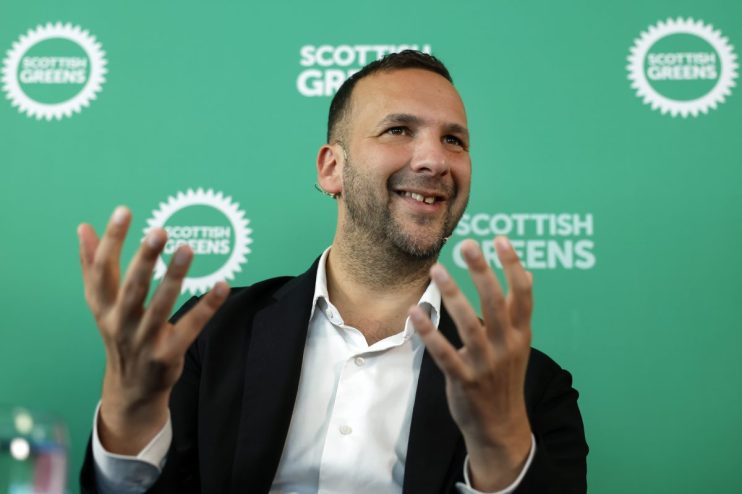
The Green Party is proposing a 10:1 pay ratio ensuring senior leaders earn no more than 10 times their most junior employees. It’s a policy even China thought was too extreme, says Joanna Marchong
British politics has never been more fragmented. The combined Conservative and Labour vote share continues to dip, while the Greens are on the up. Membership has tripled under Zack Polanski and the gap between first and fifth place in national polling is now just 15 points, the smallest on record.
For the first time in modern British history, we are watching something that resembles a genuine four-horse race. The stakes have changed. When two parties dominated, fringe policies could be dismissed as performance, at which Polanski – a drama graduate – is most qualified. They were never going to happen, so nobody needed to take them apart. That luxury no longer exists.
So, when the Greens announced their intention to restructure pay across every company in the country, public and private – an idea they hid in their 2024 manifesto – we can’t just ignore it as a weak attempt at a headline. The Green Party’s 10:1 pay ratio between executives and the most junior employees is economic illiteracy dressed up as fairness – the latest confused and dismal chapter in Zack-onomics. A mandatory cap meaning the highest-paid employee in any organisation can earn no more than ten times the lowest paid.
To understand why the Greens keep arriving at policies like this, you have to understand what they actually believe about money. They believe we have a fixed pie: wealth is finite, success is zero-sum, and if someone has too much it is because someone else has too little. The 10:1 ratio is the purest expression of this instinct, with a wealth tax to boot. It does not ask how to make low-paid workers better off. It asks how to make high-paid workers worse off. And the consequences, applied to real companies, are catastrophic.
£156,000 a year for the CEO of Amazon?
Take Amazon, this policy would peg the UK Country Manager (CEO) of Amazon to that of a 16-year-old intern. That means the person in charge of the entire Amazon operation in the UK has his salary capped to roughly £156,000 a year. Someone responsible for generating billions of pounds in revenue and securing tens of thousands of jobs will earn less than what Ed Miliband, who struggles to run a department, or a headteacher in London. The people who run Britain’s largest companies are recruited from a pool that includes New York, Frankfurt, Singapore and Zurich. If you cap their pay at a fraction of what they could earn elsewhere, they will go elsewhere.
So when companies are faced with this decision, what happens? Well, they have two choices. At a minimum, double an apprentice’s pay, making the cap high enough to retain senior leadership. Obviously, they won’t do that. No business is going to double its lowest wages to justify the salary of its most senior. They would rather sack enough young people to equalise the cost and increase overall unemployment. So it faces the second option: outsource, or exit the market. Move the lowest paid positions: apprentices, the cleaners, the security guards, to contractors outside the ratio. Shift leadership to Dublin or Amsterdam. Reduce the UK to a skeleton. The workers the Greens claim to be championing are the first out the door. And if the Greens see this coming, extra regulation in the realm of IR35 will be on the horizon.
Someone responsible for generating billions of pounds in revenue and securing tens of thousands of jobs will earn less than what Ed Miliband, who struggles to run a department, or a headteacher in London
This isn’t a scaremongering appeal to vote Conservative or Reform. We have already seen the effects of a government hell bent on punishing those with assets and putting punitive taxes on businesses. When Labour abolished the non-dom tax regime last year, an estimated 16,500 millionaires left Britain (equivalent to the income tax take of the city of Leeds) and luxury property transactions above £5m in London fell by 36 per cent. That was a tax change. A mandatory pay cap on every employer in the country would be orders of magnitude more disruptive.
The only country that has actually imposed executive pay caps at scale is China. When Beijing restricted CEO pay in state-owned enterprises, capping it at roughly eight times the average worker, the policy completely backfired. CEOs responded by increasing their consumption of perks and siphoning off company resources for personal benefit. Performance dropped and innovation collapsed. R&D investment and patent output fell significantly in firms subject to the cap, as executives became more risk-averse with no upside to chase. The talent that could leave, left. The Greens want to impose a ratio that even China thought was too extreme.
Polanski, in all his varying careers has always demonstrated one skill: the power to sell a story to an audience. And this coming general election might be his finest production yet. It is a commitment to accelerating the worst instincts of the Labour government: punishing wealth creation and demonstrating a fundamental ignorance of how businesses operate to deliver growth. The Greens have never understood the difference between ideological gimmicks and governing a country, and on the evidence of this policy, they are not about to start.
Joanna Marchong is head of communications and external affairs at the Adam Smith Institute