Forget Oasis, dynamic pricing could be coming for your weekly shop

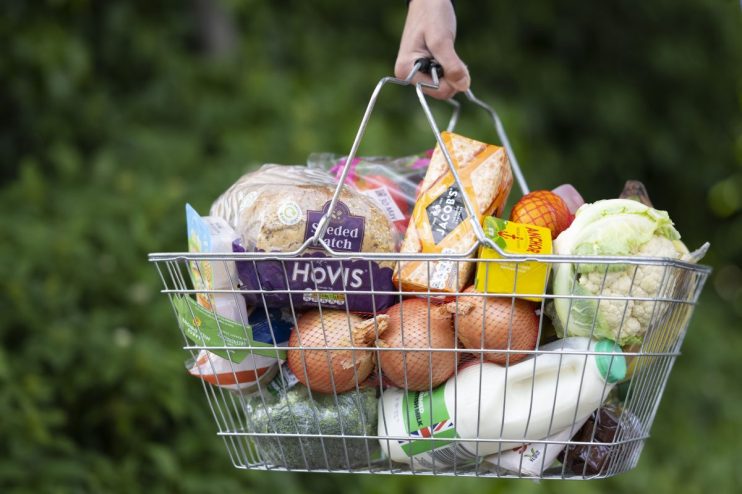
The rise of big data means dynamic pricing is easier to implement. Paul Ormerod asks what this could mean for consumers’s everyday shopping.
Surge pricing, or dynamic pricing as it is also called, is back in the news.
A report was issued on it last week by the Bank of England, which points out that the rise of big data, artificial intelligence and digital platforms is leading to pricing that changes more rapidly. It is also more targeted on individuals, so that the same product at the same time can be offered at different prices to different people.
We have been here before under the Starmer government. Oasis announced in August 2024 their massive reunion tour in 2025. It soon emerged that prices were literally surging.
This immediately led to condemnation by ministers of price “gouging” – apparently a word which is compulsory for Starmer’s Cabinet to use, the latest example being the attacks being made, with no apparent foundation, on petrol retailers.
The culture secretary, Lisa Nandy, promised it would be included in a government review of pricing at gig events. One of her colleagues, Lucy Powell, still then in the Cabinet, expressed personal outrage at the amount she had to pay for her tickets.
Oasis ‘gouging’ shrugged off by CMA
A review was initiated by the Competition and Markets Authority (CMA). The CMA did publish an update by June 2025, although it carefully stated that “the report is not an enforcement investigation and has not been taken forward with the objective of identifying breaches of competition or consumer protection law”.
So, in a way we have come to know and love about the current government, ministers were full of righteous sound and fury, only for nothing to actually then happen.
Incidentally, in a rather nice footnote, the CMA pointed out that technically the Oasis pricing did not constitute dynamic pricing and so did not fall within the scope of the report.
This was because “prices did not adjust in response to demand conditions; rather, a number of standing tickets were released at one price and, once they had quickly sold out, the remaining standing tickets were released at a much higher price”.
Even the most ardent Kremlinologist, deciphering the runes, could hardly read into this that the CMA felt that ministers had wasted its time. But the suspicion is there.
Dynamic pricing in everyday life
Consumers are of course familiar in certain contexts that the price of a product or service adjusts to demand, as both the Bank and the CMA point out.
Train fares obviously have both peak and off-peak, but even during the off-peak the price of the same journey can vary. Hotel rates are influenced by supply and demand, as are airline tickets.
But in these sectors, customers have learned how to make decisions without too much effort, the web being a ready source of information.
Further, these are both relatively infrequent and relatively large purchases for most people. Acquiring the information takes time and effort, but the costs of doing this are often outweighed by the benefit of securing a better deal.
The application of surge pricing to higher frequency, lower ticket items could impose substantial costs on consumers in terms of gathering the information. Imagine going into a supermarket knowing that the price of baked beans will vary whilst you are inside the store. It sounds far fetched, but this is the exact sort of scenario the Bank’s report suggested could come down the line, with some retailers experimenting with electronic shelf labels (already widely used in Europe) that can change prices in real-time.
The CMA correctly points out that prices can surge down as well as up. But consumers would often have the gnawing feeling that they might have got a better deal if they had gone round the aisles in a different order.
Both the effort of acquiring information and the experience of regret are real potential downsides for consumers when confronted with dynamic pricing in high-frequency purchase markets.
This is not just something for the government and the regulator. Companies themselves need to pause before imposing these unseen but still very real costs on their customers.
Paul Ormerod is an honorary professor at the Alliance Business School at the University of Manchester