A state of the nation tale: The National Rail Museum won’t accept a model railway set

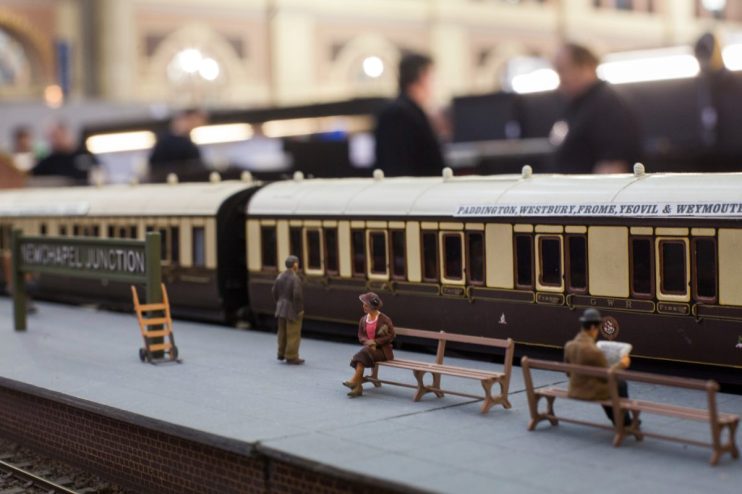
From museums that won’t accept model railway sets to the NHS’s refusal to share data, British inefficiency is costing us billions, writes Paul Ormerod
A major problem facing any British government, regardless of who is Prime Minister, is the productivity of the public sector.
Earlier this month, the Office for National Statistics (ONS) published its first estimates of the data for 2025. Across the public sector as a whole, it remains 3.1 per cent below what it was in the last year prior to the pandemic, 2019. Even more worryingly, it remains at virtually the same level which it was in 1997, when the estimates were first compiled. In other words, zero growth over 30 years.
There are genuine reasons why productivity growth in the public sector will usually be lower than in the private. Most public sector activity, for example, consists of the delivery of services. It is harder for services in both private and public sectors to increase efficiency than it is in, say, manufacturing. And the further away from the market an activity is, the harder it is to measure its productivity. We know the cost of the armed forces, for example, but any estimate of the value of their output will of necessity be rather arbitrary.
But the fact remains that on the official estimates there has been essentially no improvement in the overall efficiency of the public sector since 1997.
Imagine a different world in which it had risen by just one half of one per cent each year over the past 30 years. In this world, the current bill for the existing level of services would be around £80bn a year lower than it is. £80bn!
A case study at the National Railway Museum
We will all have our own stories of how this lack of efficiency manifests itself. A recent experience of a friend of mine, whilst trivial in the broad scheme of things, captures the problem.
They were having a clear out at home and decided to dispose of her husband’s extensive and vintage model railway set. She noticed that the local branch of the National Railway Museum was having its annual model railway exhibition. This must surely be a good way of getting rid of it.
But the staff on the desk were unsure. The supervisor, Starmerite in both stature and attitude, was called. It was out of the question to accept it on the spot. She would have to write – an email could be sent but only a written letter could trigger the process – and they would make a decision.
Rather baffled, she asked why this was. “That is our policy” he barked, making it clear the discussion was over.
As it happens, she went to mingle with the enthusiasts proudly displaying their own sets, who were only too pleased to take it off her hands. But hardly a day passes without much more serious illustrations appearing in the media.
The broader productivity picture
For example, the government wants hospitals and GP surgeries to share data on patients. We might reasonably wonder why this was not done years ago, it seems obvious. But it still might not happen. The doctors’ trade union, the British Medical Association, opposes the proposal on the grounds that it could undermine the trust between the patient and his or her GP.
We might imagine that centre-left political parties would want the public sector to be a model of efficiency, a shining example to all of the benefits of public sector activity. In practice, there are incentives not to use it, whether disposing of your train set or choosing whether to use the NHS or go private.
This state of affairs cannot last indefinitely and, at some point, reality will intrude. In the meantime, there is £80bn of what is effectively free money for any Prime Minister willing to tackle the issue of productivity in the public sector.
Paul Ormerod is an honorary professor at the Alliance Business School at the University of Manchester. You can follow him on Instagram @profpaulormerod