Conservatives have the right diagnosis, but can they cure Britain’s ailments?
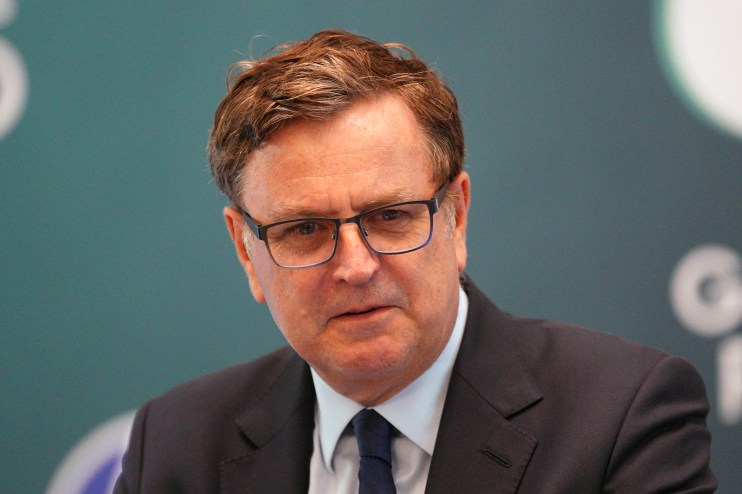
Mel Stride has set out his vision for the economic future of the UK, Matthew Bowles gives his analysis
Westminster has spent much of the past week discussing the emergence of a supposed “Burnham premium” on British borrowing costs – the suggestion being that the mere prospect of Andy Burnham returning to national politics could unsettle the increasingly sensitive gilt markets. The phrase itself would have felt faintly absurd a decade ago. Today, it draws little surprise.
Fiscal credibility has increasingly come to dominate economic discussion, and rightly so. It was no different at Mel Stride’s keynote speech, hosted by the Centre for Policy Studies this morning. While the subject matter was broad, there was a repeated return to borrowing costs, fiscal rules and debt sustainability, without forgetting market confidence. Sensible economic debate in Britain now works on the assumption that governments possess far less room for manoeuvre than they once did.
There are obvious reasons for this. Britain’s fiscal position remains weak by historical standards. Public sector net debt is about 100 per cent of GDP and the markets remain wary of the continued political instability seen over much of the past decade. Still, policy discussion operates under the long shadow of the 2022 mini-budget, which fundamentally altered just how much fiscal risk politicians believe they can tolerate.
The consequences of this have been substantial. Governments are now expected to reassure financial markets before they reassure voters. Institutional oversight, such as the Office for Budget Responsibility (OBR), and the myriad “fiscal rules”, increasingly function as prerequisites for sensibility. Truss’s experience has left its mark on sections of the political class, proving just how quickly economic credibility can disappear and just how difficult it is to claw it back.
Yet many of the constraints now treated as immutable intensified during the very years in which the Conservatives claimed to be restoring economic competence. Debt rose substantially across 14 years of Conservative government, accelerating sharply during the pandemic and has continued on an upward trajectory. Britain entered this Parliament carrying a tax burden approaching post-war highs alongside feeble productivity growth and the public services under persistent strain.
That leaves British politics in a peculiar position. Fiscal discipline is evidently necessary, but the wider conversation increasingly behaves as though discipline is a means to an end, alone constituting an economic strategy. Stability has become the central organising principle, where governments, whether His Majesty’s or its Shadow, speak constantly of guardrails and credibility. However, for the much-needed long-term transformation to happen in Britain, it could be argued that there ought to be some divergence from the current path.
Fiscal frameworks are not laws of nature
This mentality increasingly seems to shape Conservative thinking. In centre-right rhetoric fiscal prudency takes centre stage. Stride’s “golden rule”, where policy proposals such as future tax reductions or spending commitments require substantial savings to accompany them, is understandable after the reputational damage of recent years. The party is attempting to reconstruct its image as the credible steward of the public finances.
At the same time, modern conservatism appears increasingly reliant on the institutional architecture it once designed to instil prudence but which has grown to be often at odds with its stated commitment to growth and free markets. The OBR, created by George Osbourne in 2010 and trailed in opposition as a corrective to perceived Labour profligacy, now functions as a central pillar of fiscal legitimacy.
What began as an instrument of Tory fiscal prudence has gradually hardened into an independent constraint on political discretion, increasingly difficult to reconcile with a broader rhetorical commitment to state constraint and non-intervention. That tension is reflected in the party’s contemporary positioning: figures such as Mel Stride have described a hands-off approach to the OBR as “non-interventionist”, implicitly recasting institutional deference as a form of ideological consistency rather than a loss of political control.
The Conservatives are by no means alone in sticking to this now well-established view – Robert Jenrick, as Reform UK’s “Economics Spokesperson” has pledged to keep the Quango.
However, this settlement carries broader political implications. Fiscal frameworks are not laws of nature. They are institutional arrangements created by governments and sustained through consensus. Delegating economic credibility to technocratic structures remains a political choice, and therefore, also remains a form of intervention.
Yet for Stride’s main policy mentions today – North Sea energy production, scrapping carbon taxation and removing Stamp Duty – are well thought through. They reflect real and persistent structural pressures in the British economy: high energy costs and inelastic housing supply. These are all positive responses to long-standing problems that successive governments have struggled to resolve, and all importantly focus on how to increase the economy’s capacity to grow without continually relying on higher levels of public spending or distribution.
Given Britain’s long-running weaknesses in productivity and infrastructure delivery, this shift towards supply-side reform matters. Policies that address constraints are likely to carry more appeal than those purely focused on marginal fiscal adjustments, especially in the current climate.
Taken together, these priorities point towards a welcome, explicitly growth-oriented economic agenda, and a turn-away from short-term stimulus. Energy and housing are central to this task, as they are amongst the most direct levers for improving underlying performance.
The challenge for British economic policy is less about identifying the direction of travel, than maintaining the consistency in pursuing it. Successive governments now have recognised issues but have failed to bring about any form of durable change. Despite promising policies, the Conservatives will have to work out how precisely this pattern can be broken if they wish to determine much of the economic story over the coming years.
The constraints are now well understood by economic conservatives; the difficulty now is no longer diagnosis, but delivery.
Matthew Bowles is senior policy researcher at the Prosperity Institute