Wall Street banking giants ride tariff rebound to booming revenue

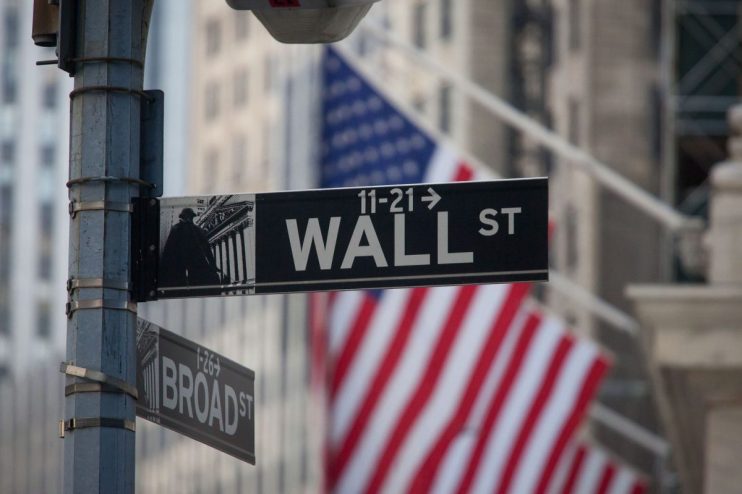
Wall Street’s banking titans have rounded off second-quarter earnings seasons largely breezing past analyst expectations as revenues boomed on the back of market volatility.
The lenders continued a trend from the first-quarter with strong trading and investment banking revenues driving a robust performance.
JP Morgan pocketed $45.7bn in revenue, outperforming its $44bn estimate. This came as fixed income trading revenue soared 14 per cent to $5.7bn and takings from equities trading jumped 15 per cent.
Jamie Dimon, the banking behemoth’s chief, said the quarter started slow as it coincided with President Donald Trump’s ‘Liberation Day’ tariff onslaught.
Stock markets across the globe tumbled as the White House slapped sweeping levies on trading partners with the S&P 500 tumbling to lows of 4,982.77. But as the White House rowed back on the trade policy and markets recovered, Dimon said activity rebounded. The S&P 500 has since surpassed highs of 6,200 in its post-’Liberation Day’ rally.
Although Dimon cautioned “significant risks persist, including from tariffs and trade uncertainty, worsening geopolitical conditions, high fiscal deficits and elevated asset prices.”
Goldman Sachs enjoyed a 36 per cent annual jump in revenue to $4.3bn as it capitalised on market volatility. The firm’s profit for the second quarter increased 22 per cent to $3.72bn.
Meanwhile, Citigroup chief Jane Fraser hailed a “record second quarter for equities” as “markets had its best second quarter performance since 2020”.
The firm’s total market revenue was up 16 per cent year-on-year and equity revenue jumped six per cent. This helped drive an eight per cent rise in revenue to $21.67bn.
Laith Khalaf, head of investment analysis at AJ Bell, said: “It turns out volatility can be your friend, especially if you’re an investment banker selling protection or trading opportunities.”
But Khalaf echoed caution from Dimon and warned “second guessing the direction the US president will take on trade policy is a dangerous game, and there is more than a little suspicion that markets are being quite complacent about the economic effects of tariffs”.
Fed in focus
Markets were relatively muted in response to JP Morgan’s revenue jump, which analysts pegged to lower net interest income figures.
Kathleen Brooks, research director at XTB, said “there are some expectations that NII could decline in 2026 due to expected Fed rate cuts.”
As the US’ biggest lender, JP Morgan is expected to be “particularly sensitive” to net interest income forecasts.
The Fed’s moves also weighed on Bank of America, which reported $26.61bn in revenue, narrowly missing analyst expectations of $26.72bn.
The lender’s net interest income inched up seven per cent to $14.82bn but this missed estimates by $70m. The firm cited lower interest rates as offsetting loan growth.
Trump has doubled down on attacks on Fed chair Jerome Powell in the last few weeks, even taking to Truth Social to claim he had “three or four people” he was weighing to replace Powell after describing the chair as “terrible” and “stupid”.
Powell’s term is not set to expire until 2026, though speculation has mounted Trump will take high fight to the courts to oust the hawkish chair in favour of a more dovish economist.
In London, Britain’s banking giants will kick off half-year results next week with Lloyds and Natwest reporting on Thursday and Friday.
Whereas the Fed has hit pause on rate cuts after a 25 basis point reduction in December 2024, the Bank of England has continued to gradually whittle away.
FTSE 100 lenders enjoyed record profits of £50.3bn in 2024 and returned £35bn to investors after rates were held at a post-financial crisis high of 5.25 per cent for the first half of the year.
But the monetary policy committee has since slashed rates to 4.25 per cent with markets pencilling in another two cuts for the second half of the year.
The effect is set to take a chunk out of the UK banks’ bottom lines as pressures weigh on net interest income.