UK construction productivity still stuck in the 90s, warns industry body

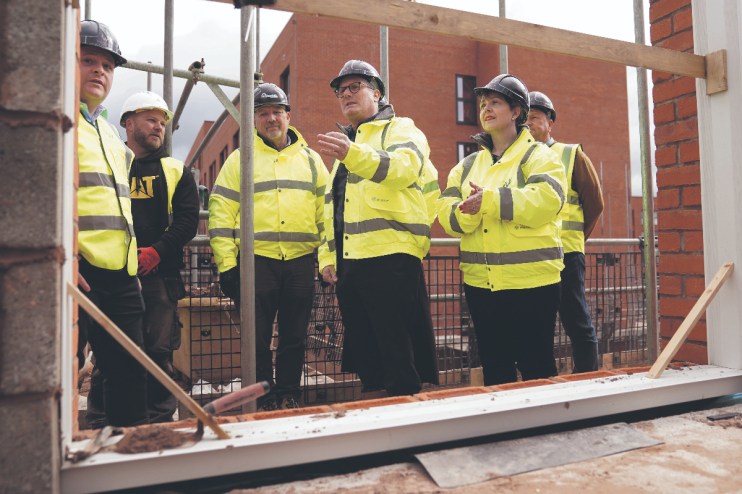
Productivity in Britain’s construction sector is now lower than in 1997, according to a new report.
Decades of under-investment have left delivery capacity “dangerously thin”, a new report by Oxford Economics for the Construction Plant-hire Association (CPA), Half-Built Britain, has warned.
CPA chief Steven Mulholland said the report should serve as a “wake-up call” for the industry.
“Britain cannot deliver modern growth with 1990s productivity… Every year we fall behind, projects take longer, costs rise and confidence weakens across the supply chain,” he said.
Analysis shows that construction output per worker has declined by an average of 0.1 per cent per year since 1997, the report found, while UK manufacturing productivity has risen 3.5 per cent annually over the same period.
Why is construction productivity so low?
Years of under-investment in machinery, technology and infrastructure has created an outdated and under-utilised capital stock, according to Oxford Economics.
The industry has a reputation for being slow to take up technological development too, despite digitisation’s potential to rapidly boost productivity.
Recent events like Brexit and the pandemic have made matters worse, worsening labour shortages and creating supply chain issues.
Low investment has created a self-reinforcing cycle for the sector, Mulholland said. “Every year we fall behind, projects take longer, costs rise and confidence weakens across the supply chain,” he explained.
New issues have compounded the structural problems, with high interest rates, ballooning costs and regulatory delays creating risk aversion and delayed decision-making.
The rate of job shedding hit its steepest level in just over five years in November, following 10 consecutive months of contraction.
Will Labour’s spending plans work?
The government’s Comprehensive Spending Review (CSR) set out plans to boost all departments’ capital expenditure plans by £95.9bn, or an average of 3.6 per cent a year in real terms between 2023 and 2030.
This additional capital spending could raise long-run output by £315bn by 2039 – around £3.30 for every £1 of public investment, according to Oxford Economics.
This is driven by the “higher total factor productivity from reduced congestion and better connectivity, crowding-in of private investment, and improved resilience across energy, transport, and digital systems”, the report found.
However, the CPA noted that it “remains to be seen” whether the government’s reforms of planning, including the Planning and Infrastructure Bill currently moving through Parliament, will have the “much-needed impact” on boosting growth in infrastructure construction.
The industry body has the government to publish a “stable, long-term infrastructure pipeline” to provide the “confidence needed for private investment”, as back as backing off-site construction and extending full expensing to leased and hired plant to allow reinvestment in modern machinery.