The next shift isn’t about space. It’s about service.

If 2026 is the year the office market resets, the next question is simple: where does the value actually come from?
The answer isn’t square footage. It’s operations.
For years, offices were treated as static assets. Build it, lease it, collect the rent. That model worked when capital was cheap and occupiers were less demanding. It doesn’t work in a market where tenants expect experience, flexibility and service, and where returns are under pressure.
This is where the shift to hospitality really begins.
Occupiers are no longer choosing offices solely on location and specification. They are choosing environments that feel curated, managed and responsive. Places that support their teams, reflect their culture and remove friction from the working day. That mindset is far closer to hotels than traditional real estate.
Serviced and flexible offices sit at the centre of this shift.
They are not just a leasing structure; they are an operating model. One that treats the building as a living business rather than a passive container. Revenue is no longer limited to rent per square foot. It is driven by utilisation, services, retention and brand.
This is where operational value is created.
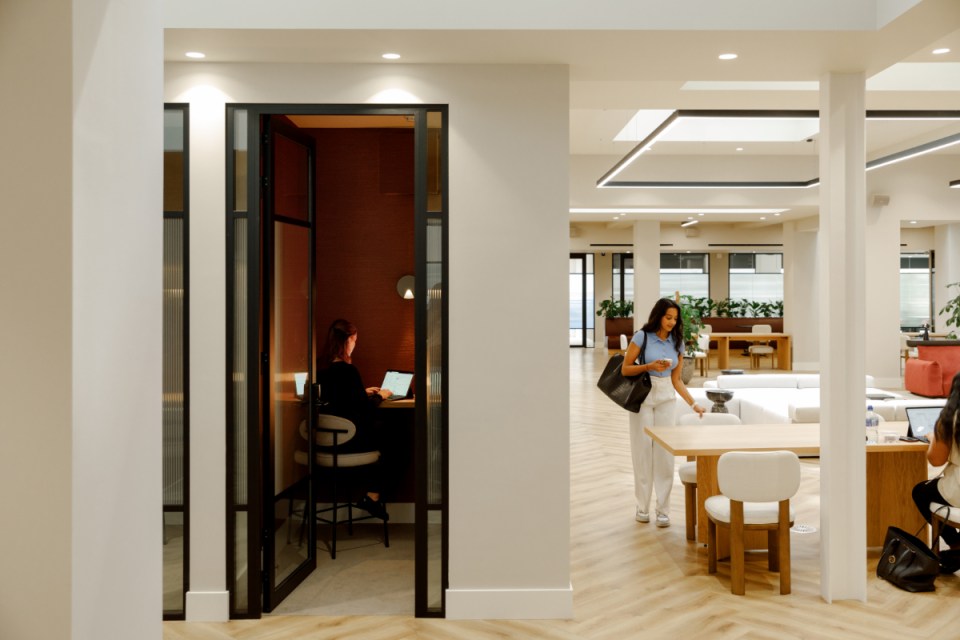
A well-run flexible office generates income across multiple touchpoints: workspace, meeting rooms, events, technology, hospitality, partnerships. More importantly, it builds daily engagement with its customers. That engagement translates into stickier occupancy, faster leasing decisions and greater pricing power over time.
In a market where supply of high-quality space is constrained, that matters.
Hospitality-led offices also respond better to the realities of modern demand, as Halkin have experienced over their 10-years in operation. They have seen teams grow and shrink. Working patterns change. The need for commitments to flex. Traditional leases struggle to accommodate that without friction. Serviced models are designed for it. Halkin have seen the positive value-add that provides for the end user and, by extension, the building as a whole.
From an investor perspective, this represents a fundamental shift. Value is no longer created solely through yield compression or rental growth. It is created through operational performance. Better experience leads to higher utilisation. Higher utilisation drives stronger income. Stronger income supports value.
That is why the “operator” is becoming as important as the building.
This doesn’t mean every office becomes fully serviced. But it does mean the principles of hospitality — service, adaptability, experience and brand — are now core to office performance. Buildings that ignore this will fall further behind. Buildings that embrace it will outperform.
The market reset underway is not just financial. It is cultural. The future office is not a product you rent. It is a service you use. And in the next cycle, the winners won’t just own the best buildings. They’ll run them best.