The Debate: Is working from home making us less productive?

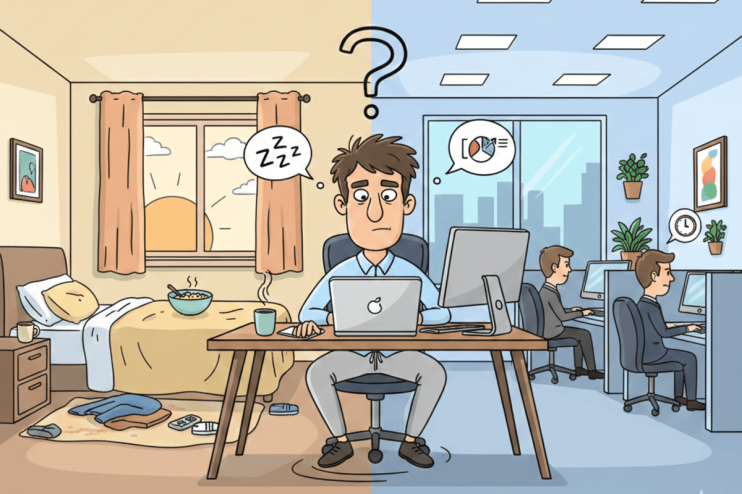
Nigel Farage has called for a nationwide “attitudinal change” over working from home amid sluggish UK productivity. Could he have a point? We take the case for and against working from home in this week’s debate
YES: When people are physically together, ideas move faster and accountability is visible
Working from home has its place, but for most roles it has made teams less productive, not more. Business success is rarely about isolated individual output; it is about energy, alignment, speed of decision-making, and shared momentum. When people are physically together, ideas move faster, problems are solved earlier, and accountability is visible. Remote working fragments that dynamic.
Communication suffers first. Messages become transactional rather than human. Nuance is lost, misunderstandings increase, and conversations that would take two minutes in person become endless email chains or delayed calls. That friction slows execution.
Teamwork also weakens. High performing teams rely on trust built through everyday interaction such as informal conversations, quick check-ins and the ability to read body language. These are difficult to replicate through a video screen. As a result, collaboration becomes more structured and less creative.
Perhaps most concerning is the loss of knowledge transfer. Junior team members learn by observation and proximity. They absorb judgement, culture and experience by being around senior colleagues. Remote environments limit these learning moments, creating capability gaps over time.
Yes, occasional focused admin days at home can work well. But when entire teams disappear every Monday and Friday, rhythm and cohesion suffer and performance inevitably declines.
Kevin Gaskell is the former managing director of Porsche, Lamborghini and BMW
NO: I need silence to focus, so working from home allows me to be more productive
When people criticise working from home they forget about the distractions in the office too. Humans aren’t built to sit and focus for hours without distractions. Attention spans differ among people, and most will have periods throughout the day when they are more focused and productive than others.
At home, I may take a break to stand outside or start a load of washing. In the office, those downtimes may look like a conversation with colleagues unrelated to work or a walk to the communal kitchen for coffee.
A comfortable environment is also important for productivity and focus. Personally I prefer to work in silence, music with lyrics is distracting to me. I also struggle to focus if a conversation is going on in earshot. I have colleagues who liked music when we worked in the office and the radio would be on all day. Now that I work from home I can control my own environment. I have worked in many offices where there are ‘aircon wars,’ with some preferring a cold room while others like to be warm. Again at home I control this environment; my fingers no longer freeze when typing due to the air conditioning breeze.
What is most important is trust; I feel trusted by my employer to work to the best of my ability at home. In previous roles, I have worked in environments that lacked trust and flexibility and I can promise that employees were not more productive just because they worked ‘in the office’. Controlling employees does not equal productivity; motivation and respect do.
Alice Greedus is a PR manager at Happiful
THE VERDICT
City AM columnist Eliot Wilson has long lamented the descent of work from home as flexible working policy to culture war pillar, cemented only further by Nigel Farage’s latest attack on remote working as “a load of nonsense” requiring a nationwide “attitudinal change”. But, amid an undeniable lag in UK productivity, could Mr Farage have a point?
To an extent, yes. As Mr Gaskell, a well-credentialled business turnaround pro, argues, communication undeniably suffers under remote working, while the long-term productivity effects on juniors are yet to be fully seen. But Ms Greedus also makes a salient point: just because your employees are in the office does not mean they are being productive. Background noise, free coffee and the constant opportunity for chitter chatter – for many, the office is about the most least productive place they can be.
What do the studies say? Just about anything you want – with many concluding work from home increases productivity, and many concluding exactly the opposite – which is really the point. What is a productive environment for one is not a productive environment for all. Working from home isn’t making us less productive, a one-size-fits-all attitude is.