Smells define our world – but modern life is killing them


The smell of the Clockwork Orange – AKA the Glasgow Subway – has mystified Glaswegians for over a hundred years. Newspapers have pored over the pong since the metro first opened in 1896. Over the years the curious, slightly fusty scent has been described as an “odour-laden spice caravan” and prompted one Redditor to ask “how do they get the smell of farts into Buchanan Street underground?”. In 1968, the Glasgow Herald described it as: “An elusive melange of airlessness, and the bottom of the Clyde, with a distinctive note of diesel oil.”
Although the exact cause is uncertain, it is unlikely to be farts and more likely a mix of tar, the river Clyde, sewage, tobacco and a plethora of mysterious, unknown substances that have converged to form an odour of which locals are often surprisingly fond.
Glaswegians are not alone in finding their local aromas scintillating. Locals have already begun to mourn the closure of one of the UK’s oldest breweries, the Westgate in Bury St Edmunds, which is slated to move to a new site on the outskirts of town in 2027. Retired resident Michael Ely said: “I was born with the smell of Greene King – the hops, the barley. I’ve smelt it all of my life. I suspect I will miss it.”
Smell has long been linked to recall and memory. The olfactory system matures earlier than other senses, and is usually fully developed by age 10, meaning smells can be particularly evocative of early memories (Proust’s narrator famously experiences a wave of nostalgia after tasting a madeleine dipped in tea in his novel In Search of Lost Time).
What exactly are smells?
Let’s start with the basics: what is smell? “Well, smell is not actually a thing,” says Kate McLean, a ‘smell walk leader’ and a researcher at the School of Arts & Architecture at the University of Kent. “A smell is just a series of chemicals that react together at a given point at a given time. It doesn’t exist until we give it a name.”
When she started her PhD at the Royal College of Art in 2013, she struggled to find research into smell from before the 1970s. Since then the academic field has expanded enormously: “It’s like being an explorer in Elizabethan times, suddenly there’s a whole lot of things to be discovered,” she says.
But while research may be on the rise, smells are being forced out, even eradicated. We live in an increasingly deodorised and sanitised world, where quotidian foul smells are all but neutralised: we wash, clean and spray with increasing, sometimes suffocating, fervour. Last year, a phenomenon where pre-adolescent and adolescent males use fragrances in huge doses to enhance their “musk” caught hold on Tiktok. It was dubbed smellmaxxing.
It was only at the end of the 20th century, however, that water, soap and detergents became commonplace in the West. Effluvium once flowed down our streets in brown rivers. Advanced sewers could not hide us from our bodily waste. Our rubbish wasn’t collected and buried or burnt or shipped overseas for someone else to deal with.
The lack of raw sewage in the streets is obviously a good thing, but have we gone too far in the destruction of the natural smellscape? Covid caused anosmia in many people, and air pollution has dampened people’s sense of smell. We live in an obsessively visual world in which screens have become ubiquitous. We can record sound. We discuss taste compulsively.
But smell is masked, or artificially enhanced. Half of young people claim they would give up their sense of smell before they handed over their tech, according to a 2011 global survey. You can assume a far higher proportion would choose smartphones over smells today.
Negging our sense of smell isn’t anything new, either: Immanuel Kant called it “the most dispensable” of the senses, claiming “it does not pay to cultivate it or refine it”.
“There has been a hierarchy of the senses in science and in historical study,” says Cecilia Bembibre, a lecturer in sustainable heritage at UCL. “There has been an idea that smell was a less than noble human sense, and that it was somehow less objective, less educated and even less trustworthy.”
Smell is the forgotten sense
With shaggy hair and a dangling pearl earring, Dr Will Tullett is a keen campaigner for the olfactory history movement. A smell historian from York University, he has published two books on the topic, Smell in Eighteenth-Century England: A Social Sense and Smell and the Past: Noses, Archives, Narratives, the latter of which argues that historians should use their noses more. He helped lead the major EU Horizon 2020 funded Odeuropa project, creating an historical catalogue of scents, and is currently writing his third book. His favourite smell is his cat.
“Smell is still relatively unstudied,” he tells me over Zoom from York, said feline peering in from the edge of his screen. “We’re not given space to articulate our relationship with smell in a meaningful way.”
‘Smell history’, he says, has slowly become a part of academia since the 1980s, when historians first started to explore the history of smell and its impact on society. One of the first was Alain Corbin, who wrote the oft-cited work The Foul and the Fragrant: Odor and the French Social Imagination, a work that was instrumental in putting smell on the map.
The rise of the study of smells aligns with the “sensory turn” in the humanities during the 80s and 90s, which emphasised both a cultural approach to the study of the senses and a sensory approach to the study of culture.
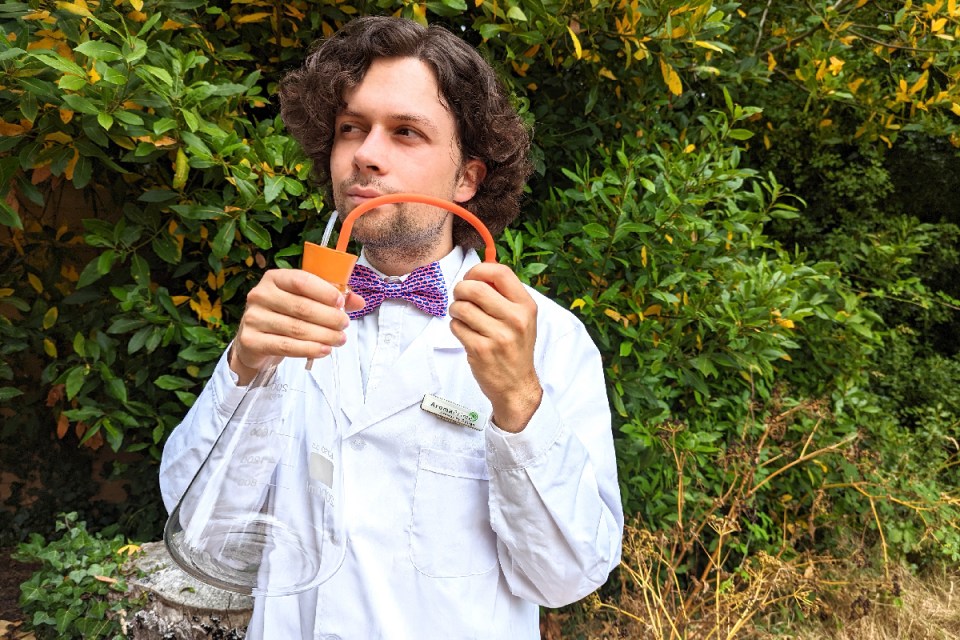
One difficulty for researchers is that human reactions to smells have changed fairly radically. “We don’t have historical noses. We just don’t smell in the same way now, and some smells mean different things.” Tullett argues that ‘smellscapes’ are as important as landscapes and a nosewitness is just as important as an eyewitness. And his ideas are catching on.
Commercial businesses, historians and sociologists, and the heritage sector are all beginning to realise the power of scent. Medical researchers have discovered that Alzheimer’s can be predicted up to 20 years early through detecting loss of smell.
Olfactory branding is now an industry worth $3.6bn, projected to nearly double to $6.8bn in 2033, with particular scents being deployed to make customers linger, employees toil harder, and trainers seem trendier. Subway, Singapore Airlines and the Four Seasons hotel are all partakers in smell branding.
How to create a new odour
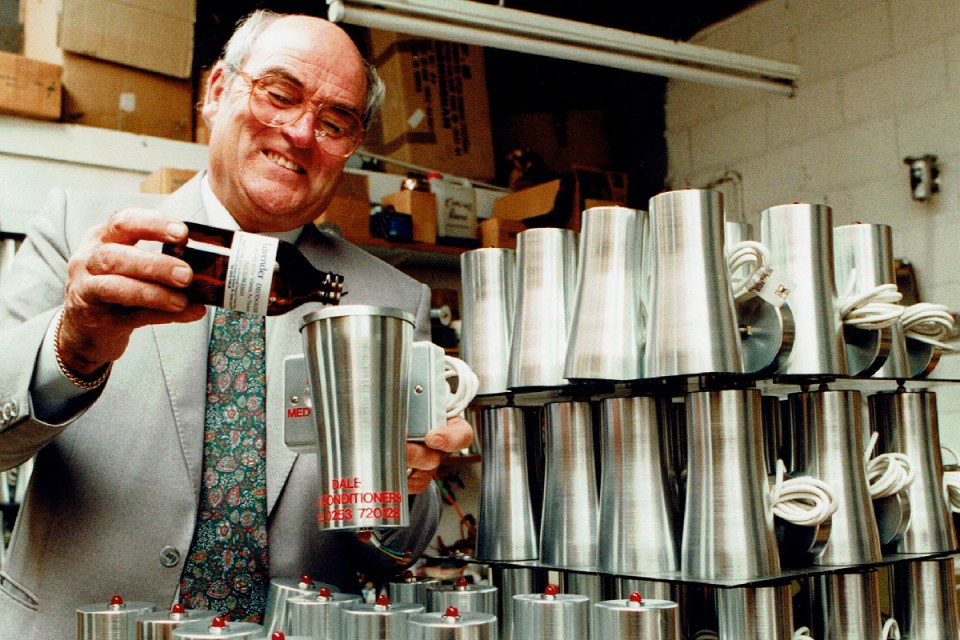
For over 50 years Rochdale’s AromaPrime, founded by “scent pioneer” Fred Dale, has built up a library of more than 400 scents, from chainsaw fumes to blocked urinals, musty attics to penguin droppings. The company works with everyone from theme parks to museums, synthesising smells that create atmosphere and manipulate emotion. Clients include the haunted hotel at Blackpool Pleasure Beach, Alton Towers and a New York whaling museum.
I spoke to Liam Findlay, an extremely smiley “themed attraction and historical scenting” consultant at AromaPrime. “For haunted houses we have scents like musty, mahogany, library and even vomit. The Curse at Alton Manor uses ‘musty’ to suggest the age of the building, and ‘coal fire’ to reflect the Victorian story.”
When it comes to heritage projects, it is usually museum curators or exhibition designers who order smells. In 2001, AromaPrime created a T-rex scent for the Natural History Museum’s animatronic T-rex. “We spoke with palaeontologists and were presented with fossil evidence that suggested the creature would have had meat stuck between its teeth. Based on this evidence, we could infer that it would have had breath that smelt of rotting meat.”
Findlay says he recently worked on a woolly mammoth scent for a tour guide: “The guide originally asked for a sweaty scent, but I read that mammoths didn’t have body odour.” So he visited a farm with sheep and llamas: “Because mammoths lived in similar grassy environments, their poo would have been similarly grassy”, and their fur would have been similarly matted with dirt from the surrounding environment. A smell was born.
“When we make bespoke blends, we combine different ratios of oils that have different olfactory qualities. For example, we could combine ‘fish market’ with ‘out at sea’ and ‘boiler room’ to make a scent evocative of a fishing ship,” he says. “When we make scents from scratch, we work with our partnering perfumers who will combine ingredients that have specific olfactory qualities.”

Entirely bespoke scents can also be prepared but it’s a long and laborious process. Say you wanted to recreate the smell of a strawberry: there are 350 different molecules that make up that scent, which represents a lot of lab work. Once prepared, scent oils that can be put into diffusers are a popular method of dispersion.
Such oils will be familiar to both Bembibre and Tullett, who worked on the EU funded scheme Odeuropais to create an archive of endangered scents. This amounted to a £2.5m research project launched in 2020 bringing together historians, artificial intelligence experts, chemists and perfumers to create an archive of the smells of Europe from the 16th to early 20th century. They used state-of-the-art AI techniques to analyse historic literature and paintings and recreate the smells therein, things like disease-fighting perfumes, tobacco or the stench of industrialisation.
In the Netherlands, the Mauritshuis gallery recreated the scent of Amsterdam’s dirtiest canals for an exhibition titled Fleeting – Scents in Colour, which opened in 2021. It paired 17th-century artworks with smells, hoping to pull the visitor into the worlds depicted. Do you experience a painting differently if you can literally smell it?
“I had never imagined such rankness when looking at cargoes unloaded from barges in scenes of old Amsterdam,” journalist Laura Cunning wrote in 2021. “What the Mauritshuis achieves with its specially manufactured scents is not just the olfactory equivalent of a soundtrack to the paintings, but a kind of doorway in itself to the pungent realities of the past.”
Preserving the smellscape
“Can we experience a building with our nose? What’s the olfactory equivalent of a painting?” These are the questions posed by researchers Bembimbre and Matija Strlič in a paper entitled From Smelly Buildings to the Scented Past: An Overview of Olfactory Heritage. Traditionally, these questions would not have made much sense, since our engagement with cultural heritage has relied heavily on visual experiences.
When we think of heritage, it’s easy to picture grand cathedrals, cobbled streets, or iconic landmarks etched into a city’s skyline. But heritage isn’t always something you can touch. In fact, some of the most powerful cultural legacies are the ones you can’t see at all – rituals, languages, crafts passed down through generations. This is the realm of intangible heritage, a living, breathing part of our identity.
Until last year, the UK was one of 12 countries (out of 196) not to have ratified an ‘intangible heritage’ pact with Unesco, despite it coming into effect in 2006. Last year we finally signed. Why did it take so long? Tullett thinks the UK has followed the lead of the US, home to the most hygiene-obsessed people in the world. He says that for many Brits, talking about smell surpasses the “boundaries of politeness”.
“If I detect an interesting scent on someone and ask them about it, they will look at me like I’m mad, or a pervert because it implies a kind of uncomfortable intimacy.”
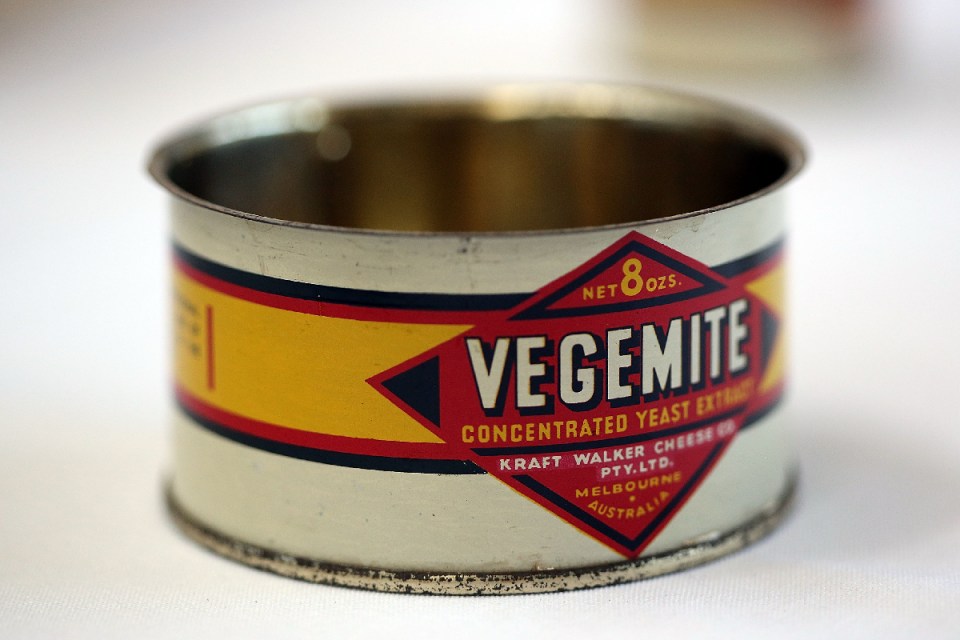
Elsewhere it’s different. In Japan, the environment ministry published a list of 100 aromatic spots in 2001, with the judges testily whittling down a shortlist of 600. The purpose was to counteract complaints about bad smells and has become something of a tourist guide. In 2021, France passed a law protecting the “sensory heritage” of the countryside, including the sounds and smells of rural life. And Down Under, the smell of a Vegemite factory was given special heritage recognition by Melbourne council in the same year. “The distinctive smell of Vegemite should be acknowledged in any future development of the site,” said deputy lord mayor Nicholas Reece.
“One of the counsellors said if the factory was closed down, we’d have a plaque there to commemorate the smell,” Tullett says. “Is that really the most appropriate thing? You’re enshrining what was a smell in a purely visual form.”
Which smells should we in the UK try to preserve? To try to answer this question, Tullett partnered with the University of Sussex’s Mass Observation social-research project, which documents everyday life. They asked people to keep a smell diary for a day, describe the scent of an object in their home and note down which scents they would preserve for posterity. The most common answers were petrol and tobacco.
These answers don’t surprise McLean: “It’s nostalgic,” she says. When the smoking ban came in, she tells me, people suddenly didn’t like going into pubs because they smelled of chlorine and bleach. Tobacco had masked it. We might live in a relatively deodorised world, but smells are still there under the surface. In a future without cigarette smoke or petrol fumes, who knows what other hidden smells may be out there, ready to drift to the forefront of our everyday smellscapes?