Rachel Reeves oversees borrowing spike as benefits spending offsets tax haul

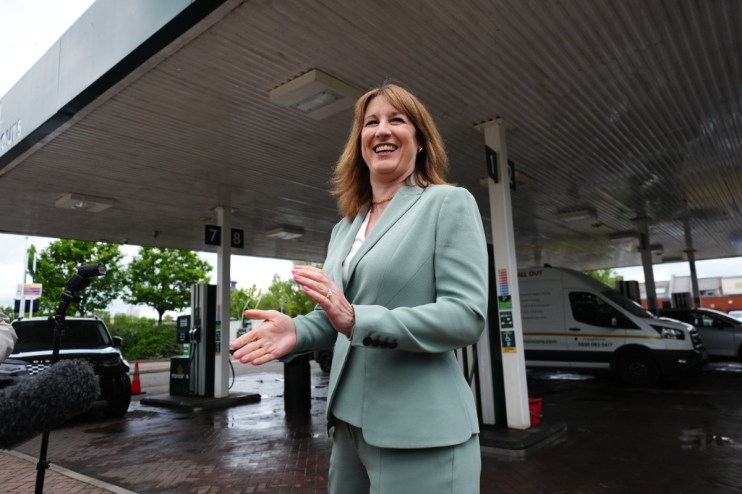
Rachel Reeves oversaw a surge in borrowing in the first month of the financial year as April’s figures hit the highest since 2020 on higher benefit spend.
Government borrowing – which marks the difference between total public sector spending and income – topped £24.3bn in April 2026, according to the Office for National Statistics (ONS). This was 25 per cent higher than April 2025’s borrowing haul.
It also overshot expectations pencilled in by City analysts of £20.7bn.
“Borrowing this month was substantially higher than April last year and although receipts increased compared with April 2025, this was more than offset by higher spending on benefits and other costs,” Grant Fitzner, chief economist at the ONS, said.
Government spending on benefits soared by £2.7bn to £29.5bn, the ONS said, which was largely driven by inflation-linked increases in benefits and earnings-linked increases to state pension payments.
The ONS said the current budget deficit – borrowing to fund day-to-day public sector activities – reached £17.4bn in April 2026, around 24.6 per cent higher than April 2025 and £2.6bn more than the OBR forecast.
“There has been a lot of talk in recent weeks about the potential flexibility in the fiscal rules, with the IMF urging the UK not to tinker and aim to reduce the budget deficit instead,” Richard Carter, head of fixed interest research at Quilter Cheviot.
“Based on today’s figures, that deficit will be difficult to close, especially with additional cost of living measures being announced. Ultimately, the focus will shift onto personal taxation again when the Budget comes around as the government looks to fund spending commitments while still waiting for growth to pick up, and particularly if events in the Middle East cannot be resolved.”
Reeves set to face borrowing cost spike
For the forthcoming financial year, the Office for Budget Responsibility (OBR) estimates the government will borrow £115.5bn.
It follows a mammoth £132bn in the last financial year, which modestly undershot the OBR’s forecast by £700m.
In the final month of the previous financial period, Reeves borrowed £12.6bn, which came under the budget watchdog’s expectations after the sweeping tax hikes inflicted in the Autumn Budget helped narrow the deficit.
The latest figures come after the government’s cost to borrow faced a drastic surge amidst the economic shock triggered by the Iran war and political instability.
Manchester Mayor Andy Burnham’s bid to return to Westminster rattled bond markets in the last week, driven by fears he could oust Sir Keir Starmer and introduce a looser fiscal policy.
Burnham overcame the first hurdle on his road back to Parliament. Josh Simons, MP for Makerfield, said he would resign to pave the way for the Metro mayor to try and stand for Labour.
But markets quickly reacted to the news with the value of the pound declining against the euro and Japanese yen, making Brits poorer compared to their counterparts in G7 countries. The yield on ten-year gilts, which serve as the main benchmark for UK government borrowing costs, also soared by over ten basis points, rising above five per cent once again.
Part of this hike in yields also came from growing fears around the inflationary impact of the Iran war. Global bond markets have been hit by the energy shock triggered by the war in the Middle East, which has led to central banks hitting pause on rate-cutting cycles and bond yields remaining elevated.
However, City economists have warned the UK faces an added “political premium” due to the conflict at the top of the Labour party, with ongoing uncertainty that the UK may soon face a new Prime Minister.