‘Panic mode’: FTSE 100 sinks as oil spikes on Iran’s energy threats
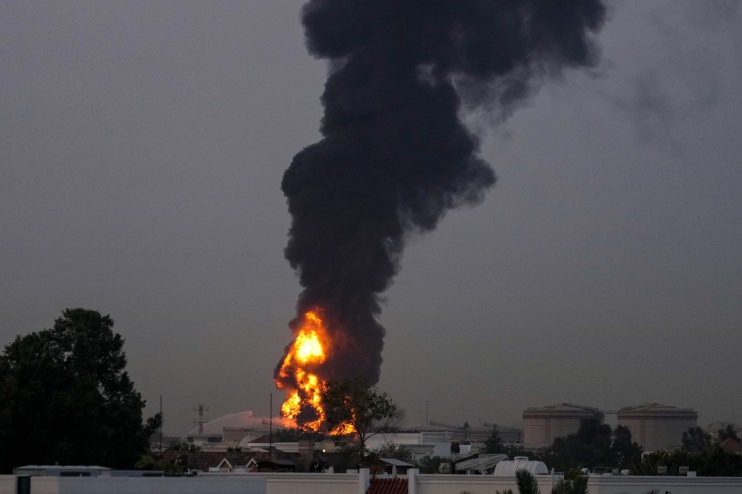
Markets were thrown into “panic mode” on Wednesday as the surging price of oil rattled global equities.
The price of Brent crude – the international benchmark for oil – spiked as much as five per cent to $110 per barrel as energy facilities across the Gulf faced evacuation following the latest threats from Iran.
The regime in Tehran sent out a stark warning to several oil facilities across Saudi Arabia, the UAE, and Qatar that they had become “direct and legitimate targets and will be targeted” in mere hours.
Gas prices also jumped on the news with Europe’s benchmark contract, the Dutch TTF, soaring over eight per cent to €56 per MWh.
Analysts at Schroders warned the UK was particularly vulnerable to a spike in gas prices given stockpiles were around 40 per cent lower than at the time of Russia’s full-scale invasion of Ukraine.
Kathleen Brooks, research director at XTB, said: “Markets are back in panic mode…
“The risk is that an oil shipping crisis is morphing into an oil supply crisis. Unsurprisingly, this has spooked a market that was wiling to grasp hopeful signs that tankers were slowly getting through the Strait of Hormuz.”
The FTSE 100, which started out the day on the front foot, quickly tumbled into the red as tensions escalated, falling over one per cent to 10,290.00p.
Markets ‘shook out of complacent mode’
Neil Wilson, investor strategist at Saxo Markets, said: “Stocks have turned lower as oil breaks higher out of the one-week range….
“Markets are being shaken out of complacent mode we have seen the last three sessions.”
The continued blockage of the Strait of Hormuz – through which a fifth of the global oil supply flows – has also kept prices elevated in the last week.
On Wednesday, President Donald Trump threatened to leave responsibility for opening the Strait to America’s allies, following refusals to provide the US military with support.
“I wonder what would happen if we ‘finished off’ what’s left of the Iranian Terror State, and let the Countries that use it, we don’t, be responsible for the so called ‘Strait?” the President wrote on Truth Social.
“That would get some of our non-responsive “Allies” in gear, and fast!!!”
On Wednesday, Chancellor Rachel Reeves said it was “frustrating” that trade passing through the Middle East had not fully resumed.
She appeared to take a swipe at the US administration as she said: “There doesn’t seem to be a plan for what to do now after the very predictable closure of the Strait of Hormuz.”
Energy support package
The government has said energy support packages were “under review”, with high public sector debt levels and pressures on public finances reducing the probability of that the government will announce a sweeping subsidy scheme worth billions of pounds.
A persistent rise in oil prices is set to unnerve Treasury and Bank of England officials making calculations on both the economic and political impacts of the war.
The Bank of England is expected to hold interest rates in a decision to be confirmed at 12pm given fears that higher energy prices could lead to inflation bouncing higher.
City economists have suggested that Bank officials would have been inclined to cut rates had the war not started.
“We ultimately think the Bank of England will look through this inflation shock and continue cutting rates over time. But the timing has become more uncertain, and it’s possible the Bank delays cuts until late this year or even next,” said Peder Beck-Friis, an economist at PIMCO.
Analysis added that inflation could exceed three per cent by the end of the year if prices stayed where they were while Pantheon Macroeconomics researchers said inflation could top five per cent if oil prices rose to $150 per barrel.