Not everyone in the City is friends with Savvy the Squirrel

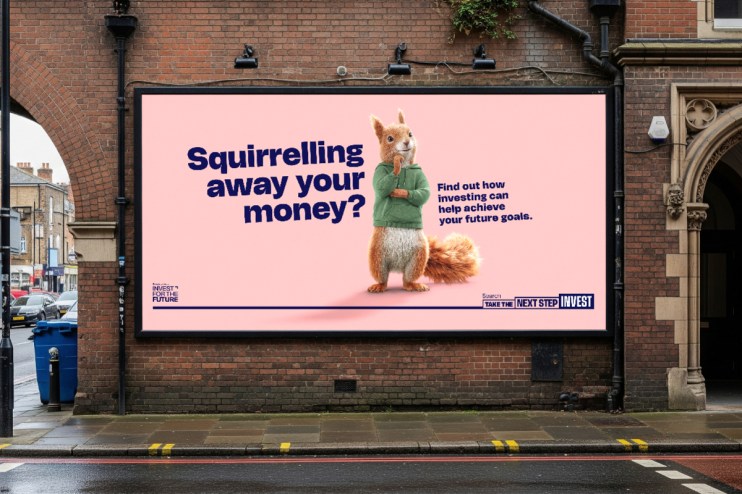
Last week the government rolled out its industry-backed nationwide campaign to encourage more Brits to enter the stock market in a bid to revitalise the stock exchange.
The ‘Invest for the Future’ campaign has employed Savvy the Squirrel to carry the message across the UK, in reminiscence of the Tell Sid adverts in 1986, with the furry rodent visible at bus stops and on taxis and billboards.
The campaign marks the latest efforts in the industry and government’s attempts to boost the retail investment culture in the UK and aid economic growth, with several large household names involved.
The UK’s largest investment platform Hargreaves Lansdown was among the founding firms, alongside Vanguard, Quilter, Schroders and St James’s place, with Hargreaves Lansdown chief executive Richard Flint expressing hope that it would “create a nation of retail investors”.
The firms have all bankrolled roughly between £8m to £10m annually for the next three to five years, with a wider television rollout later this year.
Economic Secretary to the Treasury, Lucy Rigby also said greater awareness would lead to “financial resilience” and strengthen “domestic capital markets”.
But not everyone in the City is friends with Savvy, with some calling out the campaign following its launch, while others turned their back on the cartoon squirrel months ago.
No explanations
While the advertisement campaign is only in its first phase, some industry figures have called it out for lacking information on certain areas of investing.
The website consists of four pages, each offering a short video and paragraph on risk alongside descriptions of different investment styles and a checklist asking if debt has been cleared.
However, some have expressed confusion on why the website lacks other areas of information, including what an ISA or a fund is and how they work.
Others have expressed frustration at the choice of a squirrel mascot, which was inspired by the idea of ‘squirreling’ money away, ultimately going against the notion of the campaign, and why it was launched after the end of the tax year.
High fees and bowing out
Some firms opted to walk away from the campaign last year, including AJ Bell and Interactive Investor.
Interactive Investor reportedly bowed out after cost concerns, while AJ Bell wished to focus on boosting its own brand awareness.
As of the end of this financial quarter, the plan seems to have worked with both sites seeing a hike of customers and net inflows.
Interactive Investor, a subsidiary of Aberdeen asset management, was the crown jewel after reporting a 14 per cent year on year jump in customers to 513,000.
Net inflows also jumped 88 per cent to £3.0bn, with the company crediting increased brand awareness and repricing.
AJ Bell saw record customer growth, with numbers hitting 723,000 in its latest results, while net inflows surged to £2.7bn.
But some firms involved in the campaign have run into stumbling blocks this year, as customers opted to move to platforms with lower fees and easy onboarding steps, with new investors in particular favouring digital-first platforms.
In particular, Hargreaves Lansdown was forced to lower fees earlier this year to go toe to toe with digital platforms.
Meanwhile, Robinhood has yet to offer users access to UK shares and ETFs, while St James’s Place is tailored to high net-worth individuals, causing some to question whether these firms are fit for new investors which the campaign aims to attract.
While AJ Bell tapped out, other firms which are ranked as top providers for new investors, including Freetrade and Invest Engine never appeared to even be close to the campaign.
Fixing the investing problem
Industry figures both nutty and displeased with Savvy have acknowledged the efforts to fix the UK’s investment culture, with the government having already taken steps through cutting the cash ISA ceiling to £12,000 and rolling out the Targeted Support scheme.
But concerns over the firms involved as well as lack of information of how hoarding cash can also carry risk, as it can be subject to being eroded by inflation, has caused some to wonder if this cartoon squirrel is enough to give the stock exchange a much needed kickstart.
Others have argued that while the campaign alone is not enough, the rollout of targeted support should assist in pulling more people to invest, by bridging the gap between generic and regulated financial advice.