Northern Powerhouse Rail has more to do with votes than growth

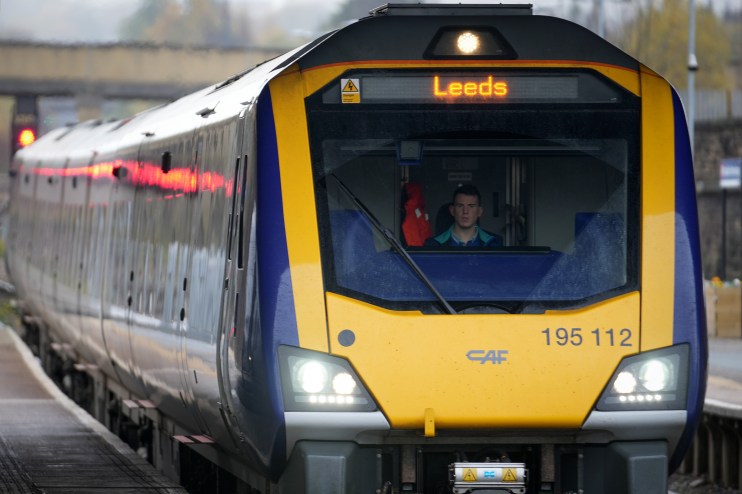
With Northern Powerhouse Rail now given the green light, the North-South divide now benefits the North over London, writes James Ford
I have long thought that the North-South divide was far more cultural than economic. One end of the country prefers gravy on their chips and chooses to eat them watching Coronation Street whilst the other likes their chips plain and enjoys them in front of Eastenders. In meaningful political terms – when it comes to transport infrastructure and spending rounds – the perception that the North of England was perennially short-changed whilst the streets of London were paved with gold was a useful myth that could be exaggerated, leveraged and weaponised by enterprising regional leaders ahead of comprehensive spending rounds. And, while MPs and lobbyists may argue as to whether trams are better than the tube, we could all agree that the Barnett Formula for public spending means that Scotland gets way too much taxpayer funding.
This cosy conceit was upended last week when, with great fanfare, the government announced that they were giving the green light to Northern Powerhouse Rail (NPR), an ambitious East-West rail project that will improve connections between the major cities in Yorkshire and the North East and, ultimately, to Manchester and Liverpool. And all for a price tag of £45bn. If there wasn’t a North-South divide in infrastructure spending before, there certainly is now. And the North is winning.
Don’t get me wrong – NPR is a great, transformative and long-overdue project. It is frankly ridiculous that a train journey between Manchester and Liverpool currently takes around an hour, to get from Manchester to Leeds takes an hour and a quarter by train and that crossing from Carlisle to Newcastle takes over an hour and a half. By contrast, Japan and France have had truly high-speed trains (capable of reaching speeds of 200mph) since 1964 and 1981 respectively.
London pays the price
But, while recognising the benefits of NPR, we are nonetheless left with one question: when will the government make a similar investment in London? Eagle-eyed readers will have spotted that £45bn is an eerily similar amount to the estimated cost of Crossrail 2, the proposed north-south underground rail line that would connect Broxbourne to Shepperton, Chessington and Epsom via central London. This project – the natural successor to the Elizabeth Line – was priced at £41bn in 2019.
The business case for Crossrail 2 is stronger than that for NPR. As well as substantial benefits to London – 10 per cent extra capacity across the tube network, 200,000 jobs created and unlocking up to 200,000 new homes – it is also projected to generate £150bn for the wider UK economy. With a cost to benefit ratio of 1:6.9, every £1 spent on Crossrail 2 will yield £6.90. (Every £1 spent on NPR, by contrast, will generate just over £2).
Moreover, investing in transport infrastructure in the capital always boosts the country as a whole, as the £42bn generated by the Elizabeth Line for areas outside Greater London has proved.
Yet, when London does get approval for vital transport projects, it often has to dig around in its own pockets to fund them. Around two-thirds of the £19bn cost of the Elizabeth Line came from London itself via funding from TfL and the GLA (30 per cent of the total cost) and the London Business Growth Levy, a tax on higher-rated business premises (which raised 40 per cent of the cost). The estimated £1.7bn cost of the DLR extension to Thamesmead is expected to be found from raiding City Hall’s piggy bank and TfL extending its overdraft. Nor did Whitehall chip in for the £1.1bn Northern Line Extension to Battersea.
There is no escaping the sense that the government’s support for NPR is more about northern votes than northern growth. London is getting left behind. And that is not just bad for the capital, it is bad for UK plc as a whole. London is the engine room of the UK economy and investing in it pays dividends everywhere, whether you like your chips with or without gravy.
James Ford is a former adviser to Boris Johnson during his time as Mayor of London