Labour’s Mansion House will be lift-off or letdown for banks

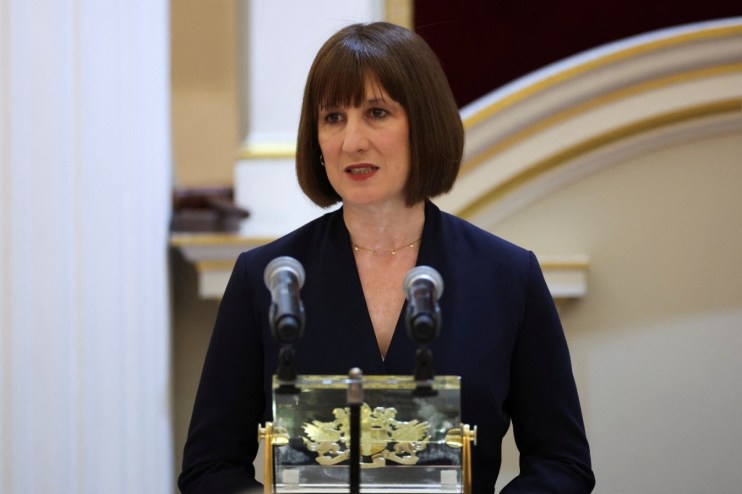
Britain’s banking sector will be keeping a close eye on Rachel Reeves’ Mansion House speech on July 15 in which the Chancellor will lay out Labour’s roadmap for financial services.
Banks are set to take centre stage in the Treasury’s Financial Services Growth & Competitiveness Strategy as Reeves looks to harness the sector to power her economic growth ambitions.
The Treasury has courted the chiefs of top lenders in a series of summits over the last year aiming to revive Reeves’ ailing growth agenda and enlisting bosses for crisis tariff talks.
As the Chancellor floats deregulation and promises to boost the UK’s financial services competitiveness, banks have seized the opportunity to make bold calls.
Writing in City AM, the chief executive of banking industry body UK Finance, David Postings, said the Mansion House Speech “offers Reeves a golden opportunity to move from growth ambition to action”.
Lenders are eyeing July 15 as a turning point. But if Reeves falls short of delivery, the sector may be in for a sharp letdown.
Don’t fence lenders in
The most recent plea from banking bosses called for Reeves to rip up the historic ring-fencing regime.
The system requires major banks to separate their retail banking operations from their investment banking activities but has been branded “redundant”.
Bosses of HSBC, Lloyds, Natwest and Santander wrote to Rachel Reeves lobbying for the Chancellor to axe the 15-year-old legislation in April, stating it was a “drag on banks’ ability to support business and the economy”.
Analysis from RBC projects a sector benefit of £2.5bn in a “blue sky” scenario and a base case of £1.5bn.
Natwest has been pegged as the top beneficiary at £530m “due to the larger funding cost gap between the ring-fenced back and non-ring-fenced back,” analysts Benjamin Toms, Anke Reingen and Pablo de la Torre Cuevas said.
The figure represents seven per cent of Natwest’s projected pre-tax profit for 2026. Its domestic-focussed peer Lloyds would be set for £480m in annual savings.
But any movement on the legislation would face staunch opposition. Barclays’ chief CS Venkatkrishnan argued in April ring-fencing shouldn’t be “relaxed or scrapped”.
“There are two counterpoints: we have spent the money on the set-up and we make it work; but the more important fact is that you have to weigh against this the immense amount of depositor protection that the ring-fencing regime gives the country,” he said.
Governor of the Bank of England Andrew Bailey also jumped to ring-fencing defence, telling MPs a removal would have a “negative effect on UK lending” leaving a potential source of government deregulation in a split between the central bank and the City.
Mid-caps eye a boost
Small to mid-sized banks have vocally protested MREL regulation, which acts as a regulatory buffer to ensure lenders can be safely resolved in a crisis without taxpayer bailouts.
Introduced in the fallout of the 2008 financial crisis, minimum requirement for own funds and eligible liabilities (MREL) rules dictate strict tailored requirements for banks possessing assets between £15-25bn.
FTSE 250 listed Paragon Banking Group last year told the financial services regulation committee: “MREL is a significant barrier to growth and competition of mid-tier specialist banks”.
The Bank of England launched a consultation in the final quarter of 2024, which proposed increasing the threshold to £20bn-30bn.
But Paragon called for it to be hiked to £50bn, stating the central bank’s proposals would have “minimal impact”.
RBC analysts said it is “a possibility that we see changes to the MREL threshold in the next two weeks, either in the Bank of England’s Financial Stability report on July 9 or in the Mansion House speech.”
Chatham-based OSB and high street bank Metro would be in line for a boost if Reeves chooses to up the MREL threshold, analysts said.
They projected Metro and OSB would save around 20 per cent and 11 per cent of profit before tax for 2027 if the threshold is increased to £30bn-£40bn.
Paragon would also benefit from “additional growth flexibility, both organic and inorganic” with further room to manoeuvre before being slapped with hefty regulation.
“Small and mid-cap management teams are hopeful that engagement with the regulator and government will lead to an incremental increase in the threshold,” analysts said.
Ombudsman on the ropes
The Financial Ombudsman Service (FOS) has remained a regulatory thorn in lenders’ side.
Banking industry body UK Finance has called for simplified regulation to ensure the FOS does not act as a “quasi-regulator”.
“Providing certainty and stability on this and other conduct-related reforms will better allow firms to innovate in the interest of consumers,” the body said.
City minister Emma Reynolds has opened the door to weakening the regulator telling TheCityUK conference last month: “Changes are needed to provide greater stability and clearer expectations on redress of all parties.”
Steps to reform the FOS would be greeted with open arms by banking chiefs after total complaints hit the highest since the PPI scandal in the last year.
Consumers lodged 305,726 complaints with the FOS in the year ending March 31 2025, as the ombudsman’s caseload increased by over 50 per cent.
This was mainly driven by a drastic near–500 per cent rise in motor finance related complaints to 73,328.
City AM revealed on Monday the banking industry’s ‘Big Six’ – Barclays, HSBC, Lloyds Banking Group, Natwest, Santander and Nationwide – paid the FOS a combined £38.8m in admin fees for the period.
The FOS has already come under pressure after a spike in complaints from professional representatives raised alarm bells
Under the new system, which came into effect in April 2025, professional representatives are charged £250 for each case referred to the FOS beyond the first ten cases per financial year.
Banks will not be charged for the first three complaints they receive in the financial year. From the fourth complaint forward, a case fee of £650 is applied, but reduced to £475 if dismissed, withdrawn or abandoned.
Further reforms would follow the Treasury’s abolition of the Payment Systems Regulator (PSR) in March 2025 – the first major move by Labour amid its deregulation push.
UK Finance welcomed the PSR’s exit but has called for “clarity” on how its functions will be transferred to “ensure innovation in payments is supported”.
Rachel Reeves has staked her political reputation on unlocking economic growth, and financial services are being positioned to lead that charge.
But after promising to both reform and champion the sector, Reeves will face tough questions if lenders are left empty-handed on July 15.