Will the Bank of England raise interest rates amid Iran war energy crisis?

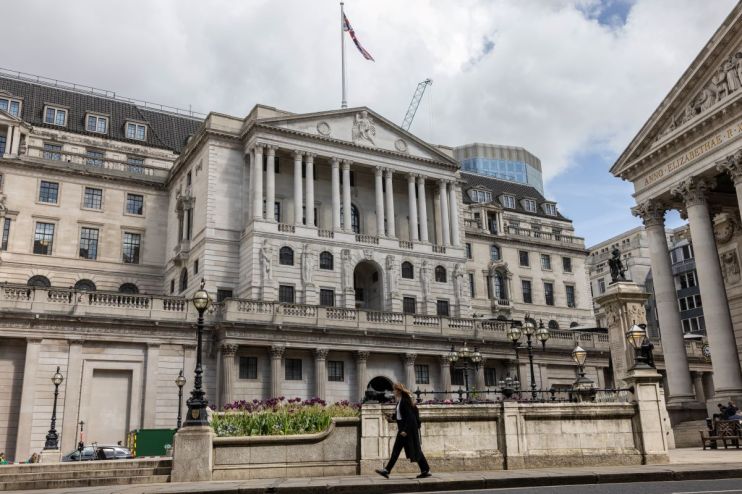
Traders are betting on interest rate hikes this year as Rachel Reeves and Sir Keir Starmer have consulted analysts at the Bank of England to monitor the impact of spiralling oil prices on the UK economy.
Investors believe interest rates are more likely to rise than fall by the end of the year, with a near 40 per cent chance of a hike being priced in.
On the whole, market data suggests analysts believe that interest rates will be left on hold for the rest of the year.
While the implied rate by the end of the year – the calculation resulting from trading bets on interest rate – is currently slightly above the current 3.75 per cent base rate, it is not high enough to suggest that a majority of investors believe interest rates will be raised.
The escalation of the conflict in the Middle East over the weekend and the continued disruption of trade across the Strait of Hormuz, which has around 20 per cent of global crude oil stocks pass through it, has raised alarm across the City and the government.
Oil prices rose by nearly 30 per cent overnight to nearly $120 per barrel before falling back slightly on news that G7 ministers were considering taking emergency action to lessen the supply shock.
Previous analysis by the Office for Budget Responsibility (OBR), which is used by Treasury officials, indicates that the current oil price surge could result in a percentage point being added onto inflation.
It could lead to inflation spiking to four per cent, around double the Bank of England’s target two per cent rate.
Iran war prompts interest rates caution
Traders were more hopeful of an interest rate cut being made last week while the government has also struck a cautious tone on the cost of living.
ING economist James Smith said the Bank was more “sensitive” to higher inflation than other central banks due to a previous oversight on managing the surge in price growth triggered by the war in Ukraine in 2022.
But Smith suggested the weakened jobs market could yet lead the Bank to ease interest rates this year.
“In a scenario where this [conflict] proves relatively short-lived – the disruption is resolved within 1-2 months – and energy prices gradually come lower again, it is still entirely possible we see renewed cuts later this year,” Smith said.
“The longer energy prices stay elevated, the higher inflation peaks and the less likely it is that further rate cuts materialise.”
The National Institute of Economic and Social Research’s Ben Caswell said there could be “minimal pass through” from oil prices to inflation should the conflict end within months.
“The Monetary Policy Committee will not have a knee-jerk reaction,” he said.
“They will be a little bit more deliberate in their judgment.”
Starmer and Reeves talk to Bailey
The Prime Minister said on Monday morning that Reeves was talking to the Bank of England’s Andrew Bailey on a “daily basis” about the potential energy crisis.
“The job of government is obviously to get ahead, to look around the corner, to work with others, and the chancellor speaks to the governor of the Bank of England on a daily basis, with looking cross-departmental within government, assessing the risks, monitoring and talking to our international partners as well about what more we can do together to reduce the likely impact on people here and businesses here,” Starmer said.
“It is important to acknowledge that that work is needed because people will sense that the longer this goes on, the more likely the potential for an impact on our economy, impact into the lives and households of everybody and every business.”
His government’s economic plans are facing scrutiny as the chairman of Utilita Energy, Derek Lickorish, said a promise to reduce energy bills by £150 would be a “white knuckle ride” as a result of the war in the Middle East.
“We need to be looking at what we can do and try and improve this for customers going forward because, if you think back to 2022, we thought that was a one-in-100-year event and now we’ve had a second one in four years.”