Ex Goldman chief: I smell another financial crisis

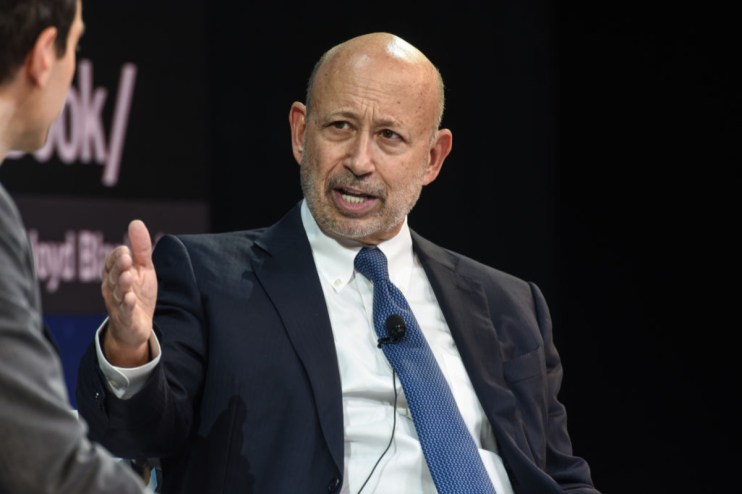
Goldman Sachs’ top boss throughout the 2008 financial crisis has sounded the alarm that the global economy was drawing closer to another crash.
Billionaire investment banker Lloyd Blankfein, who served at the helm of Goldman from 2006 until 2018, said: “I don’t feel the storm, but the horses are starting to whinny in the corral.”
Speaking in an interview with Citadel’s co-chief investment officer Pablo Salame, he said: “I wonder where there’s hidden secret leverage”.
“Now everyone says: ‘The world’s not leveraged’ – that’s exactly what everybody said in the mortgage crisis until you suddenly discover that there was a lot of mortgage risk in Iceland,” he added. “It sort of smells like that kind of moment again.”
The comments echo the sentiment of recent remarks made by JP Morgan chief Jamie Dimon, who last week warned of parallels to the financial crisis.
Dimon said: “Unfortunately we did see this in ‘05, ‘06, ‘07, almost the same thing.
“The rising tide lifts all boats, everyone was making a lot of money… my own view is people are getting a little comfortable that this is real.”
Private credit boom spooks bankers
Blankfein’s warning taps into long-standing over excessive amounts of leverage being used in the financial system, the practice of using borrowed capital for an investment with the expectation that profits will vastly outweigh the interest owed.
They also take a direct jab at the private credit market, a sector he has viewed with scepticism for years.
The banking veteran cautioned that the ‘shadow banking’ ecosystem is driving the global economy toward another crisis by operating outside the strict regulations that govern traditional banks.
He specifically criticised private credit lenders for their recent moves to encourage retail access – opening complex investments to everyday savers – at a time when market conditions are becoming increasingly unstable.
In Britain, the private credit market is estimated to have grown by 56 per cent since 2015 to $185bn (£138bn) making it the second largest after the US, according to a recent report by the House of Lords.
Peers warned at the beginning of the year that the Treasury was being too passive over risks posed to the economy by the rapid growth of private credit.
Members of the Lords’ Financial Services Regulation Committee said they were “concerned by what seemed like passivity” among Treasury ministers.
“When pressed on what the government… is currently doing to mitigate any risks emerging from the private market sector, we found the department’s responses to be limited to highlighting the action taken by the regulators,” the cross-party group of 13 peers wrote.
In an interview with the Financial Times earlier this week Blankfein warned a lack of major “shakeout” since 2008 had meant people weren’t “as scared” and had got “more complacent” regarding another shock to the system.
“The longer it takes between reckonings, there is a potential for a more severe reckoning,” Blankfein said.
“I’m not saying it’s going to happen tomorrow or what direction it comes from. But when something goes off you’re going to find all the assets that have been carried at prices that can’t be realised in the market.”