Hamilton Lane’s Erik Hirsch: We’re seeing a private credit witch hunt


Depending on which central banking chief you talk to, the burgeoning private credit industry is either a cause of insomnia, a “dark corner” of finance or an arcane lending practice whose participants are behaving like bankers in the run-up to the global financial crisis.
To Hamilton Lane boss Erik Hirsch, though, it is simply an effective avenue for thousands of companies across the world to get the capital they need to grow.
“The biggest issue with our industry is the word private because it makes things scary,” he tells City AM during a trip to London to visit his firm’s second-largest office. “But if you look at the vast swaths of data that is available to the general public we can see bankruptcy rates are sitting below two per cent and dropping, and equity coverage is rising.”
Speculation over whether or not the rapid proliferation of private credit was a bubble of frenzied lending likely to spark the next financial crisis dominated markets discourse at the end of 2025. The industry works in a similar manner to private equity – investing in unlisted companies over a five- to 10-year timeframe. But rather than taking a stake in those firms, it loans money to them, as a bank would.

Private credit’s rapid growth
Before the 2008 global financial crisis private credit was a little-known, esoteric pocket of finance, with a reputation for operating on the kind of arcane, distressed transactions at which traditional lenders and fixed income investors had balked.
But as politicians sought to vanquish any chance of a crash on the scale of 2008 happening again, watchdogs across the developed world clamped down on banks’ more insouciant lending practices. The torrent of red tape prompted many lenders to retreat even from mainstream, ‘investment-grade’ loans, creating a gap that private credit funds readily plugged.
Investors fell in love with the fledgling industry. In a decade of ultra-low interest rates and paltry economic growth, many were lulled in by its promise of consistently high yields. Borrowers developed a taste for what would come be called ‘shadow banking’, too. The flexibility that came with having just one lender as opposed to hundreds of bondholders was easy to manage, as was their lenders’ willingness to iron out any issues dispassionately and discreetly.
The biggest issue in our industry is the word private because it makes things scary.
All of which fuelled a rapid growth which – combined with its naturally opaque way of operating – has drawn the inevitable gaze of the world’s financial regulators. In 2024, the International Monetary Fund devoted an entire chapter of its annual Global Financial Stability Report to concerns its officials had over the systemic risks it posed to the wider financial system.
Concerns went into overdrive when three firms linked to the industry collapsed in the space of a few months. The failures of car parts maker First Brands, and subprime lenders Tricolor Holdings and Primalend, led Jamie Dimon – the veteran boss of JP Morgan – to warn more “cockroaches” were likely to emerge.
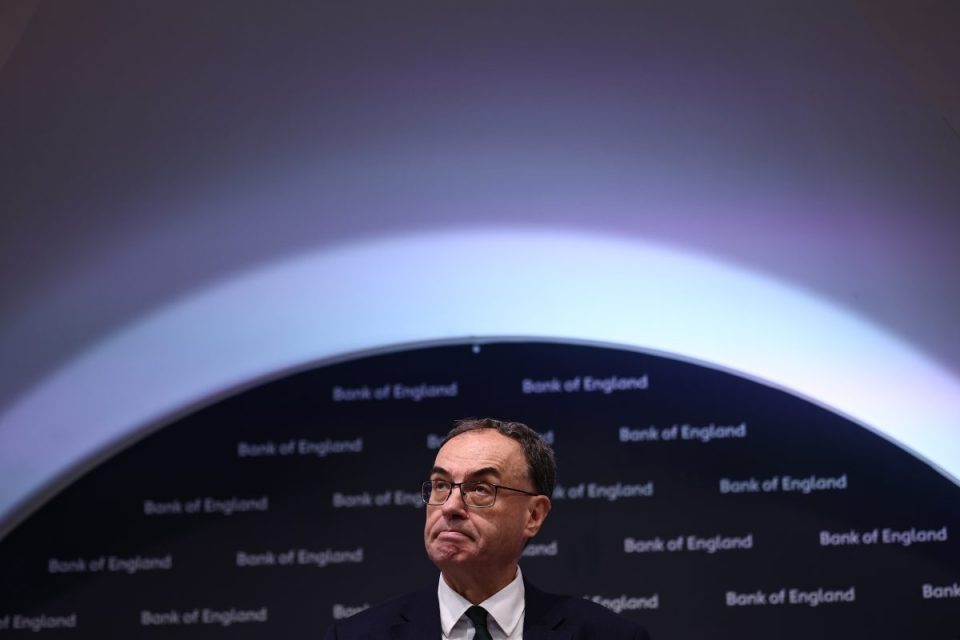
Bank of England governor Andrew Bailey said the industry was engaging in the kind of “slicing and dicing” of credit that he last witnessed in the months leading up to the financial crisis. His European counterpart Christine Lagarde, meanwhile, branded it a “darker corner” of finance that needed greater regulatory oversight.
Hirsch: I don’t see bad lending practices
To Hirsch, however, these fears are as overblown as they are misguided. And he would know. Hamilton Lane, the firm Hirsch co-leads with Juan Delgado-Moreira, is responsible for screening, recommending, investing and monitoring north of $1 trillion (£737bn) of investments in private markets. It therefore boasts one of the largest banks of data on private markets in the world.
Its customers have access to information on over 178,000 portfolio companies, and can dig into the track records of more than 68,000 private equity, credit and other funds, that span across 60 starting years.
Having observed the industry from his uniquely “high perch”, he gives short shrift to the notion that the cases of Tricolor, Primalend and First Brands will herald any wider fallout, let alone one redolent of the 2008 financial crisis.
“I don’t see bad lending practices,” he says. “I don’t see undue risk-taking that is systemic. Now, could we find a bad actor? Sure, because there’s lots and lots and lots of actors. It’s no different than if you and I went and walked the streets for an hour. Would we bump into somebody who’s maybe a criminal?”
Given private credit’s long-term, closed-end nature, any high-profile failures are less likely to set off contagion than their banking counterparts. Bank customers can all withdraw their money instantaneously, leaving the lenders facing a liquidity crunch than spread rapidly across an entire financial system.
Backers of alternatives funds – the overarching term used to describe private equity and private credit – cannot. They will get stung badly, of course, but – Hirsch’s argument goes – the chances of those haircuts morphing into a full-blown financial crisis are negligible.
Or at least they were. For as private markets have grown, so too has the number of investors that funds look to attract. For decades, access to the industry was limited to institutional capital from pension funds or insurers, and uber-high-net-worth individuals with family offices. But with advances technology and – sceptics argue – funds’ well-documented struggles to exit investments and return money to their investors, private markets are increasingly turning to retail investors to plug the gap.

Private credit funds lure retail investors
It is this trend – along with the industry’s ever-closer ties to the wider banking system – that the Bank of England’s Bailey, and an influential group of peers on the Financial Services Regulation Committee, sounded the alarm on in a recent report. So-called ‘tokenised’ private equity funds, which allow investors to buy and sell their stake in a fund as if it were on an exchange, have opened the investment class up to millions of retail investors.
Widening access and facilitating liquidity, sceptics argue, opens the sector up to rapid market sell-offs, even more so than shares on a standard stock exchange because of a paucity of information. Hirsch’s Hamilton Lane is on the frontier of this push, and six years on from retail investors first gaining access to the private markets, he argues that investors have proven to be far more discerning than regulators give them credit for.
“People were worried that [retail investors] are all going to do this, or they’re all going to do that at the same time,” he says. “I’m saying to people loudly, this is a more sophisticated group than I think we give them credit for.”
It is “nuanced” arguments like these that the Hamilton Lane boss is concerned risk being lost amid breathless talk of looming debt crises and financial blow-ups. The upshot of which, he fears, is that as watchdogs work through a regulatory blueprint, they will be drawn to focus on eye-catching – but ultimately misguided – noise.
“When I see politicians getting involved, usually, what I hear on the credit side is we’re sort of looking for the boogeyman that they’re not really sure exists, but they think exists and has to be there,” he says. “That’s not regulation – that’s a sort of weird witch hunt mentality.”
The American executive even thinks people have drawn the wrong conclusions from the three rapid collapses that spawned talk of cockroaches, dark corners and comparisons to the 2008 financial crisis. Those corporate failures – in his view – derived from a practice far more concerning than alternatives investing. One which has the singular advantage of not having ‘private’ in its name.
“It was just three things that happened in a row,” he says, before breaking into a knowing smile. “And ultimately they were all predominantly financed by banks.”