Grandparents are the missing piece in the fertility crisis

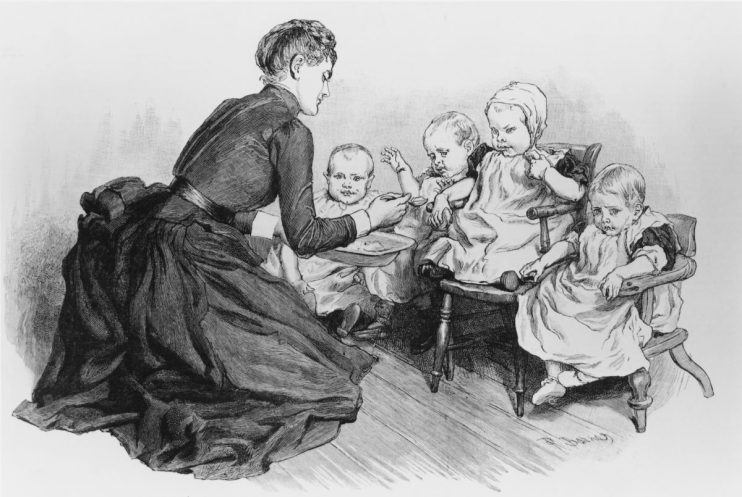
An under-discussed aspect of the housing shortage is that it forces many young Londoners to move away from their parents, making it harder to raise children of their own, says Phoebe Arslanagic-Little
My husband and I knew that our baby would be much loved by our parents, but we have both been surprised by the extent to which our daughter, their first grandchild, is the sun in their solar system.
Nietzsche wrote that there is always some madness in love and I now know that to be true. Here is a list of claims that my father has repeatedly made about our five-month-old baby. She is highly observant and “misses nothing”; is “tough” and stoic about physical pain; “doesn’t suffer fools gladly”; has unusually good hearing; and, “never” cries without a good reason.
My father is not the only one whose love for his grandchild approaches delusion. My friend has an alabaster-complexioned, red-headed baby girl (ideal to play the infant Queen Elizabeth I in a historical drama), and his mother recently remarked that this sweet child is very special. My friend heartily agreed, but his mother clearly felt that her son was in danger of missing the wood for the trees: “No, no, I mean special like…like…Mother Teresa!”. Will such grandparents ever discover that their idols have feet of clay? Somehow, I think not.
And amongst these paeans of grandparental adoration, is endless hands-on help and advice with any baby-related activity. During a trip to Australia this year, a friend’s father boldly took on the task of getting her baby boy started on solids. By the time they left, he was joyfully sitting down to three meals a day.
The truly unbeatable manoeuvre is to move near your child’s grandparents, if you can. I live a fifteen-minute walk from my parents and a short drive from my beloved mother-in-law. In addition to allowing me to return to work, go to the odd wine bar, and head back to bed for frequent lie-ins, this cushy situation means a front row seat to the developing relationship between my daughter and our parents. This is a beautiful but also sometimes bruising experience – the baby reserves her most loving coos and intense gazes for my mother, who she clearly and unsubtly loves more than she does us.
Families torn apart
Of course, it cannot work out this way for everyone and for many reasons. Some grandparents are simply too elderly or too unwell to muck in with childcare, however much they might want to. Others, having worked for many decades, don’t want to give up holidays and hobbies to sit uncomfortably on the floor and sing Old MacDonald for the twentieth time in a morning, no matter how much they love their grandchildren.
Yet grandparents riven from their grandchildren is also an under-discussed consequence of the housing crisis. For many parents, raising their children in or near to the area where they grew up and where their parents still live is not an option because it is unaffordable in terms of rent or house prices. This is particularly a problem for those raised in London, who find themselves moving to improbable and distant suburbs to maintain a toehold in the capital. A grandparent who lives a ten-minute walk away is very different to one who is a tube ride and two buses away, no matter the strength of their affection or willingness to help.
In all the regions of the UK most affected by the housing crisis, families are pulled apart in this way, unable to settle near one another in reach of helpful grandparents and cousins available for last minute playdates in the park. Raising children far from these extended family networks is absolutely possible and what many people do (and do very well) yet it is undoubtedly more difficult. The evidence is that people who live near their parents tend to have more children, and it is very likely that the housing crisis is contributing to Britain’s declining birth rate by forcing families apart. As I watch my father march up and down the street, holding my daughter so that she can look at buses and meet dogs, I feel very grateful.
Phoebe Arslanagic-Little is a columnist at City A.M. and head of the New Deal for Parents at Onward