Can Scotland ever win the Six Nations, when so many of their players play abroad?

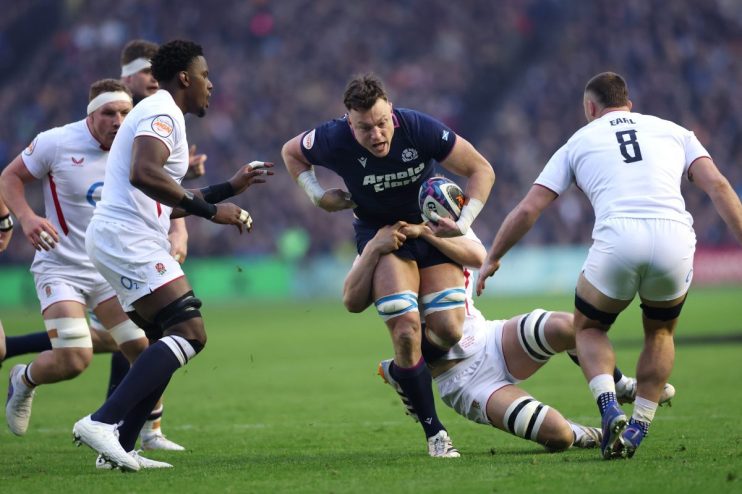
On the final day of the 2026 Six Nations Championships, Ireland defeated Scotland in Dublin in their 12th successive victory against Gregor Townsend’s side. Ireland’s victory extended Scotland’s 27-year wait for the title and underlined the growing gap between the two sides.
Days later, news broke that Scotland No8 Jack Dempsey has agreed a deal to switch his club allegiances from Glasgow to Japan this summer, news that revives questions about whether Scotland’s policy on overseas players creates a gap between individual talent and team performance.
At this year’s Six Nations, Ireland, France and England all had zero players in their squads based outside their domestic leagues. Scotland, meanwhile, had 12 and, with Dempsey’s impending departure, that number seems likely to increase.
On one hand, the model has clear benefits: the exposure to higher-intensity leagues has helped key squad members such as Finn Russell and Ben White elevate their games significantly. Given that there are only two professional teams in Scotland – Glasgow Warriors and Edinburgh – overseas moves also expand Scotland’s player pool and reduce squad congestion.
Scotland conundrum
But the trade-off is significant. In Ireland, players are centrally aligned across the four provinces, which positively impacts squad cohesion and shared tactical understanding. Scotland’s model has unfortunately weakened their domestic game, with Glasgow and Edinburgh failing to ever become powerhouses in the Champions Cup, compounding a lack of finance flowing through Scottish rugby.
A similar pattern can be seen in Wales. While their recent win over Italy ended a sorry 14-match winless streak, it did little to mask a deeper decline. Wales have finished in the bottom two positions in the Six Nations table for five consecutive seasons. Like Scotland, they have become increasingly reliant on overseas players, with 13 members of their squad this year playing outside their domestic league.
Scotland’s lack of funding for the younger generation has been very poor, highlighted by the fact they have come last in the U20 Six Nations for the last four years in a row. That makes it harder to see a sustainable pathway from youth to Test level rugby, and raises serious questions about Scotland’s long term future.
Scotland has no shortage of talent. But until it can revert the overseas model into a coherent system, like Ireland and France, it feels unlikely that the national team will be able to compete at the business end of the Six Nations and World Cups.