Britain’s data centres are eating the grid – and we underestimated the damage

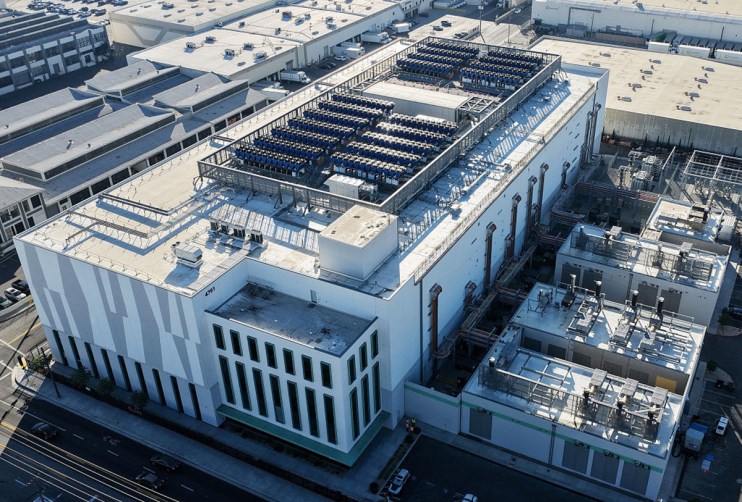
UK data centre emissions forecasts have been revised upward 100-fold. London’s server farms already consume more power than all its households combined. So why did it take this long to do the maths?
Data centres are consuming six per cent of all UK electricity, while government emissions forecasts have been revised upward by a factor of one hundred. London’s 271 data centres are guzzling 69 per cent more power than the capital’s 3.49m homes combined. Welcome to the week the bill finally arrived.
The International Data Center Authority confirmed this week that electricity consumed by data centres has risen 15 per cent worldwide in just two years, as annual global investment in the sector approaches $1 trillion.
In the UK and US, consumption has now hit six per cent of national electricity – well above the global average of two per cent, and most crucially, well above the threshold the IDCA identifies as the point at which “significant community and political pushback starts to occur.” We are, in other words, there.
The UK’s rewritten emissions forecast
Three weeks ago, the Department for Science, Innovation and Technology (DSIT) revised its forecast for greenhouse gas emissions from AI data centres. Not by 10 per cent, not by double, but by approximately 100 times.
Last year, annual emissions were projected at 0.025m tonnes of CO2, and the new figure now sits at least 34m tonnes over the decade to 2035.
DSIT attributed the change to “routine review”, but one is tempted to suggest that discovering a 100-fold error in your own projections is rather less routine than the phrase implies.
Carbon Brief had been warning for a month that the original figures were fanciful, with its analysis recently exposing that even if gas-fired electricity accounted for just five per cent of data centre supply, emissions would still be more than ten times higher than the government’s top estimate.
If expansion reaches the full 20GW of projects that energy regulator Ofgem says have achieved financial commitment, the figure could hit 70 million tonnes, which is roughly Sweden’s entire annual emissions, and nearly 500 times the government’s upper-end projection.
Tim Squirrell, head of strategy at Foxglove called the original estimates “nonsense magic beans thinking that you can have massive data centre growth without a corresponding increase in new polluting carbon emissions”.
Old technology in charge of running AI
There is, buried in the numbers, an efficiency problem that is more tractable than the political failures.
Patrick Smith, field chief tech officer at Everpure, pointed out that around 80 per cent of all data is stored on hard disk drives 0 technology that is roughly 70 years old and emphatically not designed for modern AI workloads.
Transitioning UK data centres to flash storage could save an estimated four to five terawatt hours annually and £14–17m per year in energy costs.
Karim Abou Zahab at HPE added that AI accounted for just 15 per cent of data centre energy use in 2024. The other 85 per cent came from general compute and legacy systems, including what the IDCA delicately calls “zombie services”, like running apps nobody uses that were simply never switched off.
Meanwhile, research published this week by Tokamak Energy found that replacing copper infrastructure with high-temperature superconductors could cut data centre power losses by up to 90 per cent, and reduce copper use by 98 per cent.
What comes next?
An unchecked AI boom means higher energy bills, more stress on water supplies and a new lifeline for fossil fuels.
Global Action Plan found that 84 per cent of proposed UK data centres sit in areas the Environment Agency classifies as water stressed.
OpenAI, for its part, put its Stargate UK data centre project on hold this year, citing high energy costs and regulatory uncertainty.
Smith argues the solution starts with proper standards, suggesting “terabytes per watt” efficiency metrics as a regulatory requirement, forcing operators to modernise rather than simply expand.
“Digital expansion should not be at the expense of homes, hospitals or schools,” he added. “Future growth must be matched with equally ambitious efficiency measures.”
That seems a reasonable ask. What is less reasonable is a planning regime that apparently required years of campaigning, a Carbon Brief investigation, and a 100-fold correction to a government document before the question was taken seriously.