Investing in space tech is the new frontier

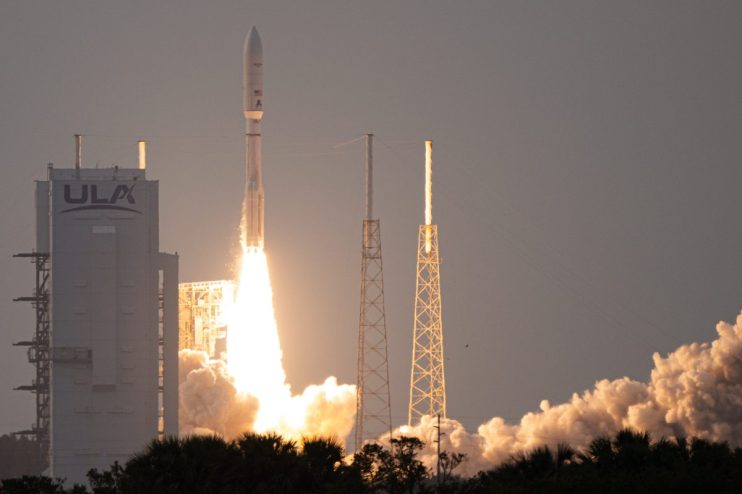
After SpaceX, more investors are looking to the stars. Maisie Grice talks to the co-founder of Seraphim Space Investment Trust about investing’s final frontier
Twelve years ago, investing in space technology was perceived as science fiction, but Mark Boggett saw an opportunity.
While some investment trusts had fund allocation to companies investing in the technology, no one had set up a specialist fund, dedicating an entire portfolio to the sector, until Boggett co-founded Seraphim Space Investment Trust.
“We were the world’s first specialist fund. One of the sort of key features of that first fund was that many of the investors were large space companies, Airbus, SES, Telespazio, Teledyne, these are all giant names in the traditional space industry.
“They recognised that their whole industry was about to go through a period of disruption, and that our fund was going to target those disruptors,” he tells City AM.
Since then the industry has catapulted into the mainstream, bolstered by increasing NASA missions and the attractiveness of Space X’s hotly anticipated IPO. The industry is now estimated to be worth a stratospheric $626bn (£460.1bn).
Seraphim shares have jumped more than 300 per cent the past year, propelling the stock from a relative minnow to a FTSE 250 contender.
Seraphim is also capitalising on the industry’s shine, but instead of offering investment options beyond orbit, the London-listed investment trust is looking to Earth to boost its capital.
Capital raises and unicorns
The industry’s momentum has been transformative for the fund. After years of trading at a persistent net asset value discount, it transitioned into a premium in 2026, hitting roughly 60 per cent as of May.
The trust’s share price has also rocketed 93.3 per cent since January, trading at 245.5p. The bump in share price also cemented its place as one of the standout performers of the FTSE all-share index, while in February it was identified as the third-stronger performing UK listed investment trusts.
Meanwhile, the trust boasts $550m in assets under management and across Seraphim’s three vehicles, invests in 45 companies.
Boggett noted that the trust has also produced nine $1bn ‘unicorns’, with its most successful, AST Space Mobile, now valued at around $30bn, and five IPOs – with another taking place this week.
The successes and growing interest from investors led the company to hold a C-raise last week which raised £137m, marking the largest UK investment trust fundraise since 2023.
Boggett confirmed that the raise will be deployed into “advanced investment opportunities”, including increasing Seraphim’s stake in successful portfolio businesses and adding further high-performing companies into the trust.
Defence specialist?
Boggett primarily identified the rapid increase in defence spending as the driver for the trust’s portfolio, hailing it the “biggest theme” in space technology investment.
For Seraphim, nine out of 10 of the trust’s top holdings deal with defence and security, representing 70 per cent of its net asset value, with the company benefiting from a number of European countries looking to increase their defence capabilities in a bid to weaken reliance on the US.
Seraphim’s largest holding ICeye, a satellite company which was recently valued at $2.8bn, has been utilised by governments in Denmark, Finland and Poland. As a result, revenue has more than doubled in the last year to roughly $250m.
Meanwhile, signal intelligence company Hawkeye 360, which floated this week on the New York Stock Exchange, was selected by a European Ministry of Defence for an electronic warfare programme valued at up to $75m.
Data centres in space?
Beyond defence, Boggett noted that the sector is at an “inflection point” crediting the work of Elon Musk’s SpaceX in reducing the cost and increasing the frequency of launches in boosting the capabilities and number of satellites in orbit.
“Roll back a few years, there was a launch once a month… we’ve now moved to 27 hours. So what we’ve really entered into is a period where getting access to space is like booking an Easy Jet flight.”
Space X’s development of Falcon 9 reusable rockets has cut launch costs by 95 per cent over the past ten years, with Boggett adding that its new Starship rocket could support the launch of much larger structures, opening the door to potential “mega structures” in space.
“Because of this new launch capability…there are a handful of companies that are already planning on building infrastructure that is going to support data centres and bring energy back to Earth. The satellite industry has completely changed where they’ve now moved to producing these smaller and cheaper satellites the size of a fridge or a microwave,” he tells City AM.
Boggett pointed out that this shift in satellite building creates the possibilities of solar farms, communication towers and data centres in space, adding that despite defence being the greatest holdings, the trust is prepared for this flip to commercial opportunities.
“This is a multi-trillion dollar investment opportunity that’s here today, and we’re still only 20 per cent of the way through it.” He adds: “There’s still a lot of opportunity just in that alone”.