
Britain needs a Budget for tax certainty

The upcoming Budget should move beyond specific tax adjustments to adopt a broader, more principled reform that aligns with the long-term Industrial Strategy and aims to create a more stable, predictable tax system, says Chris Sanger
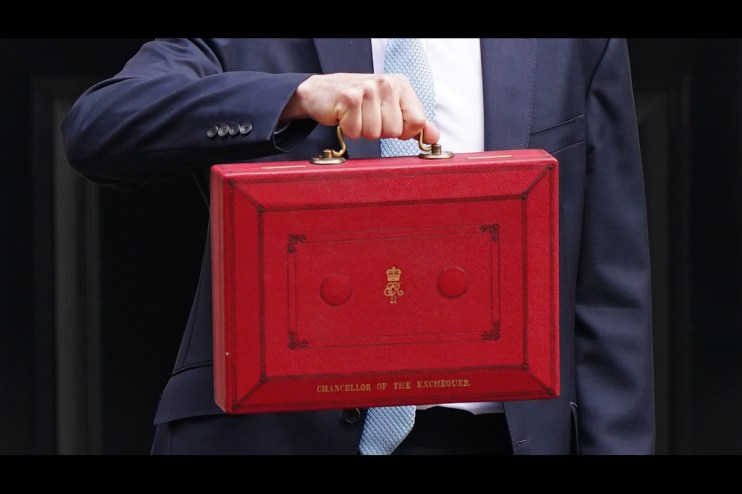
Much of the speculation surrounding the contents of the Chancellor’s red box on 26 November remains firmly fixed on which measures will make the cut – whether sweeping tax changes, more targeted adjustments, or a combination.
Determining the precise blend of tax changes and spending cuts needed to meet fiscal requirements is an unenviable task, and each Budget is inevitably followed by assessments of how these decisions have created “winners and losers”.
However, this Budget presents an opportunity to go beyond adjustments to specific measures, which are unlikely to reduce the complexity of the UK tax system, and adopt a new approach focused on broader reform. This would drive change that doesn’t just aim to improve the UK’s fiscal position ahead of the next Budget, but creates greater tax stability and helps to achieve long-term economic goals.
It would also align with the government’s Industrial Strategy, which is, after all, a 10-year roadmap. Successfully executing it will require a tax system that consistently accelerates its eight identified growth sectors, rather than tangling them in what some may feel is a complex web of standalone adjustments increasingly stacked on top of each other.
Tax changes do not need to create winners and losers
American hedge-fund manager Ray Dalio’s Principles for Dealing with the Changing World Order: Why Nations Succeed and Fail argues that governments needing to raise revenue should not measure their chosen actions against the status quo, but instead use a baseline against which required revenue is collected evenly across the economy. If this principle was applied to Budget design, the government could first state that it needed to raise, say, £20bn – roughly two per cent of total UK tax receipts – and then increase all tax rates uniformly. So, for example, the basic rate of Income Tax would increase by two per cent of 20 per cent, to 20.4 per cent.
Only once the money had been raised would the Chancellor apply policy priorities that effect various taxpayer demographics, whether that’s businesses or different salary brackets.
Based on the Industrial Strategy, the Chancellor might temper revenue-raising by prioritising longer-term goals and supporting growth in the Strategy’s key sectors, such as through lowering a tax rate, raising the Research and Development Expenditure Credit, or extending the band of reduced capital gains tax for business assets disposals.
This approach would also bring greater predictability, reducing the traditional obsession with immediate winners and losers and ensuring any relative change is driven by the core principles of the Government.
So, what structural changes to the tax system could be applied?
One option could involve changing the £12,570 Income Tax personal allowance from an allowance to a tax credit. This would mean that nobody paid the first, say, £2,600 of tax that they owed, increasing the benefit for those in the basic rate band, such as those on median earnings. It would also remove one of the anomalies of the current system, the so-called “tax trap” – the 60 per cent band applying to those earning from £100,000 to £125,140.
A tax system for predictability and attracting investment
Targeting a fit-for-purpose tax system would alleviate much of the typical pre-Budget uncertainty surrounding which taxes could go up or down.
This government has already demonstrated its desire for tax predictability, not least by sticking to its pre-election commitment to hold a single annual Budget in the final two weeks of November. And, with technology now being used to deliver so much more of our tax system, rates that vary with the changing needs of the economy seem much easier to deliver.
This could give rise to far greater certainty, supercharge the Industrial Strategy, and help keep the UK attractive and competitive in an increasingly turbulent and unpredictable global economy.
Chris Sanger is UK tax policy leader at EY