‘Bond market meltdown’: UK borrowing costs highest since 1998 as Starmer fights for survival
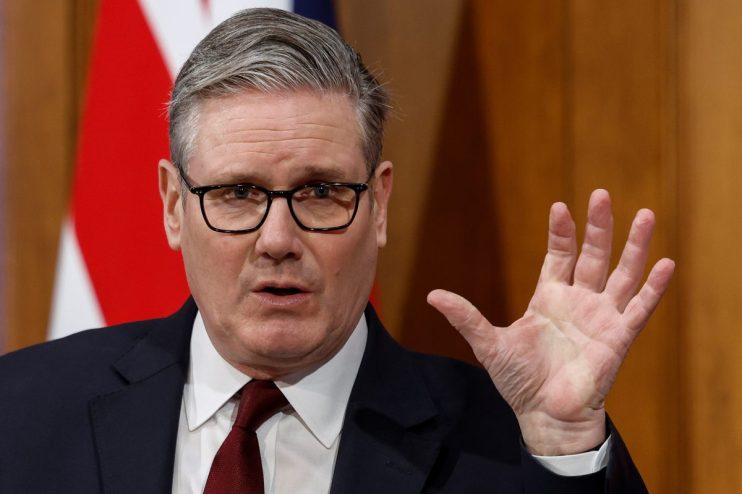
Warnings of a “bond market meltdown” flashed through the City on Tuesday after government borrowing costs soared as pressure mounted on Sir Keir Starmer’s future in Downing Street.
For weeks, City investors have been on high alert as fears mounted that a mass rebellion would be triggered after devastating local election results.
Traders fear the worst scenarios may be coming to pass as gilt yields spiked on Tuesday morning, with 30-year gilt yield surging as much as 13 basis points to a fresh 28-year high above 5.8 per cent.
The 10-year yield also rose ten basis points before dropping slightly as some Cabinet ministers defended Starmer.
Pressure on the bond market has also intensified this week following the latest hopes of peace in the Middle East fading, sending the price of oil higher.
Kathleen Brooks, research director at XTB, said: “There is an upward bias for bond yields anyway, and the UK yields are facing a double whammy of an energy price spike and a political crisis. The risk is that we get a bond market meltdown in the UK in the coming days.”
Brooks added: “In the past, Rachel Reeves has been seen as vital to the stability of the UK’s bond market because she introduced the ‘iron clad fiscal rules’ to bring down the UK’s debt levels and finance day-to-day spending with tax take.”
Starmer pressure puts question on Reeves
The Chancellor pulled out of an event in the City of London this morning where she was expected to be interviewed by the Lady Mayor. Treasury minister Lucy Rigby is understood to be taking her place.
A new Oxford Economics report suggested that while short-term gilt yields could ease if a peace deal is brokered, long-term gilt yields would remain high in the event of a Labour leadership contest.
“Even if short-end pressures fade, the long end is likely to remain elevated, causing the curve to steepen,” economists said.
“Term premia could rise further because fiscal slippage looks more likely, either via Prime Minister Keir Starmer’s attempts to regain popularity, or more likely from a successor implementing more costly leftwing economic policies. If Starmer sets out a timetable to stand down, the uncertainty premium will persist.”
This morning, the Prime Minister’s chief secretary and one of his closest allies refused to confirm whether Sir Keir Starmer will be the one leading the Labour Party into the next election, just minutes before markets opened.
Cabinet minister Darren Jones said: “Obviously colleagues are asking the prime minister to consider different options in the future, and as I say, he rightfully is listening to them.
“It would be wrong if he wasn’t listening to them.”
When asked directly whether Starmer will still be in Number 10 come the next election, Jones said: “I’m not going to get ahead of any decision that the Prime Minister may or may not make.”
Jones’ comments mark a major tone shift from Starmer, who has pledged he would not “walk away” and set his sights on a decade of government over the weekend.
Labour left make play for looser fiscal rules
A separate left-wing group of Labour MPs also took aim at the government’s fiscal rules, with a policy paper claiming they “resolved in favour of caution”.
The paper also called on the government to tax wealth more heavily and to reward work.
Peel Hunt economist Kallum Pickering said the bond markets acted an “important check and balance on policy nonsense in the UK” and said investors wanted policies that curtailed inflation and boosted growth.
Another policy paper from a centrist group called for the government to close more tax loopholes and cut national insurance for employees.
Nearly 80 members of the Labour party have now called for Sir Keir Starmer to resign given Labour lost nearly 1,500 councillors across England in local elections.
Home secretary Shabana Mahmood also called for the Prime Minister to set out a timetable for his departure.