IMF: Middle East war risks sparking government debt doom loop

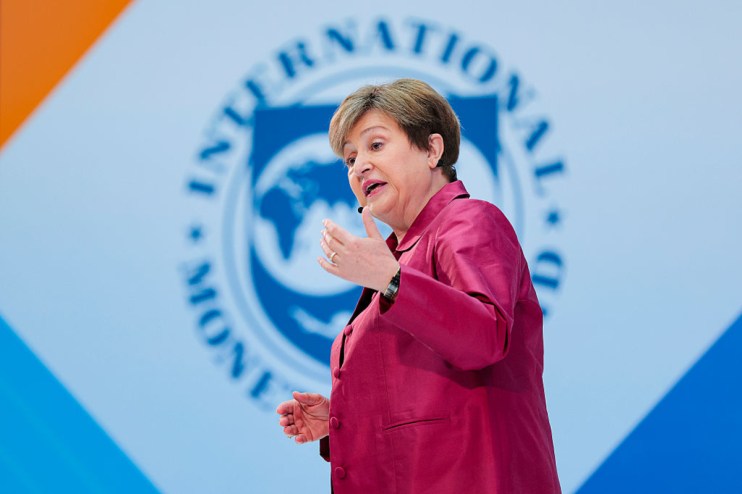
Ballooning levels of government debt have left the global economy dangerously exposed to the aftereffects of the Middle East war, according to the International Monetary Fund (IMF), which warned a fresh wave of inflation could trigger a historic bond crisis.
In its latest Financial Stability Report, the financial body said that countries’ inability to rein in exorbitant borrowing has left them without the fiscal firepower to revive their economies if the war triggers a depression, and could blow up into a full-blown debt doom-loop.
Developed economies’ bond prices – which move inversely to their yields – have already fallen dramatically since the US and Israel launched their first strikes on Iran on 28 February. Traders have been forced to price in the likelihood that the drastically higher oil prices could unleash another round of inflation.
The yield on 10-year gilt – the benchmark for the UK’s long-term capacity to borrow – has climbed more than half a per cent to its highest rate level since the 2008 global financial crisis.
Investors have also dumped the United States’ 10-year Treasury despite its traditional role as safe haven during times of financial stress, with the security’s climbing some 0.4 per cent before ceasefire talks were announced.
Authors of the IMF paper warned that sky-high debt to gross domestic product (GDP) ratios in developed economies has left public finances highly vulnerable to the kind of sharp movements seen during the regional conflict.
Government debt a bigger concern for IMF than private credit
Governments’ troubles will be compounded by their recent preference for borrowing over shorter time horizons, they added, leaving them more exposed to sudden changes the cost of servicing their debt when they re-issue – or rollover – pre-existing borrowing.
“High debt levels and greater rollover risks in core sovereign bond markets could accelerate the rise in bond yields,” the paper said, “while greater volatility in bond markets could tighten funding markets and revive the sovereign–bank nexus.”
The sovereign-bank nexus – commonly referred to as a debt doom loop – occurs when routs in government debt spill into a country’s commercial banking system, restricting their capacity to lend, in turn worsening the crisis affecting government bonds.
The biannual study warned the risks teetering bond markets pose to the global economy outweigh any systemic threat from a private credit downturn. The opaque lending industry – known also as shadow banks – has preoccupied global financial watchdogs in recent months, after several high-profile players were hit by a wave of redemption requests form investors.
IMF researchers listed private credit as a “less urgent” concern, adding: “The most problematic structures, such as retail and semiliquid funds, are still a moderate share of the market, and sizeable investments in artificial intelligence that could raise debt levels and interconnectedness in the financial system.”