Rachel Reeves battled Scott Bessent over Iran war

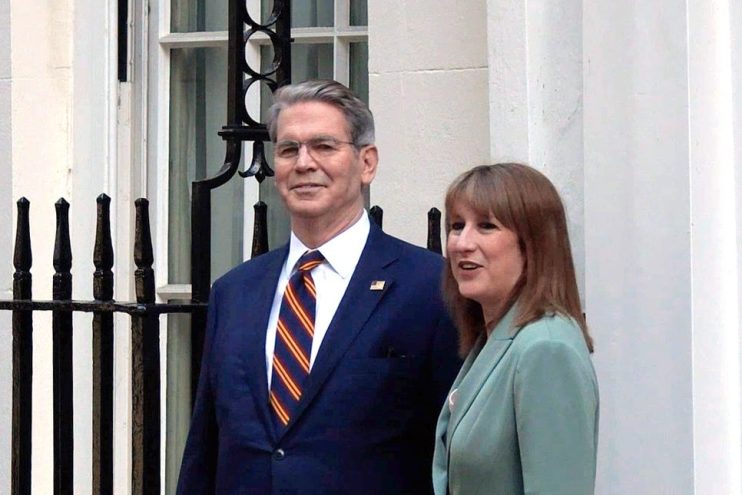
Chancellor Rachel Reeves sparred with Donald Trump’s Treasury secretary Scott Bessent over the US’s attacks on Iran, it has been reported.
During her stay in Washington DC for meetings at the International Monetary Fund last month, Reeves hit out at the Trump official for “how he had spoken to her.”
The two sparred over the Iran war, with Bessent telling his British counterpart that the US had made the world safer by launching attacks with Israel on Iran.
According to a report in the Financial Times, Reeves told Bessent that the Iran war lacked clear objectives in what may have been a clearer line than Sir Keir Starmer’s warning that he did not support “regime change from the skies”.
The UK government’s current position holds that pushing for de-escalation of the conflict in the Middle East was the “best economic policy” to protect UK growth and inflation.
Those diplomatic efforts appear to have fallen flat as the US and Iran once again exchanged fire across the Strait of Hormuz, shattering a ceasefire agreement that had boosted markets.
On Tuesday, the Brent crude oil price sat at around $112 per barrel, more than 50 per cent higher than the level seen in February before war erupted.
Economists at the Bank of England said, in the worst case scenario of a longer war, inflation could exceed six per cent while interest rates would have to jump back to 5.25 per cent, leaving the UK economy more exposed to a recession.
Reeves is ‘very frustrated’
Reeves has been one of the most outspoken critics of President Trump’s war. She publicly said she was “very frustrated and angry” that the US went to war “without a clear idea of what they were trying to achieve”.
Labour strategists are also determined to curry favour with voters ahead of crucial local elections, with polling suggesting that the government’s stance on the war has been broadly popular compared to approaches taken by Reform UK and the Conservatives.
The Financial Times reported that both she and Bessent had spoken again since their dispute.
But the brawl in Washington DC highlights fraying relations between the US and the UK, putting extensive security arrangements and deep economic ties at jeopardy.
Analysts have warned that the UK faces greater economic risks from the war than other advanced economies.
Both the IMF and OECD downgraded UK growth forecasts by more than any other G7 nation as a result of the war.
Researchers at Allianz and Goldman Sachs said the UK was more exposed to jet fuel shortages than other European countries, which would damage the all-important aviation and tourism sectors.