GDP: UK faces ‘most dismal decade for growth in 100 years’

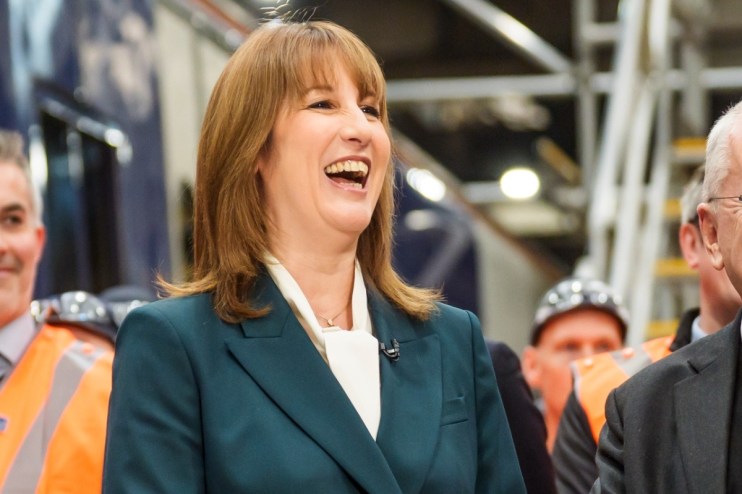
The UK economy had a minor expansion in the fourth quarter of 2025 coming a touch below expectations as an expected boost from the services sector failed to come to fruition.
Fresh figures from the Office for National Statistics (ONS) showed the economy expanded a sluggish 0.1 per cent in three months to December 2025.
A survey of City economists by Bloomberg had projected 0.2 per cent growth for the fourth-quarter.
This came as the services sector, which is often viewed as the engine of the economy due to its hefty contribution of over 80 per cent to GDP, had no growth in the period.
Production output expanded 1.2 per cent whilst construction shrank 2.1 per cent.
“The economy continued to grow slowly in the last three months of the year, with the growth rate unchanged from the previous quarter,” Liz McKeown, director of economic statistics at the ONS, said.
“The often-dominant services sector showed no growth, with the main driver instead coming from manufacturing.”
McKeown added construction registered its worst performance in over four years.
The Chancellor was also handed another major blow in the monthly data with November’s growth revised down to 0.2 per cent, from the initial estimate of 0.3 per cent. The economy’s 0.1 per cent contraction in October was maintained.
In December – the first month after Reeves’ Budget – the economy expanded 0.1 per cent.
Andrew Sentance, a former policymaker at the Bank of England, said the UK was on pace for “the most dismal decade for growth in 100 years”.
“A long list of data revisions from the ONS has revealed the UK economy barely kept its head above water in the final quarter of last year,” said Lindsay James, investment strategist at Quilter.
“We should now be reaching a place where peak uncertainty is behind us, and businesses are better able to plan for the post budget and post trade deal world. However, the well flagged leadership challenge – which headlines would have us believe is fast becoming a case of when rather than if – risks derailing that.”
Growth for 2025 came in at 1.3 per cent, undershooting the 1.5 per cent projected by the Office for Budget Responsibility (OBR) and 1.4 per cent from the International Monetary Fund.
Budget bounce fails to leap into action
An uptick in activity was pencilled in by economists after countless surveys in the final quarter suggested businesses had put their investment plans on hold until uncertainty around the public finances was quelled.
Reeves was expected to be facing a drastic black hole after a productivity downgrade. But the Office for Budget Responsibility’s economic forecast would later show a surge in tax receipts – due largely to inflation – more than covered the £16bn downgrade.
Still, Reeves raised taxes to the tune of £26bn in the Budget, though businesses were able to curb some of their worst fears.
The removal of some fiscal uncertainty was tipped by economists to have led to an uplift in activity after the November Budget.
An Institute of Directors (IoD) poll ahead of the Budget showed private sector optimism had plunged to the lowest level since the industry body started collecting data a decade ago as tax speculation ramped up.
Reacting to the new figures, shadow Chancellor Mel Stride said: “These disappointing statistics show a Downing Street and a Treasury that have taken their eye off the ball.
“Wes Streeting is right to say Labour have ‘no growth strategy’. They are distracted by scandals of their own making as Keir Starmer’s authority crumbles.”
Chancellor Rachel Reeves said: “Thanks to the choices we have made, we’ve seen six interest rate cuts since the election, inflation falling faster than predicted and ours is the fastest growing G7 economy in Europe.
“The Government has the right economic plan to build a stronger and more secure economy, cutting the cost of living, cutting the national debt and creating the conditions for growth and investment in every part of the country.”
Growth’s bigger picture glooms
Economists have sounded the alarm on a late-year growth spurt with Oxford Economics pointing out that any uplift would be “payback” for declines in output over previous months.
“This appears to be noisy data rather than there being any strong underlying narrative,” Oxford Economics UK economists Andrew Goodwin and Edward Allenby said.
The Bank of England also handed Reeves a blow during the Monetary Policy Committee’s latest meeting after the MPC cut its growth forecast for 2026 to 0.9 per cent from 1.2 per cent.
This also came alongside a revised growth estimate for 2025 of 1.4 per cent, from the previous 1.5 per cent.
Simon French, chief economist at Panmure Liberum, said: “2026 won’t be a vintage year for UK economic performance by historical standards.
“The composition of economic growth remains overly reliant on public sector spending, and housing wealth.”