Ocado shares spike as grocer boosted by £750m M&S joint venture gain

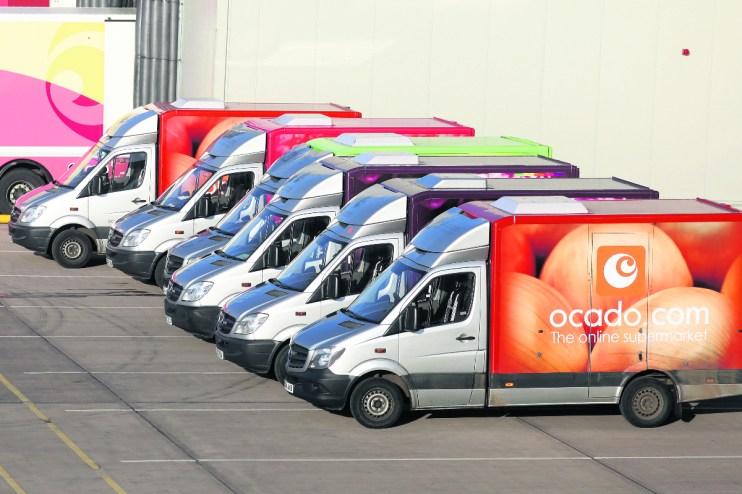
Online grocer Ocado has reported significant growth in the first half of 2025, while stating its major goal is to turn cash-flow positive next year.
Its share price spiked more than 13 per cent in early trades.
Ocado told markets this morning that revenue rose 13.2 per cent to £674m, while earnings before interest, tax, depreciation and amortisation (EBITDA) rose 76.4 per cent to £91.8m.
The group has also reported a statutory profit of £611.8m thanks to a £750m accounting boost from its joint venture with Marks and Spencer.
This was a one-off item relating to the valuation of the group’s stake in the Ocado Retail joint venture upon deconsolidation i.e. breaking the venture up into separate parts.
The venture, which began five years ago, has been marred by trouble, with M&S chairman Archie Norman saying he was “not happy” with the joint venture’s financial performance and Ocado threatening legal action over payments related to the venture.
Ocado has now transferred responsibility for the reporting of Ocado Retail to M&S, but it has continues to retain its share in the partnership and accounts for the business in its financial statements rather than reporting Ocado Retail’s results.
The delayed payment from M&S, related to missed earnings targets by Ocado, is still under negotiation.
Ocado boomed during the pandemic thanks to a rush of shoppers looking for alternatives to in-store grocers, but struggled to progress post-pandemic as demand dropped off.
It also now faces competition from supermarket’s own delivery services, which became rapidly more efficient and developed during Covid.
Ocado’s ‘core priority’ to turn cash flow positive
Elsewhere, Ocado reported 10 per cent revenue growth in its tech solutions arm, with an EBITDA margin 20-25 per cent in FY25.
The business has eight customer fulfillment centres going live in the next three years.
“Our focus remains on turning cash flow positive during FY26, supported by continued growth with our partners and cost discipline across the business,” Tim Steiner, CEO of Ocado Group, said.
Cash outflow in the first half of the year improved by £93m to an outflow of £108m, driven by the improvement in EBITDA and by lower capital expenditure, Ocado said.
“Ocado Group has delivered a strong first half and we have reached important milestones both in our UK business, as well as across our international partnerships.
“In recent months we have gone live in one of the most highly developed online markets, with Lotte in Korea, as well as a market in an early stage of online development with Panda in KSA.
“Meanwhile, Ocado Retail has maintained its position as the fastest-growing grocer in the UK, reflecting strong customer growth and continued market share gains,” Steiner said.
Technology improvements a ‘driving force’ for today’s numbers
“The technology improvements have been a driving force for today’s numbers, and the market reaction offers a clear indicator that investors have hope that this progress will continue,” Lucy Rumbold, equity research analyst at Quilter Cheviot, said.
Mark Crouch, market analyst for eToro, said: “Ocado reported a marked improvement in half-year earnings, a rare moment of relief for investors following a particularly bruising 2024. Management claims the business will be cash flow positive by next year, a target that, while encouraging, comes after several years of missed milestones. The market has learned to treat such guidance with caution.
“Much of Ocado’s appeal has rested on its technology licensing model, but the pace of adoption has been slow, and the returns even slower. The tie-up with M&S continues to offer some operational ballast, yet it doesn’t resolve the broader question of whether Ocado’s core proposition can generate sustained, profitable growth. And until Ocado demonstrates that it can convert technical sophistication into reliable financial performance, investors may be right to remain sceptical.”