Why The Omen is still terrifying as it celebrates its 50th birthday

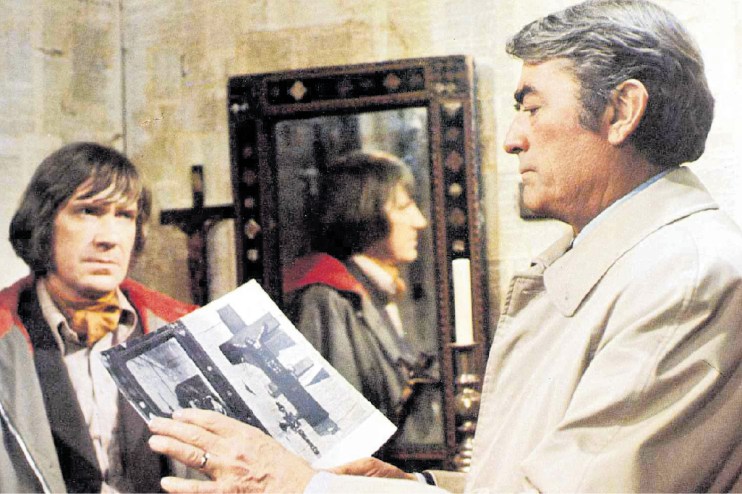
One suspects that, for a lot of people outside the hard core of horror fans, The Omen is one of those films they think they’ve seen and of which they recognise snippets. Some (guilty) will occasionally break into a ropey Gregory Peck impersonation and demand “What do you know about my son?”
The film is a bleak thriller about a stiffly proper American diplomat, played by Peck, who is told his son is literally the offspring of Satan. It is easy for it to become entangled in the collective memory with a wave of cinema releases in the mid-1970s which took their inspiration from the supernatural, and especially from Roman Catholicism.
Their quality varied, but some have become standards of the horror canon: think of Don’t Look Now and The Exorcist from 1973, To The Devil A Daughter and Carrie, both released the same year as The Omen, The Sentinel (1977) or even John Carpenter’s searing suburban reinvention of the slasher movie, Halloween (1978).
The Omen received a mixed reception on release in June 1976. The New York Times judged it “dreadfully silly” but “reasonably well-paced”, while NBC’s Gene Shalit dismissed it as “a piece of junk”. Perhaps the most acute but uncomfortable verdict came from Tom Shales in The Washington Post, who acknowledged it as “probably the classiest Exorcist copy yet”.
I think the film has stood up reasonably well to the passage of time. It isn’t easy for a film produced by our society of 50 years ago, given how much we have all changed in our knowledge of the world, culture boundaries and approach to cinema, to retain the ability to unsettle.
That is the operative word: films can shock or frighten or disgust without much effort, and we soon cast off these transient emotional reactions. Much deeper and more powerful, and much more elusive, is the capacity to make us feel instinctively, viscerally, in that place far beyond conscious reason, that something is not right.
The Omen eschews a happy ending
It helps that The Omen eschews a happy ending. Spoiler alert, but Peck’s Ambassador Robert Thorn is warned by an eccentric priest that his son Damien is the child of the Devil, that his wife is pregnant and Damien will kill him, his wife and the unborn child. The priest is killed, as is Thorn’s wife, and finally Thorn himself is shot dead by police as he attempts to exorcise his son on the altar of a cathedral. The film closes with the Thorns’ funeral; Damien, standing with the President of the United States and the First Lady, turns to the camera and smiles horribly. This is not an upbeat film.
Part of the bone-deep chill, at least for a British audience, comes, I think, from the familiar, almost homely settings. Thorn is the US Ambassador to Britain for the central part of the film, and most of it was shot in London and the Home Counties, as well as Shepperton Studios, in the winter of 1975-76. It was a mild and dry season but punctuated by one or two unexpected and savage gales. You draw your own conclusions.
British actors have always been good at giving eerie performances, and The Omen has some stalwarts at the top of their game
The combination of the ordinary and the horrifying frightens us because it threatens assumptions about safety and refuge. Thorn meets Father Brennan (Patrick Troughton) in Bishops Park in Fulham, and the priest is impaled by a falling lightning conductor outside All Saints’ Church, just by Putney Bridge. Thorn’s wife, played by Lee Remick, is thrown to her death at Northwick Park Hospital in Harrow and Thorn is killed at St Peter’s Church in Staines. Comfortable English scenes, but suddenly heavy with menace when director Richard Donner overlays the stiflingly supernatural.
It also helps that British actors have always been good at giving eerie performances, and The Omen has some stalwarts at the top of their game. Patrick Troughton, having cast off Doctor Who, is an unnerving crank whom you can’t quite dismiss; Billie Whitelaw, as the evil housekeeper Mrs Baylock, maintains the thinnest veneer of normality over seething and murderous menace; the outstanding David Warner, as nosy photographer Keith Jennings, guides us from curious scepticism to dreadful realisation, and is decapitated by a sheet of glass.
The Omen is not a perfect film nor without flaws, and it is somehow less than the sum of its parts. But those parts, examined carefully, are like flashes of a nightmare you won’t easily forget. It’s just entertainment, of course. But remember what Baudelaire said: the greatest trick the Devil ever pulled was convincing us he doesn’t exist.