UK under-16s social media ban could land before year end

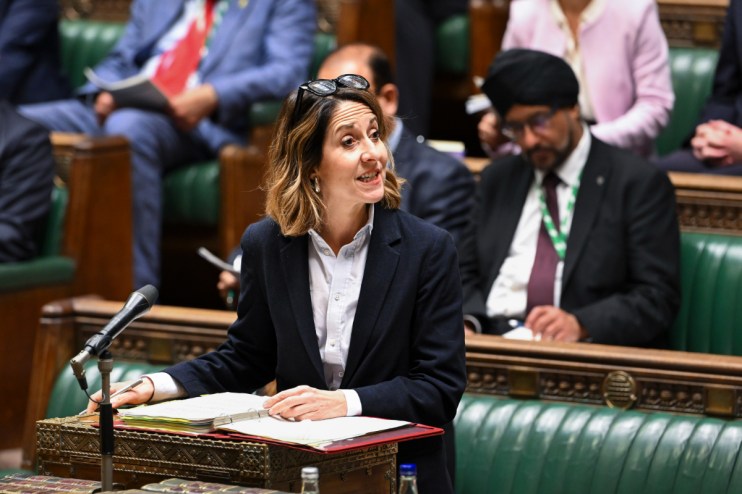
Sir Keir Starmer is considering banning under-16s from social media within months, as ministers crack down on children’s online activity following a deepfake scandal on Elon Musk’s Grok.
The prime minister has insisted that “no platform gets a free pass” on child safety, with a formal consultation on tougher social media protections launching in March.
Tech secretary Liz Kendall has confirmed proposals will be brought forward before the summer, adding she does not want to wait ‘years’ to act.
Alongside a prohibition for under-16s, the government is considering restrictions on features such as ‘infinite scrolling’, as well as limits on children interacting with AI chatbots and measures to curb the use of virtual private networks (VPNs) to bypass safeguards.
Starmer said: “Technology is moving really fast, and the law has got to keep up. With my government, Britain will be a leader, not a follower, when it comes to online safety.”
Would the Australian model work here?
While no final decision has been taken, ministers are closely watching Australia, which began enforcing a ban on social media accounts for under-16s in December.
The law requires major platforms including TikTok, YouTube, Instagram, Facebook and X to prevent children from holding accounts, or face fines of up to $49.5m (£26.5m).
The move was expected to affect over one million Australian accounts, and platforms have relied on a mix of age-estimation tech and identity verification tools to comply.
The move has been criticised for encouraging young users to lie about their age, pushing them to less regulated alternatives. But the policy shifts responsibility firmly onto tech giants.
In the UK, more than 60 Labour MPs backed an open letter earlier this year urging Starmer to introduce a similar ban, warning successive governments had done “too little to protect young people from unregulated, addictive social media platforms”.
Lord Nash, a Conservative peer campaigning for tighter controls, said the government should “raise the age limit now”, rather than delay further.
Meanwhile, shadow education secretary Laura Trott described the latest announcement as “more smoke and mirrors” unless it results in firm action.
Legislative fast track
Ministers are preparing to use the Children’s Wellbeing and Schools Bill to give themselves powers to act quickly once the consultation is over.
Amendments to the Crime and Policing Bill will also look to close loopholes in the Online Safety Act, so that AI chatbots are clearly covered by its duties.
This sharpened focus on child safety follows controversy over Elon Musk’s Grok chatbot, embedded within X, which was used to generate non-consensual, explicit images of women and girls.
Ofcom launched an investigation, and ministers promised to strengthen legislation targeting AI-generated deepfakes.
Campaign group Jools’ Law has also secured backing for measures that would preserve children’s online data in serious cases.
Limited market impact
Analysts expect the immediate economic effect on markets to be modest.
Daniela Hathorn, senior market analyst at Capital.com, said: “Starmer’s pledge to restrict addictive social media features is likely to have limited – if any – impact on markets. Tech giants like Meta and ByteDance derive only a fraction of their global revenue from the UK market. Any restrictions on UK activity is unlikely to dent earnings.”
She added that markets tend to react more strongly to coordinated global regulation rather than “national tweaks, unless they have a sizeable impact on the economy”.
Elsewhere, Alex Brown, head of TMT at Simmons & Simmons, said the announcement “signals a clear hardening of approach to online safety”, and reflects growing concern that the current regulatory model is struggling to keep pace with generative AI.
“The Online Safety Act was deliberately framed around regulating services rather than technologies” he said. “But rapid developments in generative AI and conversational chatbots are exposing the limits of that model.”
He also noted that Australia, France, Spain and Norway are all pursuing statutory age limits, with similar debates escalating in parts of the US.