The River Thames is London’s largest public space. So why don’t we use it?

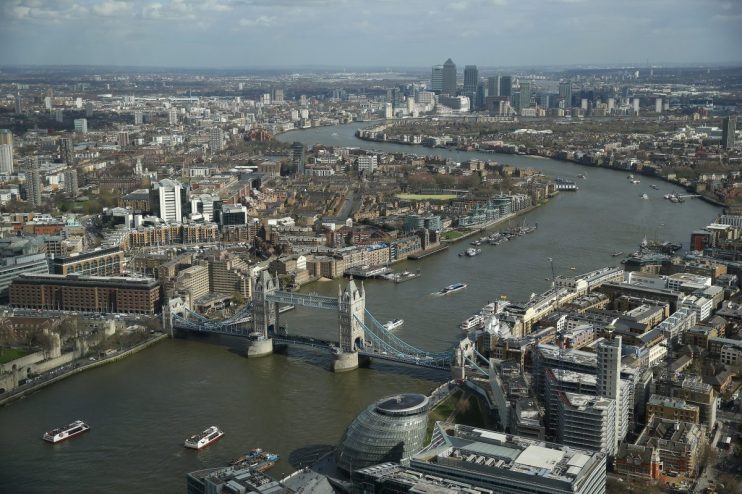
The River Thames is London’s largest public space, so why aren’t we using it? Swimmable Cities co-founder Chris Romer-Lee calls for us to make the river swimmable in today’s Notebook
It’s time to make the Thames swimmable
London’s shiny new super sewer has reduced the impact of Thames combined sewage overflows by 96 per cent, promising to dramatically restore the health of the waterway and giving a huge boost to the riverine ecosystem. But what opportunities does a cleaner Thames offer?
In 2013 a similar question was posed by the Royal Academy of Arts and the Architecture Foundation’s ‘London As It Could Be Now’ Open Call. The practice I co-founded in 2003, Studio Octopi, responded with a vision for a post-Tideway family of swim sites along the central London section of the River Thames.
Some floating, others simpler sheltered and protected swim zones, all dressed in estuarine planting, providing privacy and natural filtration for the pools. Central to the response was offering equitable access to the foreshore and water. The proposition was in direct response to the high flood walls and elevated embankments that physically separate and deter Londoners from any engagement with the lifeblood of the city.
I’m often asked why we need to swim in or on the river – why not just build a lido?
Firstly, there’s the long history of swimming in the Thames. The Baths and Washhouses Act of 1846 brought in new places to bathe, but with the growth of the city and an emphasis on the river as highway for trade, the Thames became increasingly polluted, so much so that by the 1950s it was declared biologically dead. While there is still more to be done to rejuvenate the river’s biodiversity, we are taking our first tentative steps towards regaining access to one of London’s historical pastimes.
Secondly, the river’s historic commercial use masked the fact that it is London’s largest public space – the central section is 7x the size of Hyde Park. Yet how many Londoners actually get to benefit from access to this space? The Port of London Authority is rightly championing leisure activities on the tidal Thames but it doesn’t get close to the ownership that the public has a right too.
Finally, climate change means London is faced with more extreme summer heat. The impact of the heat island effect can already be experienced on warmer days. Is it not time to reconsider our priorities for the coolest place on a hot day – the river?
The hidden cost of public access to water
London is currently blessed with a year round breadth of outdoor swim sites. Lidos, reservoirs, lakes, docks, ponds and of course the rivers all play their part in making London a swimmable city. But look a little deeper and the barriers to participation become clear.
Besides the queues over the summer holidays, the cost of accessing a natural water swim site (dock, reservoir etc) is both a geographic and economic deterrent to so many across our city. For instance, Middle Dock in Canary Wharf offers swimming but at the cost of an annual membership (£20) and each standard swim (£9.50). A family living on the Isle of Dogs should have free or affordable access to either the river or the dock that encompasses them.
Why the GLA can lead in delivering a swimmable London for all
London is inherently swimmable but needs leadership to ensure equitable access to water. Re-elected on a policy of healthy waterways for all, the Mayor of London is ideally placed to unite stakeholders and follow the lead of cities like Paris and New York City. Now is the time to replicate London’s air quality success in its rivers.
The GLA has an imperative to address inactivity in communities, biodiversity and economics all of which can be helped by improving access to London’s waterways. This can only be achieved through knowledge sharing, education and collaboration.
Swimmable Cities, an alliance I co-founded last year, champions safe, clean urban swimmable water. Our Cities Program is already improving policy makers’ decision making along waterfronts with the ambition of increased swimmability.
Beyond advocacy, we’re commissioning research and by 2030 launching floating labs to promote Nature Rights and the Right to Swim. These opportunities offer the GLA a chance to change the perception of the river to a ‘blue’ space for all Londoners.
Our Swimmable Cities Charter sets out goals for access to a city’s rivers, water quality, community engagement and biodiversity. We invite the Mayor to sign the Charter as a commitment to delivering the change the River Thames needs.
Diving into the world of swimmable cities
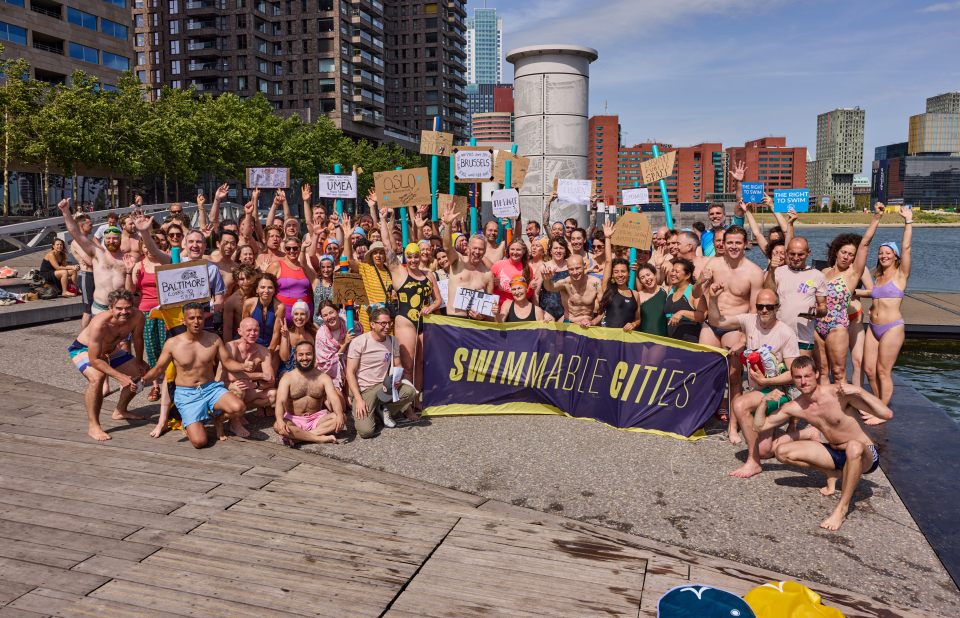
The first Swimmable Cities Summit took place in Rotterdam’s Rijnhaven, a dock connected to the Maas River. It brought together 153 organisations from 83 cities across 30 countries – the world’s first global gathering of the urban swimming movement. Over 200 participants, including British Olympian Toby Robinson and American ultramarathon swimmer Katie Pumphrey, joined an “opening splash” to mark World Bathing Day.
Recommendations for swimming enthusiasts
I’ve got many reading/watching recommendations for swimming enthusiasts. First for film, at the Swimmable Cities Summit in Rotterdam we collaborated with the fantastic World Water Film Festival based in New York City. We showed a collection of films including The Outdoor Swimming Society, Swim Dem Crew and a first screening of Catherine Joy White’s Swim Sistas.
For books, 10 years since publication, this is still the Thames swimmer’s bible: Caitlin Davies’ Downstream: A History and Celebration of Swimming the River Thames.
Although not about where I swim, the Serpentine, Pondlife by Al Alvarez is a tender story about growing old through the seasons at Hampstead Ponds.
Finally, City Water Matters: Cultures, Practices and Entanglements of Urban Water by Sophie Watson is an academic reflection on water in our cities. A must for anyone working with the right to swim or nature rights.
Chris Romer-Lee is co-founder of Swimmable Cities and co-founder of London architecture practice Studio Octopi