The Debate: Should we scrap the ‘table tax’?

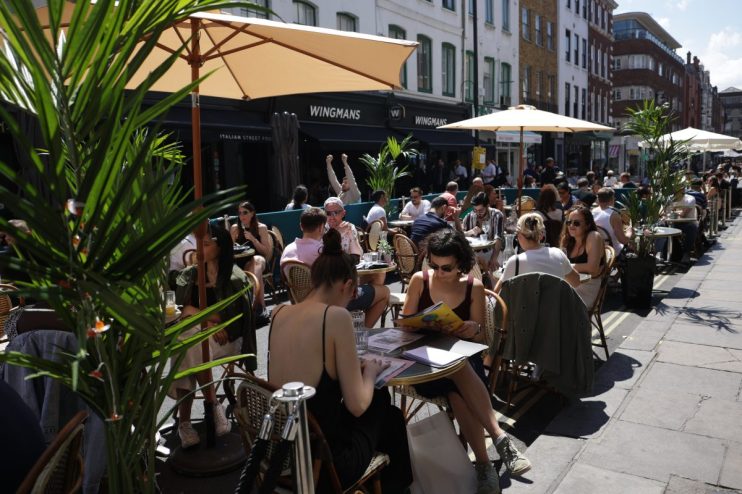
Pavement licenses mean restaurants have to pay to put tables and chairs outside. Is that fair or is it a tax on enterprise? We hear both sides in this week’s Debate
YES: Vibrant town centres are created by lowering the barriers to everyday enterprise
Scrapping the “table tax” would deliver an immediate, nationwide boost to high streets and small businesses.
With margins being squeezed from every direction, charging hospitality businesses hundreds if not thousands of pounds for putting some tables and chairs on the pavement is perverse.
The maximum length and price for pavement licences, or as we call it the table tax, are set in Westminster. Councils are charging for this because they can, not because they need to. Hence, some London borough councils charge £0 while others charge up to £1,400 a year. For small, independent operators especially, this is not a trivial cost. It can be the difference between expanding capacity and standing still.
There is the issue of bureaucracy too. Small business owners don’t have the time to navigate a maze of applications, consultations and arbitrary rules. This is time that should be spent serving customers and helping to grow our economy, not form-filling.
This regulation is the opposite of what high streets need. Vibrant town centres are not created by Whitehall funding pots, but by lowering the barriers to everyday enterprise.
Sitting outside is not just a lifestyle preference, it is an essential tool for turning streets into communities. Outdoor seating is one of the easiest ways to increase footfall, enliven public spaces, and transform high streets into places people want to spend their time and money.
As long as the pavement remains safe and accessible, the hospitality industry is actually doing their community and council a favour by putting tables and chairs outside. This should be encouraged, not licensed.
If ministers are serious about backing businesses and revitalising the high street, scrapping the Table Tax is the fastest win available.
Kitty Thompson is head of campaigns at the Conservative Environment Network
NO: The current system already has the balance right
My view on retaining the ‘table tax’ is simple: this isn’t about burdening hard working businesses in hospitality, it’s about protecting disabled people’s right to move safely, freely and independently through public space.
Back in 2022, while volunteering with Disability Rights UK, I helped collate research showing that 84 per cent of disabled people reported serious street-access problems in their local area, while 60 per cent said those barriers were preventing them from living independently. What might seem like minor inconvenience to some – street furniture, cluttered pavements, blocked routes – can make everyday journeys difficult, unsafe or simply impossible for wheelchair users.
That warning was reinforced in 2023 by Sustrans and Transport for All’s Disabled Citizens’ Inquiry, which found that 41 per cent of disabled people regularly struggle to reach their destination due to inaccessible streets. Outdoor dining was explicitly highlighted as part of the growing problem of pavement clutter.
The current system already gets the balance right. In England, pavement licences are permanent, fast-track and fee-capped, making them workable for businesses, but they still require a clear, unobstructed route along the pavement – typically wide enough for wheelchair users and safe for visually impaired people to navigate – alongside defined safety and accessibility standards.
Crucially, councils have the power to impose conditions, revoke licences and remove non-compliant setups. That oversight is not red tape, it is what ensures public spaces remain usable for everyone and reinforces that accessibility is not optional.
Nick Birko-Dolder is a campaigns consultant
THE VERDICT
With London temperatures set to hit 24 degrees today, the Conservative Environment Network could hardly have chosen a better time to launch their new campaign petitioning for the end of the ‘table tax’ – their name for the fees restaurants have to pay to put tables and chairs outside. Who, after all, could argue against the joy of a spritz in the sunshine? Nonetheless, we must concede there are valid arguments for keeping the current pavement licence system.
Mr Birko-Dolder, for one, is right to raise that pavements have other functions: namely for travelling upon. Putting tables and chairs on them creates obstructions for those wiith disabilities and without. It also, crucially, redeploys public space for private enterprise. Libertarian though we are, should there not be a fee for such conversion? Currently, councils can charge up to £500 for a new license application and £350 for renewals (lasting around two years), which, if we’re honest, feels fairly reasonable. The table tax is a catchy name, but we think hospitality has bigger fish to fry right now.