The cost of living crisis is the fault of the public sector, not billionaires

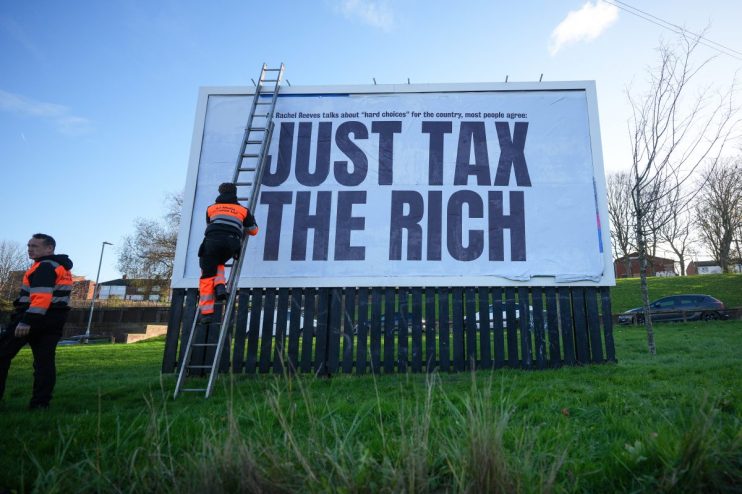
The Green’s newest MP was quick to blame billionaires for the cost of living crisis. She’d be better off directing her attention to the public sector, writes Paul Ormerod
The victorious Green Party candidate in the Gorton and Denton by-election has made much of the so-called cost of living crisis.
In her victory speech, Hannah Spencer proclaimed that “working hard used to get you something… but life has changed. Instead of working for a nice life, we’re working to line the pockets of billionaires”.
It is a beguiling message, particularly to areas such as Gorton and Denton which have large pockets of genuine deprivation. There is a striking similarity to Jeremy Corbyn’s message in the 2017 general election campaign, in which he almost pulled off a surprise victory.
Things did not go so well for Corbyn in 2019, when the electorate had had the opportunity to become more familiar with his policies, some which, they rightly concluded, were simply barmy.
But, nevertheless, life is not easy for substantial numbers of people in the UK. As I pointed out last week, on a per capita basis there has been no growth at all in the economy since the end of 2019. For many of the less skilled, real wages have hardly risen since the financial crisis of the late 2000s.
Yet politicians such as Spencer who see themselves as progressive fail to see the most important reason for the cost of living crisis. The same blindness affects most of the membership of the Labour Party, the Liberal Democrats, the SNP and Plaid Cymru.
The elephant in the room which they cannot spot is the unreformed nature of the public sector.
Public sector has recorded no productivity gains in three decades
According to the Office for National Statistics (ONS), the productivity of the sector is estimated to be similar to what it was in 1997. Over a period of almost 30 years, there have been no overall gains in efficiency in the provision of public services.
There are genuine reasons why productivity growth in the public sector will usually be lower than in the private.
Most public sector activity, for example, consists of the delivery of services. It is harder for services in both private and public sectors to increase efficiency than it is in, say, manufacturing.
And the further away from the market an activity is, the harder it is to measure its productivity. We know the cost of the armed forces, for example, but any estimate of the value of their output will of necessity be rather arbitrary.
Even so, a major sector of the economy has registered no overall gains in efficiency over the course of three decades.
Imagine if productivity could have risen by 10 per cent since 1997. It is not much to ask for: an improvement in inefficiency of one third of one per cent a year.
Then the Chancellor would have around £50bn a year extra to play with. No need for the various taxes on jobs which Rachel Reeves has introduced, no need for freezing income tax thresholds. And still plenty of spare change left over to cut the financial deficit, which would probably mean lower interest rates.
What a difference such things would make to the “cost of living crisis”!
Labour started off on the wrong foot just a few days after the election in July 2024 by giving the train drivers everything they demanded. But no attempt was made to unravel in return at least some of the many restrictive practices on the railways.
But the instinct of many politicians on the left is to defend the public sector at all costs. They should instead see that it is important to demonstrate that public services work well, better in fact than they would if delivered by the private sector.
It is the unreformed public sector which is at the heart of the cost of living “crisis”.
Paul Ormerod is an honorary professor at the Alliance Business School at the University of Manchester