Six Nations in-game ads pave way for football to be split into quarters

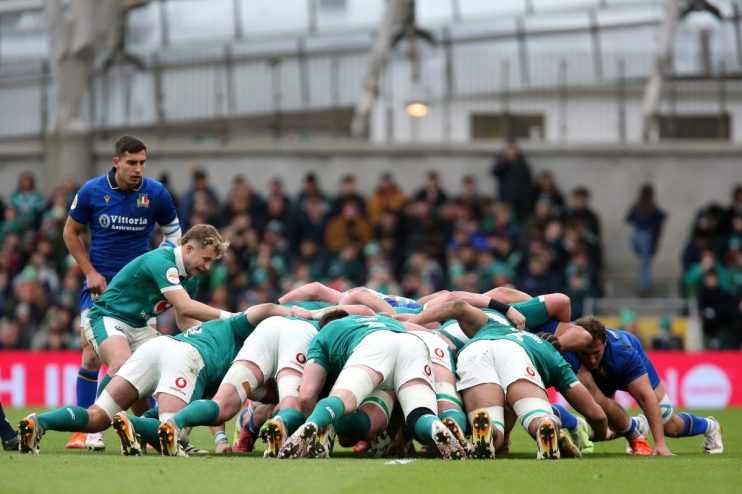
Like many Welsh rugby fans, the highlight of the first round of the Six Nations was the small moment of relief granted by the ad breaks in either half, twenty seconds of respite from giving away penalties, points and accumulating yellow cards.
I’m not sure everyone was as pleased to see them as me. They certainly wouldn’t be if they knew that they are a sign of things to come in sport.
The decision to allow in-game adverts was greeted with a predictable response from rugby’s traditionalists, yet the ads themselves have so far passed without widespread comment.
Big-name brands including Samsung and Virgin have bought the split-screen spots, which have felt a little blink-and-you-miss-it during the pause before a scrum is formed.
At this stage it feels like everyone’s a winner. The broadcasters and the Six Nations have created an extra revenue stream, the TV viewers don’t miss any of the action and the players get a breather. Don’t necessarily expect things to stay this magnanimous.
The very nature of advertising must mean dedicated, more “disruptive” spots are coming – ads which are inspired by, and capitalise on, the moment, rather than just cutdowns of existing advertising campaigns.
In-game ads at the Fifa 2026 World Cup?
Surely Joe Marler will pop up promoting something at scrum time very soon, but of more long-term significance is the pending football World Cup this summer.
Fifa has already announced that there will be “hydration breaks” at the 22-minute mark in both halves of every game during this summer’s tournament. Temperatures in the US and Mexico in particular are expected to often be above 30C so this is a positive move for player welfare.
Although I’m not sure player welfare was a primary consideration when expanding the tournament to 48 teams, a year after a bloated Club World Cup saw the sweltering weather become a big talking point.
These water breaks won’t just see players heading to the touchline for a quick swig and tactical chat. As a TV viewer you probably shouldn’t expect to see the players at all as each break will be three minutes long – even longer than the current two-and-a-half-minute breaks for advertising in the NFL and NBA.
Don’t be fooled by the clock continuing to run and a mandatory three minutes being added to the end of each half. The 104 World Cup matches will effectively be quartered, adding 208 additional advertising opportunities across 624 minutes to the broadcasters who have paid a tidy sum to own the rights.
Of course, fans haven’t been consulted about this change. And does it really matter if you’re watching a match on TV at 11pm on the other side of the world? The concern is that the genie is now out of the water bottle.
Six Nations leading the way?
Would Sky, TNT, Amazon or any of the others collectively paying billions to broadcast English and European football turn down the opportunity to add minutes of in-match ads? I very much doubt it.
With VAR, longer injury assessments and three subs breaks per side, club football is broken up more than it’s ever been. Don’t be surprised if football’s administrators are keeping an eye on Six Nations rugby. Well, 40 seconds of it anyway.
For rugby union itself, a sport with many financial challenges, embracing this commercialisation and becoming a “quartered” sport could make sense. Even with changes to quicken the game up, stoppages remain frequent and there are 16 substitutes entering the fray from about 50 minutes onward. And the venue of the 2031 and 2033 the men’s and women’s World Cups? The USA.
Fortunately for those of us in good old Blighty, we are protected from any in-game advertising boom by Auntie Beeb. During the BBC’s broadcast of Wales v France on Sunday there was sadly no 20-second break from the latest crushing of Cymru.
Similarly, England football fans won’t have to suffer ads during England’s World Cup group game with Ghana on the BBC. Although adverts may be preferable to Alan Shearer ranting for three minutes about the Three Lions’ inability to break down the west Africans’ low block.
Matthew Fletcher-Jones is a Sports Communications Consultant.