Rocco Forte: Inheritance tax grab has endangered my family firm

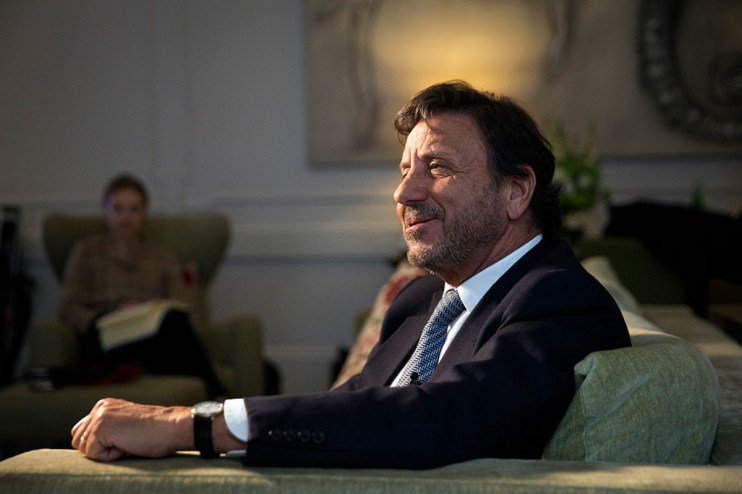
With luxury outposts across Europe, and plans to expand to the Gulf, Rocco Forte Hotels has become one of Britain’s most successful hospitality exports. But after being hit by a wave of damaging policies – including a potentially existential inheritance tax crackdown – he tells Ali Lyon, he is more disillusioned with Britain now, than in the blackout-ridden 1970s.
It was while he was watching a high-stakes rugby match between Wales and Italy, in which ‘the Azzurri’ came up short against an out-of-form Welsh side, that Sir Rocco Forte realised the depths of the UK’s PR problem on the international stage.
Sitting at home with the game on television in his adopted country, the hotelier – and avid rugby fan – watched as the camera panned to Welsh rugby patron Prince William cheering his team onto their first Six Nations victory in three years.
“I remember the Italian commentator saying, ‘And there’s Prince of Wales,’” Forte recalls in his cut-glass English sotto voce. “‘He’s here trying to re-establish the Royal Family after the Prince Andrew scandal.'”
The hospitality tycoon, and driving force behind his £1.4bn eponymous business empire Rocco Forte Hotels, concedes that the episode is “somewhat ridiculous”. But over the course of an hour-long conversation with City AM, it is one of countless incarnations he lists lamenting the fading soft power of the UK, a country where his father, Charles, and later he made Forte one of the most renowned names in all of hospitality.
“External publicity of the UK is very poor,” he says. “I talk to Italians, Germans and our many American customers who come through the hotels, and their opinion of the UK is very down. It’s very down as a country.”
Rocco Forte Hotels’ push into Italy
In Forte’s view, the mood in and around the UK hasn’t been this low since the 1970s, when, faced with double-digit inflation and the threat of electricity blackouts, the government was forced to announce a three-day working week. The upshot of which is that Rocco Forte Hotels, the family-run hotel group that he and his sister founded in 1997 after their father’s even larger hospitality empire was sold to ITV-predecessor Granada, has over the course of several years, gradually been loosening ties with the UK.
First, between 2007 and 2016, the pair sold their only Welsh hotel to Principal Hotel Group before also offloading Manchester’s first-ever five-star hotel. Then, after building one of the most successful hotel groups in modern British history, the family sold a 49 per cent stake to Saudi Arabia’s Public Investment Fund (PIF), in a 2023 deal that valued the group at £1.4bn. Shortly after that, Forte himself moved to Italy.
The London-headquartered group still counts Brown’s, one of the UK’s oldest luxury hotels, and the Balmoral in Edinburgh among its sprawling portfolio of businesses. But as he rattles through the various exotic locations where the chain plans to establish a presence next – “Naples, Sardinia on the Costa Smeralda, and Noto” – the company’s home market is conspicuously absent.
Some of this, Forte says, is the result of factors outside of anyone’s control. Unlike the embarrassment of sunkissed and salubrious hotel locations in Italy – and one presumes other Mediterranean escapes like Spain and France – the UK only boasts two “truly international cities”; and in Brown’s and the Balmoral, Rocco Forte Hotels already has storied bolt-holes in both of them.
The UK is returning to the 1970s
But much of it is down to decades of what the hotelier sees as myopic policymaking with an outwardly anti-business bent, particularly as it pertains to the country’s embattled hospitality sector.
The Conservatives’ misguided move to apply VAT on tourists’ shopping has been a cause against which Forte – a longstanding donor to the party –has passionately railed for several years. He has also, in the past, given withering assessments of the party of Thatcher’s bungled attempts at growing the economy after the financial crisis. But in his mind, the scale of their mismanagement pales in comparison when next to the damage that Keir Starmer and his Chancellor Rachel Reeves have wrought on the country since being swept into Downing Street on a wave of disillusion with their Tory predecessors.
“We’re returning, effectively, to the closed shop era of the 70s,” he says. “It constantly talks about growth, and then everything it does destroys growth – it’s almost shameful.”
Of particular concern is the barrage of employment reforms that has hit – or are due to hit – employers like him before the end of the parliament. The party’s flagship workers’ rights overhaul is a “terrifying” development that will leave the unions across the country much more powerful and which “no one seems to be focusing much attention on”.
Its ill-fated one-two-punch to reduce employer national insurance thresholds, simultaneous to its above-inflation hike to minimum wage, was an “attack on employment”. And more recently the government’s business rates overhaul has left him with an overwhelming sense that “everything is happening at once”.
In the latter’s case, the shake-up, which sparked a monumental sector-wide backlash culminating in thousands of landlords banning Labour MPs from their pubs, will result in a multibillion-pound uplift in property tax for Balmoral and Brown’s. Brown’s, the celebrity Mayfair haunt that has counted Princess Diana and Mahatma Gandhi and Rudyard Kipling as patrons, will pay £1.5m more annually in business rates by the time the changes come fully into force in 2028.
“All the extra costs have been tied to business all at the same time,” he says, dejectedly. “And the sort of cumulative effect is enormous.”
‘No way’ Rocco Forte can survive inheritance tax grab
But while the squeeze being placed on employers and hospitality firms like his across the country has left the dyed-in-the-wool Thatcherite disillusioned with his native UK, there is one change that poses a positively existential threat to the 30-year-old family business: the government’s decision to end a decades-old carve-out from inheritance tax granted to family firms.
The move – due to come into force next month – has provoked uproar from some of the UK’s most feted entrepreneurs, and sparked warnings that much-loved businesses will have to be sold or broken up once their founder dies.
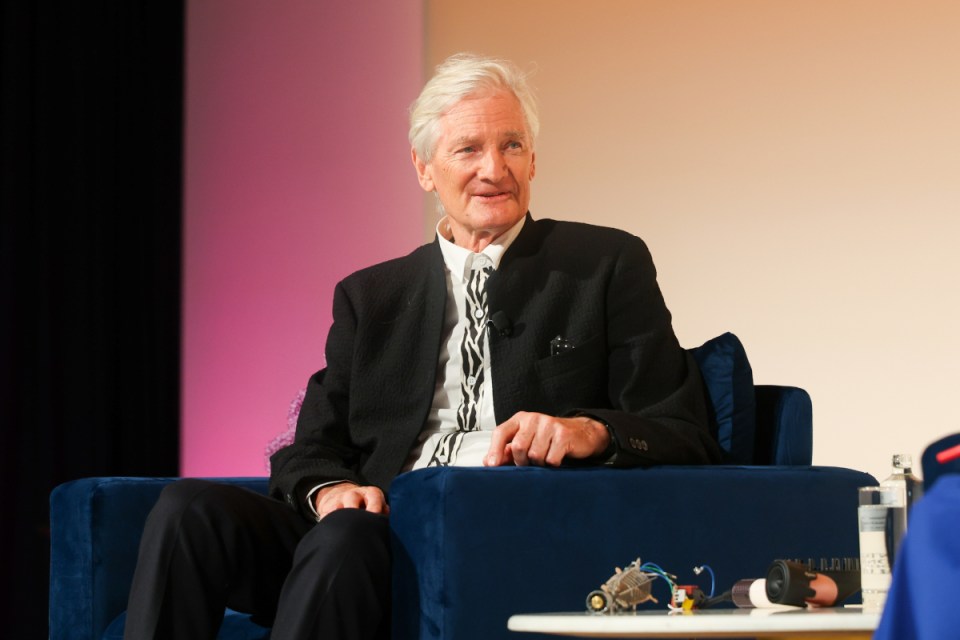
In December,Sir James Dyson warned his eponymous engineering firm would be “unrecognisable” after his death, at which point his family would be forced to foot a multi-billion-pound tax bill.
Absent an unlikely U-turn from ministers, would Rocco Forte Hotels face a similar fate to his fellow knight of the realm?
“If I drop dead tomorrow – and if you suddenly have inheritance tax charged even on 20 per cent of the whole value of the family businesses – there’s no way my family can pay that tax without selling the business or breaking it up,” he replies.
“But it’s not about my business, it’s about the overall effect on all the businesses which are very important.”
Both Reform UK and Kemi Badenoch’s new-look Conservatives have vowed to row back on the move, which the fiscal watchdog has predicted will only bring in £400m a year. And while the leaders of both right-wing parties have – in his eyes – shown glimpses of having what it takes to revitalise the country’s moribund economy, neither look like the finished article. Badenoch, he says, has so far failed to exhume enough of the one-nation Tories that oversaw over a decade of stagnation, while Farage’s flirtation with socialist-lite policies like ‘nationalising UK champions’ like British Steel is “deeply unimpressive”.
All of which at least in part explains why the octogenarian is channelling his and his company’s focus into exploits elsewhere; exploits which for now at least, he has no plans to relinquish to one, or more, of his children in search for a slower life.
“I want to see my company grow significantly over the next five years, and I feel I’ve got the energy and enthusiasm to help drive that forward,” he says, resolutely. “That’s my outlook at the moment, and I also can’t think of anything worse than sitting around with nothing to do and just enjoying myself.”