Reeves lands £30bn reprieve ahead of Spring Statement

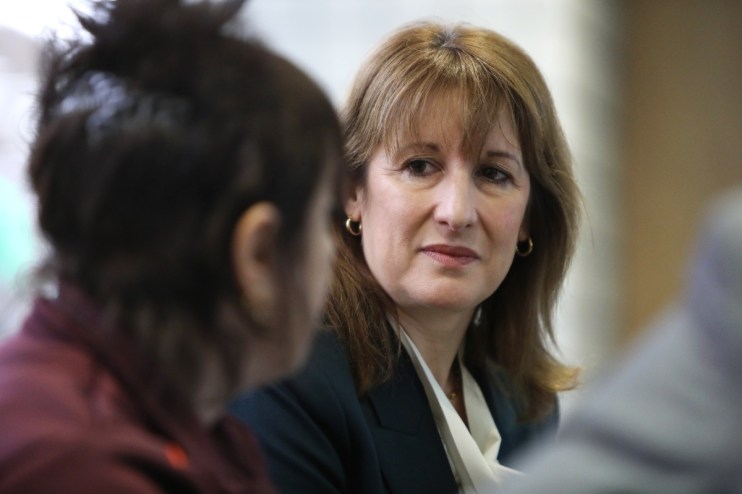
Rachel Reeves has secured a record-breaking borrowing reprieve in fresh data that comes ahead of the Chancellor delivering her Spring Statement in March.
The Treasury has been handed a surplus of £30.4bn in January, new figures from the Office for National Statistics (ONS) show, after a surge in tax receipts.
The figure is £15.9bn higher than that of January 2025 and £6.3bn above the Office for Budget Responsibility’s (OBR) November 2025 forecast.
“January – which is traditionally a strong month for self-assessed tax receipts – saw the highest surplus since monthly records began,” Grant Fitzner, chief economist at the ONS, said.
Borrowing for the financial year to January 2026 hit £112.1bn, around 11.5 per cent lower than the same 10-month period last year. Though it still marked the fifth-highest April to January borrowing run on record.
Meanwhile, total public sector spending inched up by £900m from January 2025, to £112.7bn. This was largely cited to a decrease in interest payable on central government debt.
Capital gains bump ‘not a sustainable improvement’
Capital gains tax (CGT) receipts saw their highest January on record, with total receipts up £7bn to £17bn, in signs fears over future tax hikes may have triggered a sharp asset sell-off.
Economists at Capital Economics said the surge came amid a brace for a tax hike meaning it was “not a sustainable improvement”.
“And the big picture is that borrowing has failed to come down much this year.
“The risk of borrowing overshooting our forecast further ahead has also grown if Starmer/Reeves seek to shore up their positions by raising borrowing, or if a leadership challenge ushers in a less fiscally responsible PM and Chancellor.”
In response to the latest figures, Chief Secretary to the Treasury, James Murray said: “We have the right plan to build a stronger, more secure economy.
“We have doubled our headroom, we are bringing inflation down, we are making sure that taxpayers’ money is spent wisely, and borrowing this year is forecast to be the lowest since before the pandemic.”
Shadow business secretary Andrew Griffith said: “There’s nothing good about the Treasury gorging itself on record taxes from businesses and families.
“That’s doubly true if it was due to forced sales ahead of tax hikes.
“You can kill the golden goose and enjoy a momentary feast but poverty soon follows.”
In January, figures for the end of 2025 showed total borrowing costs for the financial year had topped £140.4bn, brushing past the Office for Budget Responsibility’s (OBR) forecast for £138.3bn.
It came despite borrowing figures for December undershooting the estimates from City analysts.
Reeves fiscal rules face scrutiny
Reeves has attempted to trumpet her self-imposed fiscal rules – which dictate tax receipts must pay for day-to-day spending instead of borrowing – as a means of stability for the UK economy.
But criticism has grown over the rules, with economists at the Institute for Fiscal Studies (IFS) stating with structure paves the way for “spurious” policy changes, ramping up volatility in the economy.
“This framework is achieving neither sustainable public finances nor credibility with financial markets,” Ben Zaranko, economist at the IFS, wrote.
The IFS said the “current equilibrium is producing such dysfunction that the time has come” to try something new.
It called for a radical reform of the post-2029 Parliament, in which the Chancellor delivers a high-profile speech outlining broad fiscal objectives in narrative terms rather than in fixed terms.
Reeves has consistently said that her fiscal rules are “non-negotiable” and blasted her predecessors for playing “reckless” with public finances.
The Chancellor will deliver her Spring Statement on 3 March 2026, where reports suggest the Treasury is hoping to play down the event in a bid to not disrupt the bond markets and send borrowing costs higher.