Primark sales slip as owner dresses up retailer for demerger

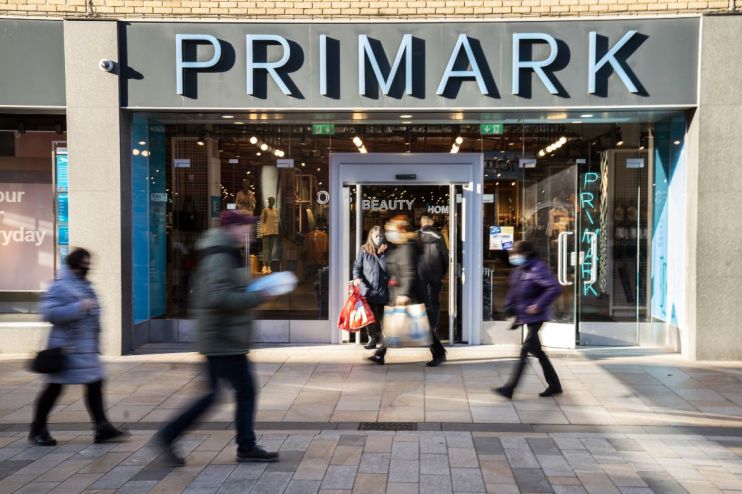
Primark has seen its sales slip due to heatwaves and “weak” consumer spending, despite efforts by its owner to revamp the discount clothes seller as it prepares to be spun off.
Associated British Foods (ABF), the FTSE 100 consumer goods giant which owns Primark, said it is working “at pace” to improve the retailer ahead of its demerger next year.
But the clothes seller is expected to suffer a three per cent dip in like-for-like sales in the last quarter of this year, dragging its total sales for the year down by 2.6 per cent. Shares in ABF were dragged down more than eight per cent to 1,846p in early trading.
ABF, which is controlled by the billionaire Weston family, said Primark is facing up to a “challenging consumer environment in most markets”.
The group said it has slashed prices across hundreds of its autumn and winter products and launched a campaign to boost public awareness of Primark’s discount proposition.
Heatwave melts Primark sales
The discount retailer’s UK sales are tipped to grow by 0.6 per cent in the quarter, though sales in continental Europe are expected to slump by 4.7 per cent.
ABF has pushed more investment into marketing and advertising in Europe in a bid to slow this decline, it said. In Great Britain, Primark is preparing to offer home delivery for the first time.
“While trading in the quarter started strongly, sales were then impacted by the prolonged hot weather, which delayed the seasonal purchasing catalyst for autumn/weather clothing,” the group said.
Primark has bought an automated warehouse in Sheffield from online retailer Boohoo for £90m to support its new home delivery arm.
“Primark’s digital maturity, including the success of click and collect, and online market developments, mean there is now the opportunity for profitable growth through the home delivery channel,” it said.
George Weston, chief executive of the group, said: “Actions to strengthen Primark’s customer proposition have continued at pace. Our priority focus areas, the UK and womenswear, continued to outperform our other markets and categories.
“Trading in continental Europe remained challenging, where actions to strengthen our customer proposition are at an earlier stage.”
Analysts at RBC Capital Markets said: “Primark, is a leading value clothing retailer, however recent trading trends have been softer than expected.
“We think it is suffering from an increase in price perception, along with a tougher macro and competitive backdrop in major markets, particularly outside the UK.”
Hot weather hits demand for tea
In April, ABF said it would spin off Primark to help it focus on its food empire, adding that it hoped to land the discount clothes retailer its own spot on the FTSE 100.
Associated British Foods said it has delivered “resilient trading” in recent months across its food arm, which includes brands like Twinings, Allied Bakeries and Patak’s.
The group said its Twinings tea business saw “good growth” in Australia but suffered from low demand due to the sweltering summer heat in the UK and Europe, which it said reduced the consumption of hot tea in these markets.
ABF’s struggling sugar business took another hit to sales and profitability in the UK and Spain during the quarter, as it suffered from low sugar prices, high energy costs and lower crop yields.
Earlier this year, the group bought bakery brand Hovis for £75m. ABF said it has taken a “one-off” hit from the deal as it absorbed the baker’s losses.
“While a number of factors contribute to our negative outlook for Sugar in 2027, the recent positive turn in European and global sugar pricing should benefit future years,” Weston said.