The Kay Fisker building refashioned as Copenhagen’s coolest new hotel

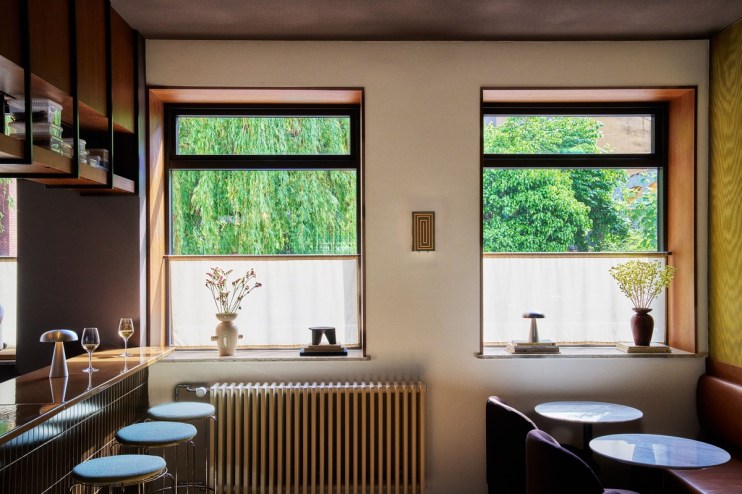
Hotel Petra opened its doors last June, timed to coincide with Copenhagen’s 3daysofdesign festival. For three days, this annual showcase transforms the capital into a temporary showroom, making the collaboration with Petra particularly fitting, given it’s a project from Danish design powerhouse &Tradition, which has been trading showrooms for guestrooms as it raises its ambitions from interior design pieces to entire hotels.
Copenhagen: Where to stay
Last summer, the brand relaunched a 1940s building by Kay Fisker, the architect widely credited as the father of modern Danish design. In short, Fisker turned Danish design into a global shorthand for minimalist chic. The refurbishment saw those iconic late-modern curves given new life, with the building’s original, ornate 1940s walls repainted to offset the brand’s modern furniture.
With Hotel Petra, instead of wiping the state clean, &Tradition worked with the existing bones of the building. “The starting point is always the building itself,” says Hannah Jordan, Petra’s head of spatial design. “We wanted to honour what was there while creating something that feels liveable today.”
Upstairs, its rooms are small by necessity (this is central Copenhagen and space is at a premium) but assembled with a precision bordering on the obsessive. A bedside light with three separate settings for reading, working, or sleeping. A wardrobe fitted so exactly to its alcove you would think the building had been designed around it, rather than the other way around.
Bathrooms are tiled in a deep, almost edible chocolate brown, restored and fitted to architect Kay Fisker’s exact proportions, which is either hugely satisfying or frustratingly Danish, depending on your tolerance to detail.
Read more: Colourful, hip Copenhagen is a city that’s always changing
A sense of home
The lobby feels bright and open, its in-house bar moody and cocooned. The same space houses a restaurant that’s open from morning to night, something that’s unusual for this city, so it’s as likely to be filled with locals as it is tourists. “We always try to build a sense of home”, Jordan says.
And yet ‘home’ is a tricky quality to pin down – and Hotel Petra doesn’t always achieve it. For all its comfort and elegance, you never entirely forget you’re in a curated space; it’s more elegant than cosy, more showroom than sitting room. Still, it makes a strong case for its liveability; less in a slippers-and-Netflix sense, but as a kind of distilled version of the city itself: calm, practical, considered.
Where to eat
Just as Copenhagen wears its ‘liveable’ badge with pride, it also spent years balancing a foodie crown on its head, thanks in no small part to Noma. But with Noma’s regular service now closed, you might worry the city would slump into culinary withdrawal. Hardly; I urge you to pack stretchy trousers.
At Bæst in Nørrebro, the meat is cured on site, the cheese spun fresh each morning with biodynamic Danish milk, and even the pizza dough has its own fermentation ritual. A simple, zesty side salad surprised us by being one of the best things on the table. Then came the mozzarella, dressed with little more than a glug of olive oil and a pinch of salt, so rich and creamy it lingers long after the plate is cleared.
In the former industrial heart of the Meatpacking District, Fiskebar is a little cooler. Oysters arrive briny and bold, the lobster is indulgent and the fish is cooked with precision. Then there’s Baka d’Busk, a vegetarian bistro run by six childhood friends, who treat hospitality as a form of theatre. Plates of sweet, marinated peppers and leeks prove vegetables can outshine steak, while complimentary – and obligatory – vodka shots punctuate the meal.
Rooms at Petra start at 1500 DKK (£175) a night; for more information or to book, visit their website