OpenAI backs London with hub expansion and new roles

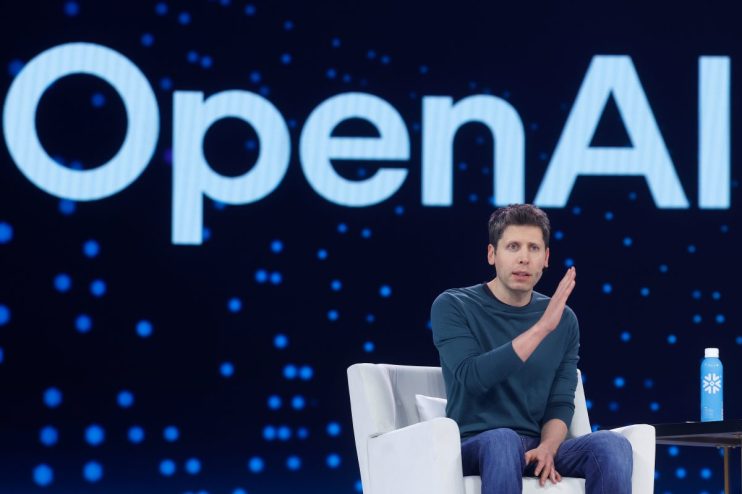
OpenAI is to make London its largest research hub outside the United States, in what ministers have hailed as a “huge vote of confidence” in the UK’s AI sector.
The ChatGPT developer confirmed it will significantly expand its London operation, which currently employs around 30 researchers, though it declined to put a figure on how many new roles will be created or how much will be invested.
The move sets up a battle for talent in the capital between OpenAI and Google Deepmind, which already employs around 2,000 people in the UK.
Mark Chen, OpenAI’s chief research officer, said staff in London would “own key components” of the company’s frontier AI research, including work on safe model development.
“We are excited to establish London as a major research hub for OpenAI, building on the leading work our London team is already doing to support our latest breakthroughs,” Chen said.
London-based researchers are already contributing to products including Codex and GPT-5.2, he said.
The tech heavyweight cited the UK’s “unique concentration of world-class talent across machine learning and the sciences as well as its strong culture of cross-disciplinary collaboration” as key reasons for the expansion.
Talent war accelerates
The news comes as competition for AI specialists reaches fever pitch on both sides of the Atlantic.
Chen acknowledged that OpenAI has hired from Google DeepMind in the past and said the company would offer pay “very competitive with what Google DeepMind is offering”.
“AI talent is very valuable and we need to be competitive everywhere,” he said, adding that OpenAI’s “bottom-up” culture, where researchers are encouraged to pursue their own ideas, was a draw.
In the US, bidding wars have seen mega compensation packages dangled in front of top engineers.
Reports have suggested Zuckerberg-owned Meta has offered some researchers up to $1bn to join its AI unit.
Meanwhile, in the UK, senior AI engineers at Google are working towards total packages worth well over £1m, according to jobs data platform Levels.fyi.
OpenAI, as a private company, can also offer equity that could rise massively in value if it lists, and has already enabled staff to sell shares on the secondary market.
UK fights to lead arms race
While London remains the clear engine room of British tech, home to 57 of the country’s 100 fastest-growing private tech firms, according to The Sunday Times, concerns are mounting over talent shortages.
Recent data from RSM UK showed applications from overseas tech workers seeking UK visas fell 11 per cent quarter-on-quarter, even as ministers pledge to fast-track AI specialists and reimburse visa fees.
Liz Kendall, the tech secretary, said OpenAI’s decision was “a huge vote of confidence in the UK’s world-leading position at the cutting edge of AI research”.
“It also reaffirms the UK’s global leadership as the place to pursue AI innovation that is both safe and transformative”.
Sadiq Khan said he was “delighted that OpenAI is anchoring its major new research hub here”, adding that the capital was home to “world-class talent and renowned institutions”.
The move also reflects the breakneck pace of AI development. Chen described the rise of AI agents, autonomous software capable of carrying out tasks with almost no human interaction, as a “step change” for the industry.
“It really does feel like we’ve reached a level where we can rely on them and use them in the real world workforce”, he said.