Not enough bums in Brum: Why so many empty seats at European Athletics Championships?

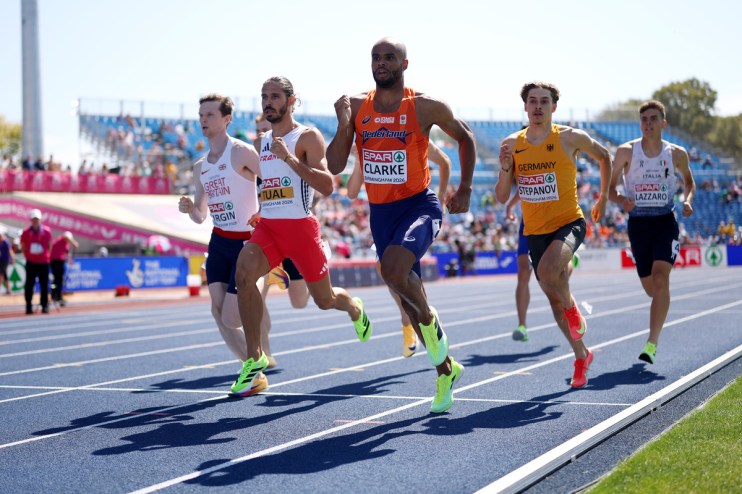
Britain loves sport yet ticket sales for the European Athletics Championships in Birmingham have been slow. Ed Warner wonders why.
British sport has a capacity problem or a bandwidth one, depending on which way you want to look at it. Too many seats in too many venues with too few bums to fill them. Or alternatively, a time-pressed, financially squeezed population too heavily concentrated in London.
No matter that we pride ourselves on being a nation of sports lovers, there’s only so much each of us has the time and wherewithal to follow; 67m people on an island that can be traversed in hours by train is no guarantee of sporting commercial success.
This Sunday sees the final session of the European Athletics Championships in Birmingham go head-to-head with the men’s final of The Hundred at Lord’s on the BBC. The track and field has the advantage of BBC1 coverage versus the cricket on BBC2.
Yes, there still is a swathe of the population whose viewing habits – or jammed remote controls – are anchored to the nation’s oldest channel. Pity those who would rather have comfy dramas, antiques and wildlife shows wash over them at the close of the weekend.
The “sold out” signs are up online for The Hundred’s climax, but the tournament overall has been notable for smaller crowds in this, its sixth season – the first one in which the new owners of franchises have been responsible for their own ticket sales.
The opening couple of nights at the athletics were poorly attended too, certainly compared with expectations. I’m told that the Alexander Stadium will be packed at the weekend, but you can still buy seats to see as many fireworks there – sporting and actual – as will be on show at Lord’s.
I bought my tickets for the athletics in the first few minutes that they went on sale last August, happy to do my very small bit to assist the event’s cashflow management and seduced by memories of the packed London Stadium for the 2017 World Championships.
Turns out I needn’t have been so eager. But what if the event had been in London, even in a venue with roughly three times the capacity of the Alexander Stadium’s 23,000 or so? I bet it would have been almost full for those early sessions.
“I think we made the most out of it. The people that show up are very enthusiastic. I think that’s the most important.”
Norway’s Jakob Ingebrigtsen after winning 5000m gold at Birmingham 2026
There has been a clear disparity this year between crowds for The Hundred at London’s two grounds, which have been almost full to capacity, and across the rest of the country.
Welsh Fire’s owners will be pleased by the increased number of fans drawn to Sophia Gardens in Cardiff, especially when compared to Glamorgan’s usual crowds. However, the images beamed onto our screens from Edgbaston, Headingley, Trent Bridge and Old Trafford will have dismayed broadcasters who regard each empty seat as a possible trigger for fickle viewers to switch channels.
On the BBC commentary this Monday, Steve Cram called out the small Euros crowd. In my early days at UK Athletics I made an award to him in the in-field at Gateshead during one of our Grand Prix meets. He had stepped away from his mic and as we walked across the grass he looked pointedly at the stands and criticised our inability to sell out the stadium. At least this moan was a private one.
Around the same time, I remember a senior Beeb executive berating me because a single block at the Crystal Palace athletics stadium wasn’t rammed with spectators. Viewers, he argued, will ask themselves why they should be watching at home if others hadn’t bothered to turn up in person.
Everyone I ask, not just in cricket and athletics, tells me it’s a tougher than normal ticketing market at present, especially so in cities outside London.
Don’t be fooled by the demand for perennially popular events (just watch Ashes 2027 tickets fly when they go on sale next month). Instead, step back and reflect on the abundance of choice when deciding how to spend whatever marginal funds you might have for leisure activities. And the marketing challenge of getting pricing right a year out from an event.
If the Alexander Stadium fills up at the weekend and the GB team tops the medal table, I predict those early empty seats will swiftly reach vanishing point in memory’s rearview mirror.
Empty ground syndrome
A few weeks into my new role at Sussex Cricket, the challenge posed by the crowded event market is obvious and unsurprising. However, along with the other 10 counties that do not host a franchise in The Hundred, we have the additional problem of insufficient days of cricket to market to possible spectators at the height of the summer. Four days of men’s first-team cricket at home in 46 days when the sun is shining and schools are out constitutes a near-drought.
This situation is a function of the very existence of The Hundred and the non-compete protections put in place to nurture the competition’s early development.
I contend that, in reality, there would be little or no cannibalisation of attendances at the (not so new) tournament or of its TV viewing figures if us non-host counties were freed up to provide more opportunities to get people into our grounds to enjoy our sport in these key weeks. After all, Premier League football clubs don’t require non-compete arrangements with the divisions below them in order to be able to fill their grounds.
No-one ever looks at a county cricket match and criticises the number of empty seats. The focus instead is on the numbers in attendance. Every day that a ground is closed is a day on which scarce pounds are spent elsewhere in the leisure economy.
Not so much an issue of either over-capacity or narrow consumer bandwidth, but of artificially constrained opportunity. Time, surely, for investors in The Hundred to show confidence in their product by allowing the removal of this constraint. They might even find that in time they benefit from healthier overall interest in the game. Win-win.
The wisdom of Dottie Lasso
With apologies to pickleball’s aficionados… This is a line from the opening episode of the new series of Ted Lasso, in which his mum explains the game: “It’s like tiny tennis but much louder and you’re not allowed to move.”
Bang on. Doesn’t mean I was any good at pickleball the one time I played though…
And on the subject of fast-growing racquet sports: padel is wildly popular in many quarters, but is a hard watch online. Check out footage of last week’s London Premier Padel P1 at Olympia which got rave reviews from enthusiasts in attendance, but long rallies and the filter of cage and glass screens were a turn-off for this particular remote observer.
Squash has made it into the Olympics after decades of lobbying. Padel may enjoy a shorter route to this ultimate destination but has much work to do first to appeal to a mass of viewers rather than mass participants.
Other championships are available
You can be forgiven for not knowing there are major champs in sports other than athletics taking place this week.
Away from mainstream broadcast media you can find the Euro aquatics in Paris, equestrian worlds in Aachen, rhythmic gymnastic worlds in Frankfurt and artistic Euros in Zagreb, EuroBeachVolley in Stare Jablonki, Poland, and the hockey men’s and women’s World Cups in Belgium and the Netherlands.
I’m sure there are others I’ve missed, besides a host of age group championships. Summer lovin’.
Ed Warner is chair of Sussex Cricket and GB Wheelchair Rugby and writes his sport column at sportinc.substack.com