New V&A East Storehouse is the museum of the future

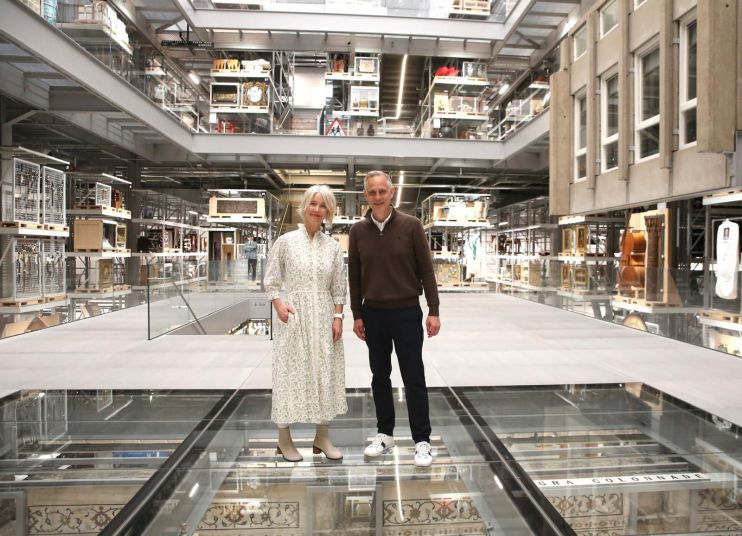
The V&A East Storehouse, opening in east London’s Queen Elizabeth Olympic Park, redefines the museum experience with unprecedented public access to thousands of artifacts, marking a bold cultural milestone in the £600 million East Bank development, says Justine Simons
The museum of the future is here, and guess what? It’s in east London!
A quiet revolution has been taking place over in Queen Elizabeth Olympic Park where the new V&A East Storehouse is preparing to open its doors as part of East Bank.
The very concept of a museum has been reinvented, marking a new era for the old 2012 Olympic Media Centre. Over three levels, and bigger than 30 basketball courts, it’s been thoughtfully designed by world-renowned architects Diller, Scofidio + Renfro (who also designed the High Line in New York).
I was lucky enough to get a sneak preview and it’s incredible. It’s a wild and fascinating collection spanning every creative discipline. As you walk through the entrance you are flanked by sculptures and statues – from Greek busts to Buddhas watching you from their open wooden crates. Then climbing the stairs into a cavernous space – a treasure trove of artefacts. Japanese ceramics, mid-century furniture, Suffragette merch and a Margaret Calvert street sign are revealed.
Visitors to the new V&A East Storehouse, which opens to the public on Saturday, will also be able to ‘Order an Object’ from this extraordinary collection spanning 5000 years of human creativity. Gone is the ‘look but don’t touch’ attitude of the past, now anyone can simply book up to five objects online and then can get up close with previously locked away artefacts, revealing stories we never imagined.
Up close with objects
I ‘ordered’ a primary-coloured Mary Quant PVC poncho, mass produced in the 1980s and a Gay Pride vest from 1985, made by Body Zone for the Market Tavern in Nine Elms. A silk theatre programme from the opening of the London Hippodrome in 1900 was a surprise, apparently silk and satin theatre playbills and programmes were produced from the 18th century to mark special evenings at the theatre. The vision of access for all extends behind the scenes too, with over 75 per cent of new jobs at the museum going to local people.
Everywhere you turn there are great stories and anecdotes, from the 3,500 shoes the team had to accommodate to an exquisite 15th century carved and gilded wooden ceiling from the now lost Torrijos Palace near Toledo in Spain, which has been painstakingly restored and installed in the central collections hall.
The enormity is balanced by a stripped down ‘one object room’. A contemplative immersive space, currently displaying a ceiling high stage cloth from the Ballet Russes in Paris 1924. It is a recreation of Picasso’s ‘Two Women Running Along a Beach’ that the artist personally signed to confirm it was up to the required standard.

Other brilliant set pieces are Frank Lloyd Wright’s glorious 1930’s Kaufmann Office and a small but perfectly formed 1920’s Frankfurt kitchen.
The V&A’s fashion collection is unrivalled and a longstanding source of inspiration for fashion designers at every stage of their career. Ten minutes walk across the Olympic Park, the London College of Fashion students can now pop over and see the inner structure of a ballgown as well as illustrations, patterns and fabrics from across the centuries.
The V&A East Storehouse is all part of a bigger story – East Bank, which is the largest new culture and education district in London in over 150 years and it’s been a personal privilege to help steward this Olympic legacy into being. At over £600 million it’s also the biggest investment by the Mayor of London in culture and it will deliver a big return for London. East Bank will welcome one and a half million visitors a year, give a £1.5bn boost to the economy and deliver thousands of jobs.
With Sadlers Wells East, London College of Fashion and University College London all now open, the opening of V&A East Storehouse is another landmark moment for London.
Justine Simons OBE is London’s Deputy Mayor for Culture and the Creative Industries