National Wealth Fund boss calls for public finance consolidation

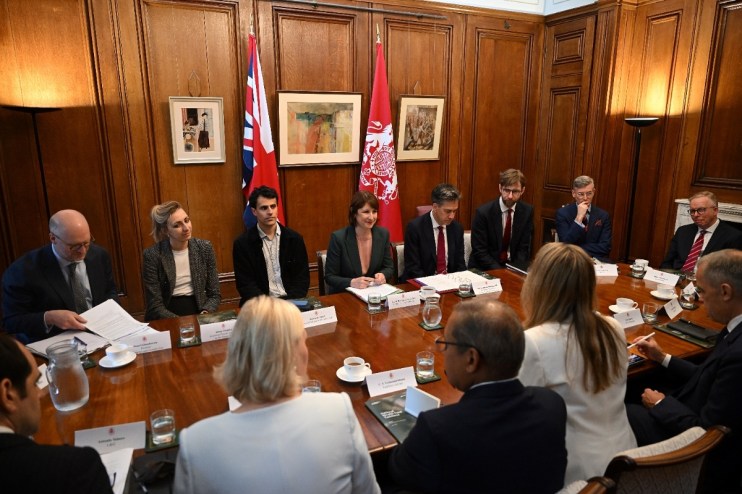
The boss of Labour’s National Wealth Fund has urged the government to remain open to consolidation of public finance institutions in a bid to ease confusion for the private sector.
In a hearing on Tuesday, the chief executive of the National Wealth Fund (NWF) John Flint told MPs he would “encourage” the Treasury “not to close the file” on making changes to the public finance landscape.
Flint said he had “huge sympathy” for those in the private sector as they face the “challenge” of where to access finance in a crowded pool of institutions.
“That’s not getting better, I think that’s getting a little bit worse because there are more public finance institutions available,” he added.
Flint, the former chief executive of banking juggernaut HSBC, said there was an “ambition floated” that the government might reorganise the public finance landscape.
Labour announced the creation of the National Wealth Fund – a fixture of the party’s manifesto – on July 9 2024.
Chancellor Rachel Reeves and business secretary Jonathan Reynolds “instructed officials to immediately begin work to align the UK Infrastructure Bank (UKIB) and the British Business Bank”.
But in October 2024, Rachel Reeves said the UKIB would “become” the National Wealth Fund.
Flint said on Tuesday: “Having a proliferation of sub-scale public finance institutions all facing similar organisational challenges… doing that multiple times is not the most efficient way to do that.”
The NWF boss is set to exit his role in the summer.
Treasury sidesteps inclusion question
In a later hearing, financial secretary to the Treasury Lord Spencer Livermore referenced grouping the British Business Bank in the NWF as “something we have considered”.
Lord Livermore said Labour entered government with “intention for greater alignment” but following a review instead turned attention to access to finance and increasing financial capabilities.
The remarks came as shadow financial secretary Gareth Davies pressed the Treasury on the decline in clean energy investment and the U-turn on the British Business Bank’s involvement in the NWF.
Minister James Murray sidestepped the question on the bank’s exclusion from the NWF and instead pointed to elsewhere green energy investments, referencing the likes of Great British Energy.
This follows the chief executive of the British Business Bank, Louis Taylor, telling City AM the government understood after a “few months in power” what the process of creating a national wealth fund would involve.
Taylor said: “A new government came in, and inevitably, they had not had their hands on the levers of all these institutions.”
Throughout the Treasury Committee’s inquiry experts have raised concerns about the naming of the body as a “national wealth fund”.
Academics last month branded the title a “misnomer”.