Modernisation and missteps: Lloyd’s of London struggles for a new era

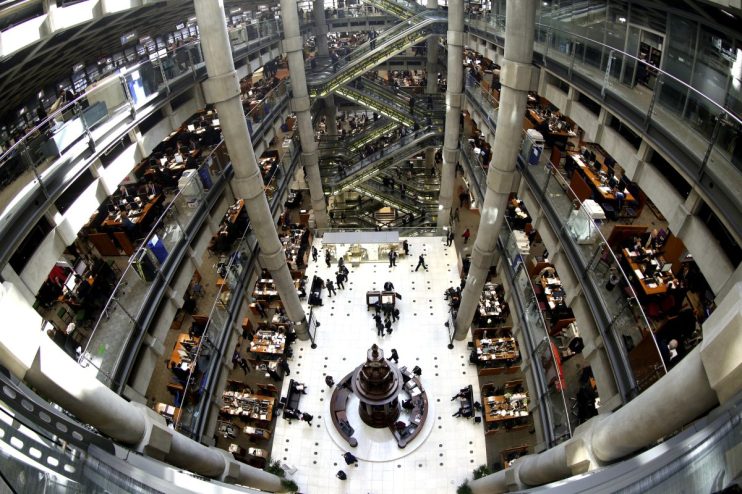
Lloyd’s of London, one of the world’s largest (re)insurance markets, has faced its fair share of battles in recent years, and one of the biggest fights has been against itself and its old-fashioned ways.
Back in 2018, the incoming chief executive, John Neal, had an ambitious mandate: to restore stability and modernise Lloyd’s following a period of financial losses and reputational damage.
Neal was previously group chief executive at Australian insurance giant QBE before he was unanimously approved by the Council of Lloyd’s to take over the marketplace.
He took the most senior role at Lloyd’s of London at a time when the market was struggling with significant financial losses, but he was soon preoccupied with a different matter, a PR nightmare after its ‘boys club’ and culture of sexual harassment was aired to the world.
Lloyd’s culture under the microscope
The 2019 Bloomberg report exposed a “toxic” culture at Lloyd’s of London, detailing widespread sexual harassment, bullying, and excessive alcohol consumption.
The fallout from the report prompted Neal to launch a major overhaul, including bans on workplace drinking, in order to tackle the culture problem.
Speaking to City AM in 2024, Neal said he’s tried to “create the belief that the market wants to be inclusive” and “therefore the best talent will want to come to work with us.”
The marketplace launched a Culture Strategy and recruited a head of culture in 2022. It set gender targets, such as 35 per cent women in leadership, as well as trying to enforce change at syndicates that had a ‘drinking problem’.
In December 2023, two chief executives of specialist insurer CFC Group were removed by Lloyd’s over allegations of non-financial misconduct linked to culture issues at the firm.
In March 2024, the marketplace met the target of filling 35 per cent of leadership roles with women, defined as the board, the executive committee, and the executive committee directorate.
“There is a change in our leadership profile and in the people coming in at entry-level, but that doesn’t mean we’re there, this is a journey, not a destination, so there is a long way still to go in relation to culture,” Sheila Cameron, the LMA’s chief executive, told City AM.
However, two years later, Lloyd’s suffered another huge reputational blow after Neal stepped down in early 2025.
Neal had inked an agreement to join Aon as its global CEO of reinsurance and global chairman of climate solutions, but he turned down the role before he’d even started.
The former Lloyd’s boss dropped the role in favour of the role of president at AIG, but one month before he was set to join, it was reported that AIG had withdrawn the offer after an alleged inappropriate workplace relationship came to light.
In response to the news, a spokesperson for Lloyd’s said it has launched an investigation with the support of a law firm.
This wasn’t the first time Neal had made headlines for his romantic relationships at work.
Back in 2017, one year before Lloyd’s hired him for its top job, the QBE board docked Neal $550,000 (£284,000) for failing to disclose a romance with his secretary, whom he later married.
Digitalisation back to the drawing board
Neal was the primary architect and face of the ‘Future at Lloyd’s’ strategy, the plan to modernise the 340-year-old insurance marketplace by shifting it from paper to digital.
After a 10-week consultation, Blueprint One, the strategic vision, was published in 2019 and identified six primary solutions to address market inefficiencies, including ways to make Lloyd’s of London more attractive to diverse forms of capital.
Speaking at the time, Neal said: “We have a once-in-a-generation opportunity to lead the marketplace in delivering innovative services and solutions.”
The delivery manual for this transition, BluePrint Two, was launched in 2020 with a plan to modernise the market by 2022, a date that was pushed several times and is now long forgotten.
After years of delays, City AM exclusively revealed earlier this month that BluePrint Two was shelved as new management sought to rethink its approach to digitalisation.
Sources familiar with the situation told City AM the project was quietly shelved, with the teams responsible for market engagement disbanded at the end of last year as there was no work for them to do.
New leadership at Lloyds, under Patrick Tiernan, is currently rethinking its approach to draw a line under the “toxicity associated” with BluePrint Two. City AM understood that Lloyd’s wants to cut its own costs and investment and shift more responsibility to the Velonetic project team.
Lloyd’s is still “committed to supporting the re-platforming of the market to a resilient, cloud-based operational infrastructure”, but City AM understands that the marketplace was struggling to get its syndicates, and now some of the firms are now more focused on their own internal digitaliaions in the wake of AI.
Tiernan, who took over in June, said in his message to the market on his first day in the senior role that “stability of Lloyd’s is paramount” as his vision included the marketplace to “work together”.
He has been noticeably quiet since taking over the leadership role eight months ago, but Sheila Cameron, CEO of the Lloyd’s Market Association, noted Lloyd’s is expecting to announce a new strategy under Patrick’s leadership shortly.
“We will be focused on making sure that this delivers every part of the streamlining of process, careful oversight and cultural change that managing agents want and need,” Cameron added.