‘Indian food is a universe’: Making a home at Chet Sharma’s BiBi

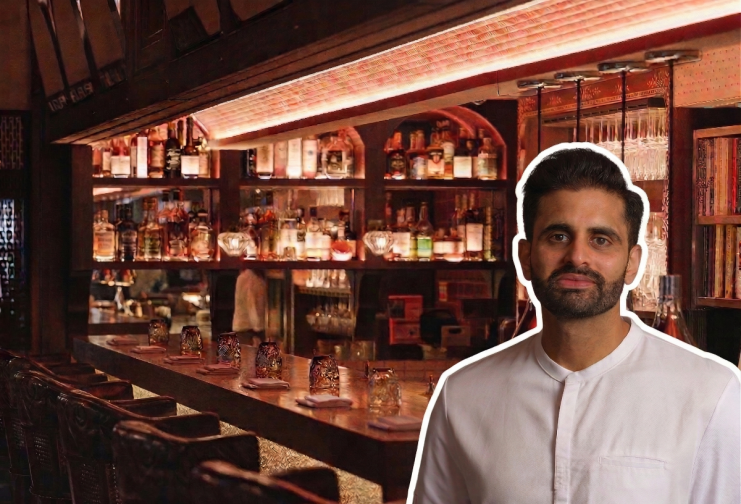
Quietly but surely, Chet Sharma is serving up some of the tasty plates of food in London. Carys Sharkey meets the chef reimagining fine dining with a healthy serving of nostalgia
If you make your way down Oxford Street, past the shops slinging vapes and candy to indiscriminating kids, weaving through the preachers confirming your damnation, and finally under the imposing, stone-columned ribs of Selfridges, you deserve good food. Really good food. Just off the thrum on North Audley sits BiBi, and here is salvation.
BiBi has been quietly, but resolutely, cooking up some of the tastiest food in the capital since 2021. It may not have attracted the same level of fanfare that other ‘Indian fine dining’ spots like Gymkhana have, but it has a cultish following of loyalists from Michel Roux Jr to Andrew Garfield (“the food is absolutely delicious”). And at the centre is chef patron Chet Sharma, who is understatedly putting out the kind of dishes that make London one of the most exciting places to eat in the world.
But he didn’t always plan on being a chef. After finishing at UCL, Sharma went to Oxford for his PhD in Condensed Matter and Materials Physics. A thesis on “gating in mammalian K2P (TREK-1) channels” may feel a world apart from late nights on the pass, but Sharma’s cooking feels compulsively rooted in his academic background. The work at BiBi is continuation, rather than total rupture.
“I’ve never really seen my academic background and cooking as separate worlds. I didn’t set out to be an academic – the degrees were opportunities I took – but what they gave me was a mindset. Research, precision, obsession, long days in the lab or library teach you how to sit with a question until it reveals something deeper,” he tells me when I ask about his salad days.
And you feel that pushing, obsessive inquiry in Sharma’s cooking. A dish of cured hamachi and blood orange is part play on ceviche, part riff on nambu pani, or Indian lemonade. The dish is intensely floral from the slightly unplaceable nimbu (Indian lemon), with heavy basenotes of sulphurous black salt and darkly roasted cumin. Bright and sour, rich and dark – it’s alchemy in effect: condensed matter and material physics.
And this sort of cooking takes the dedication of a scientist. As Sharma tells me: “A dish isn’t just assembled; it’s interrogated. It goes through layers of testing until it feels emotionally right and technically precise.”
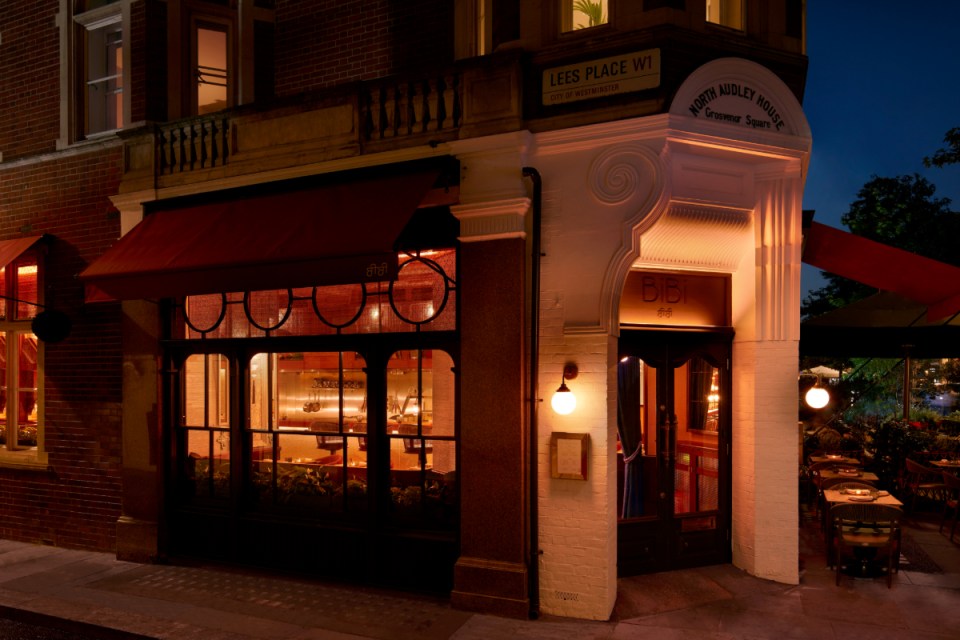
Emotionally nailing a sense of time and place is what elevates Sharma’s cooking; BiBi has none of the clinical coldness of a lab. The train-like dining space is long and intimate, with only enough space for 32 guests. It’s bathed in golden light with fittings from Calcutta, while chairs are embroidered with patterns from his grandma’s pashmina. Family ties wrap around the whole restaurant: ‘bibi’ is an affectionate Punjabi term for ‘grandmother’.
“At BiBi, I’m not trying to recreate nostalgia, I’m trying to capture emotional memories,” Sharma says.
“One of my earliest food memories is arriving at our family farm near Delhi at 2am, aged six, and my uncle had made malai kofta from scratch – even the paneer – just to welcome us. That moment was a kind of awakening.”
And decades later, Sharma is making his own paneer to welcome guests. It’s one of the most confidently delicious things on the menu: A big, generous slab of the custardy, yielding cheese.
But it’s in BiBi’s signature dish of ‘Sharmaji’s Chicken’ where Sharma really ‘captures’ memory. Inspired by his grandfather, who “would almost never speak about life pre-partition”, the dish is indebted to a kebab vendor in Lahore. It was someone – and something – his grandfather could talk about, a fragment of memory that survived.
“If an Indian grandmother tasted the dish, she might not recognise the presentation, but it should taste innately Indian. Time and place are everything, but they’re filtered through where I am now.”
And for those not of Indian heritage, there is a play on the familiar/unfamiliar push and pull. A meal at BiBi starts with a tricolor layered chutney and a cheddar poppadom reminiscent of a gaunt Quaver. It’s fun, delicious and a little kitschy in its nod to British curry houses. The dinner ends with a kulfi ‘mini magnum’ that tastes like a rhubarb and custard.
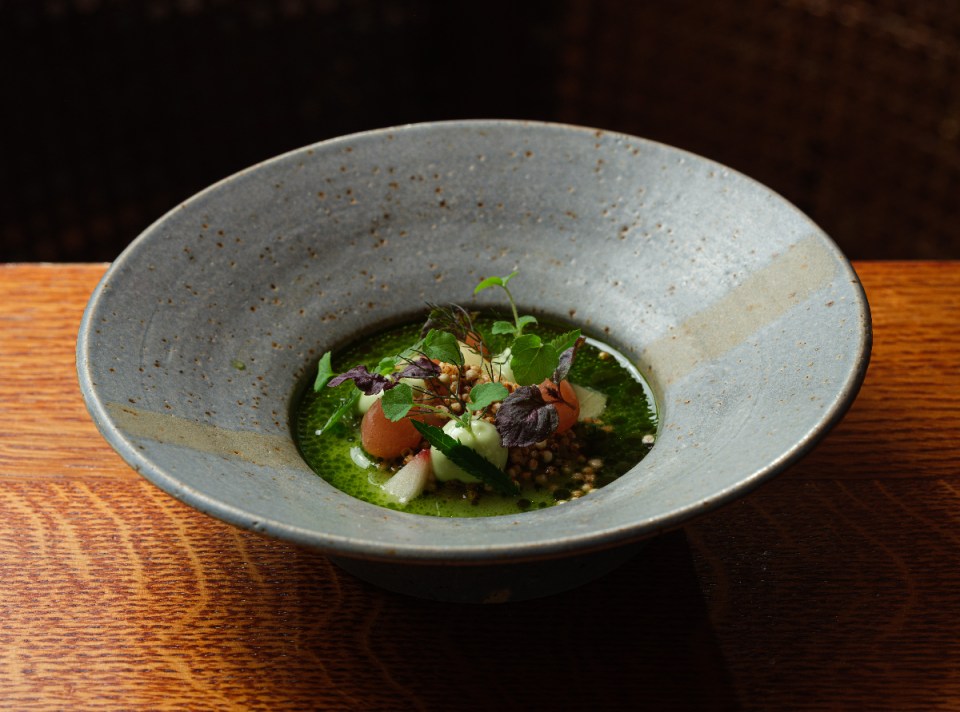
“Indian food isn’t just about spice: it’s about crunch, softness, smoke. When those layers come together, something feels both new and deeply familiar,” Sharma says
It’s a style of cooking that slips between continents and yet has an absolute conviction of place. And although BiBi frequently ranks highly as one of the best restaurants in London, a coveted Michelin star has proved more elusive. I ask Sharma if there is tension between perceptions of ‘Indian food’ and ‘fine dining’.
“If you cook for recognition, you lose generosity, and generosity is fundamental to how I understand hospitality. There can be tension. Indian food has historically been viewed as abundant, convivial, generous – sometimes not ‘fine dining’ enough in the traditional European framework. Part of what we’re doing at BiBi is challenging that assumption”.
It immediately made me think of the nihari I ate at BiBi. Blushing texel lamb sits on a brawny, tense curry that borders on medicinal. Served with cultured bread, Sharma likens it to an American French dip sandwich: something to stuff and plunge into sauce. It’s familiar and delicious, unfamiliar and astringent. It was the most memorable thing I ate there, and challenges every assumption of taste, ingredients, cooking and eating style that you come to an ‘Indian’ restaurant expecting. It’s open-ended, liberating cooking, and it’s where Sharma, as cook, becomes most animated:
“Indian food isn’t a restraint – it’s a universe”.