London property market can be UK’s growth engine

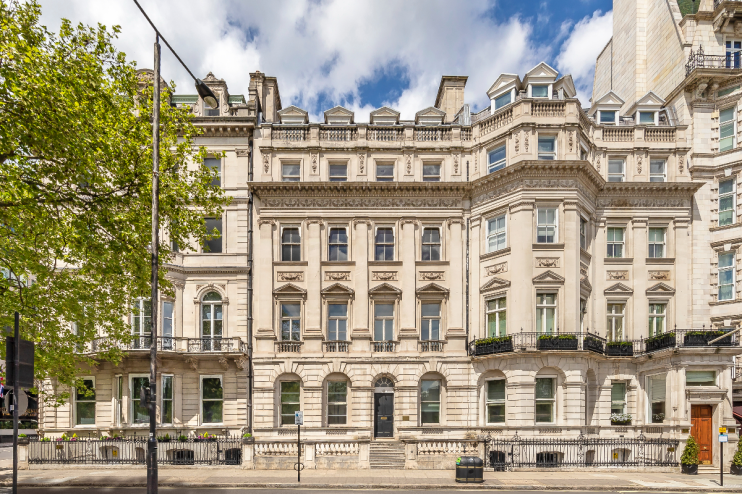
London’s property market is showing green shoots of growth, but that doesn’t mean we can stand still, writes Tom Goodall
London’s housing market has always been a bellwether for the wider UK economy. Given that the built environment contributes almost a quarter of the UK’s GDP, it goes without saying that when we build, capital flows, jobs are created and market confidence follows. When it stalls, the consequences ripple far beyond the property sector. The latest Molior data makes for sobering reading and underlines just how urgent the task of getting London building again has become.
Construction starts in the capital have fallen by 84 per cent over the past decade. In 2015, London recorded 33,782 new home starts. In 2025, that number fell to just 5,547. This is not a cyclical wobble. It is a structural slowdown.
But it’s not all doom and gloom, and there are tentative signs that confidence will return when the right conditions are put in place. Molior’s figures show a marked improvement through 2025, with new home starts rising from 1,385 in Q1 to 2,294 in Q4, almost doubling over the course of the year.
If we look at Q4 2024, the improvement is even greater; according to Gov.uk, there were just 1,280 housing starts in London in that same period. That progress matters, not because it solves the problem, but because it shows that the market responds quickly to greater clarity and stability.
That is why the package of measures signposted by the Greater London Authority (GLA) and the Ministry of Housing, Communities & Local Government (MHCLG) late last year to stimulate the market was so important. Perhaps just as crucially, the measures signalled the start of a more open and constructive dialogue between government, City Hall and the industry. That change in tone is now starting to bear fruit, but the latest figures are a reminder of how fragile the recovery remains.
Green shoots in London property market must be nurtured
At the end of Q4 2025, construction halted on 5,009 homes across 51 development sites in London. These are schemes where sites are effectively on hold. In some cases, contractors have faced acute financial pressure as costs have risen sharply. In others, developers have paused delivery in response to weaker sales conditions, with the cost-benefit equation no longer adding up. Both scenarios point to the same conclusion. Without confidence in the medium and long-term outlook – alongside political and regulatory stability – capital stays on the sidelines. How we improve the long-term attractiveness of London and the UK is key to kickstarting meaningful development at scale.
The UK’s next growth phase will not be driven by short-term fiscal interventions or political soundbites. It will be shaped by long-term investment decisions in cities and major regeneration projects. From transport-led developments to large-scale mixed-use neighbourhoods, these schemes require patient capital, predictable planning outcomes and credible public-private partnerships. Where those elements align, private investment follows.
Property should be recognised for what it is: a core engine of productivity and growth. It supports millions of jobs, underpins the financial system and provides the physical space in which everything else operates. Treating it with the same strategic importance as financial services would be a powerful signal to international investors.
Looking ahead to 2026, the mood from investors is positive. A survey from Knight Frank last week showed that the UK was the top target location globally for international investment. London is likely to be the primary recipient of that capital due to its resilience, stability, liquidity and strong market fundamentals, which help drive returns. But investors also want to work in markets that offer long-term visibility and consistency in policy. London and the UK can meet those expectations, but only if we continue to work collaboratively across the public and private sectors.
The green shoots of recovery are there to be nurtured. The task now is to build on them, restore confidence and ensure London once again becomes a city that builds at the scale its economy and population demand. This will require determined and persistent leadership from the private and public sectors alike. The alternative is, at best, the continuation of a prolonged period of under-supply and stalled growth. At worst, it’s a steady erosion of the greatest city in the world from the global stage. And that is a price we cannot afford to pay.
Tom Goodall is chief executive director of Related Argent