Investors eye farming as AI’s latest cash cow

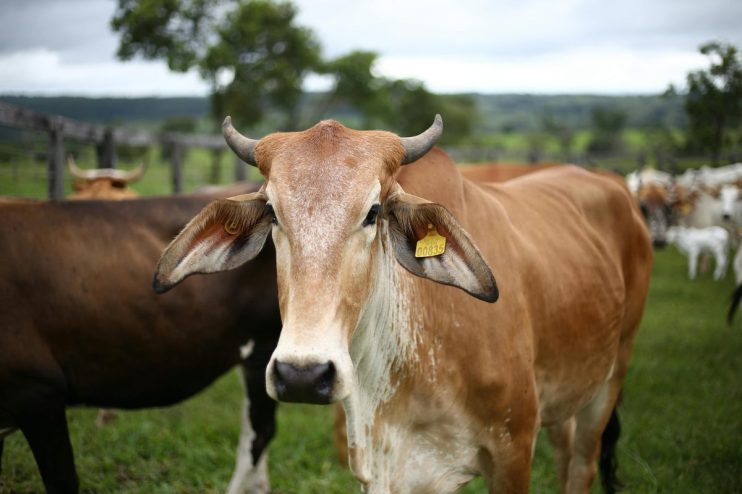
A startup fitting livestock with AI-powered collars is closing in on a $2bn valuation, as investors turn their attention to a less obvious frontier for AI.
New Zealand-based Halter is in talks to raise fresh funding led by Founders Fund, the Silicon Valley firm backed by Peter Thiel.
The round is understood to be heavily oversubscribed, pointing to renewed appetite for technology that promises tangible gains in traditional industries. Halter’s system allows farmers to manage herds remotely.
Each animal wears a solar-powered collar linked to a mobile app, providing real-time data on location and health indicators such as fertility and digestion.
The collars also emit sound and vibration signals, enabling farmers to guide livestock without physical intervention.
Digital boundaries can be drawn and adjusted on a screen, reducing or eliminating the need for fencing.
Herds can be moved between grazing areas or called in for milking without the same level of manual labour.
The company charges a monthly fee per animal, shifting livestock management towards a subscription-based model.
That structure, more commonly associated with software, has helped attract investor interest despite a tougher period for agricultural tech startups.
Halter’s approach builds on a wider trend towards data-driven farming, with firms like Deere & Company having developed machine learning tools for crop and equipment management.
Meanwhile, Merck & Co. monitors millions of livestock globally through connected systems. Halter’s model extends this by combining monitoring with direct control over animal movement.
Labour shortages and rising costs drive demand
The move lands on a sector facing sustained pressure. In the US, cattle herds have fallen to their lowest level in decades, driven by drought, rising costs and an ageing workforce.
Beef prices have increased as supply tightens, while rebuilding herds is expected to take years.
Those conditions are increasing demand for tools that improve efficiency, and thereby cut costs.
Reducing labour requirements and lowering infrastructure costs can all have a direct impact on output. Systems that allow fewer workers to manage larger herds are likely to see greater uptake, particularly in large-scale markets.
Halter has already expanded into Australia and is targeting further growth in the US, where the economics of adoption are more compelling.
Its rise is notable in a sector that has seen uneven investment in recent years, with some agtech companies struggling to scale.
Areas offering clear operational benefits, particularly those linked to productivity, continue to attract capital.
But adoption is expected to remain gradual, with considerations around cost, reliability, or even animal welfare continuing to shape how quickly systems are rolled out.