How Philanthropy Powers Cutting-Edge Science


Christian May, City AM‘s Editor in Chief, meets experts from Cancer Research UK and the Francis Crick Institute to explore the role of philanthropy in driving breakthrough research and treatment.
Cancer remains a formidable challenge. Globally, it’s estimated that 19 million people are diagnosed with cancer every year. And an estimated 10 million die from the disease.
Alarmingly, by 2045 – just 20 years from now – the number of cancer diagnoses is predicted to increase by around 60% compared to 2022 estimates. But there is hope. Fuelled by advances in AI and technology, the next decade presents a unique opportunity to transform the prevention, diagnosis and treatment of cancer for millions. That’s why, in February 2024, Cancer Research UK launched the More Research, Less Cancer campaign, the largest ever philanthropic campaign by a UK charity, to help accelerate a new golden age of cancer research. The campaign is already over halfway to reaching its £400 million target.
To explore the impact of this campaign and understand how research is powering life-saving progress, City AM convened a small group of engaged philanthropists at the prestigious Francis Crick Institute, Europe’s largest biomedical research centre under one roof. Here, they met leading scientists and researchers from Cancer Research UK to see how the charity’s work is at the forefront of global innovation and impact for people affected by cancer – and why philanthropic support enables bolder, more innovative approaches to take ideas from lab to clinic faster.
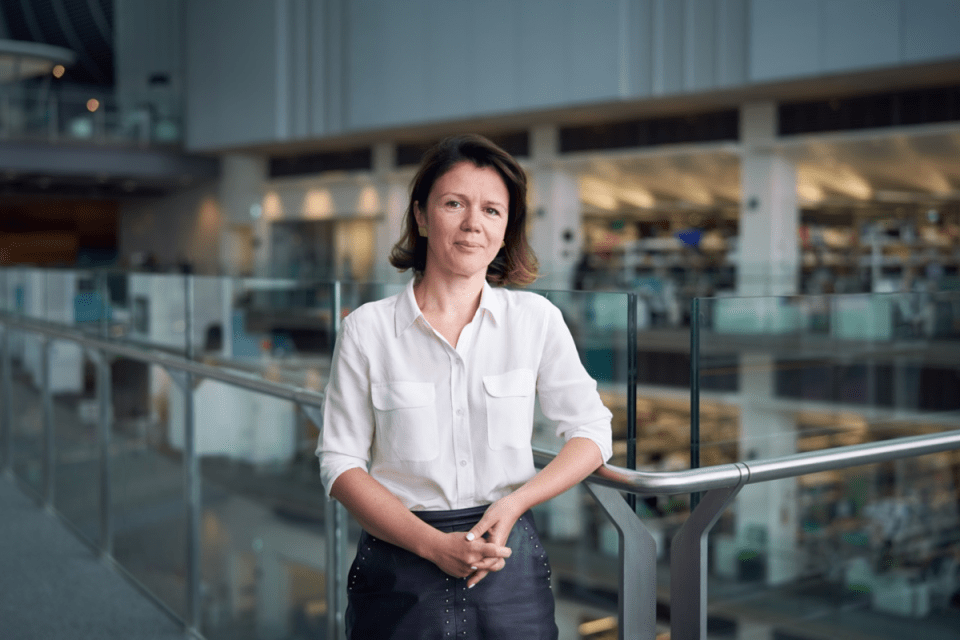
Among the dedicated experts we met at the Crick was Professor Samra Turajlic, a distinguished clinician scientist who serves as a consultant medical oncologist specialising in the treatment of melanoma and kidney cancer at the Royal Marsden. Professor Turajlic’s work with Cancer Research UK perfectly embodies the critical interface between clinical care and deep scientific investigation, a relationship central to accelerating breakthroughs.
The limits of existing knowledge
Professor Turajlic balances her work as a practicing oncologist with her research. She was initially drawn to medicine and oncology for the immediacy of clinical care and the relationship with patients, finding it a “privileged situation for a physician to accompany a patient with cancer on that sort of journey through their treatment”. However, after two years in oncology, she felt frustrated by the limits of her existing knowledge – a “systems knowledge” of how the disease behaves clinically and what treatments exist, but without a deeper understanding of the complex underlying interplay of cells, the immune system, and genetics. This frustration drove her to branch out of clinical work to conduct original research with the aim of enhancing the care she could offer to patients.
She cites the example of melanoma, a fast-growing skin cancer whose rates have increased by two-and-a-half times in the UK since the early 1990s, largely due to sun exposure. Despite 50 years of clinical research, there had been little progress in treating the disease. Professor Turajlic’s experience of mostly having “conversations about palliative care” with melanoma patients, often telling them in their first consultation that nothing could be done, was in stark contrast to other cancers where chemotherapy, radiotherapy, and surgery had made strides.
‘Unprecedented breakthrough’
Then came a breakthrough: thanks to the international Human Genome Project, it became possible to map genetic changes inside cancers. Cancer is essentially a disease of our cells, where the genetic material of our own cells becomes faulty. The discovery of a particular genetic change in melanoma led to a new treatment developed within about five years. Professor Turajlic decided she wanted to work in this context, at the forefront of scientific discovery. These first treatments for melanoma were revolutionary; she had patients whose skin lumps would disappear within two days. “It was completely unprecedented”.
However, this excitement was tempered by the “sobering realisation” that, on average, after about six to nine months, the disease would return. The cancer, with its “almost infinite ability to adapt,” would find a way around the drug’s action. This is where the incentives of researchers like Professor Turajlic and those in the pharmaceutical industry can diverge.
While the industry business model is driven by getting drugs to market that meet a required threshold of effectiveness, clinician scientists like Professor Turajlic see the reality faced by the people these drugs don’t work for, or stop working for. This is what sparked Professor Turajlic’s interest in understanding why treatments stop working, approaching it through the lens of cancer as an evolutionary process.
Figuring out how cancer adapts and becomes resistant is key to tailoring treatment plans and developing better therapies.
Findings in the 1990s, which eventually led to the Nobel Prize, revealed that cancers hijack the immune system’s “checkpoint” system, which normally dampens the immune response after an infection. Cancers use these checkpoints to hide, stopping immune cells that have identified the cancer cell from eliminating it.
This fundamental discovery was translated over about 20 years into immunotherapy, specifically immune checkpoint blockades.
Immunotherapy is “revolutionising how we’re treating cancer” according to Professor Turajlic, who told me that based on her day-to-day experience in the clinic, she estimates that, thanks to immunotherapy, around half of her patients with advanced melanoma (which has spread widely) will see a “significant impact” from the treatment and are likely to be alive 10 years later. While they can’t technically call it a cure, the disease goes into very long-term remission. This “durability of therapy effect” is what makes immunotherapy exciting, offering the promise of long-term cancer control.
‘We have to keep innovating’
However, there’s still a long way to go, as in Professor Turajlic’s experience, only around half of her melanoma patients benefit from immunotherapy, and this proportion is even lower for other cancer types. “So what do I do for the other 50 per cent of my patients?” Professor Turajlic asked herself. “That means we have to keep innovating”. For Cancer Research UK, philanthropists are the fuel in the engine of innovation in a golden age of research, but it must be sustained in order to power breakthroughs.
As part of the conversation I hosted with leading philanthropists, I asked Dr Iain Foulkes, Cancer Research UK’s Executive Director of Research & Innovation and CEO of Cancer Research Horizons, to explain Cancer Research UK’s role in this dynamic landscape of clinical work and research. He described Cancer Research UK as a mission-based organisation that funds research and the work of people like Professor Turajlic, with the ultimate goal of ensuring laboratory insights make it through to the clinic and to people affected by cancer. It funds basic science to understand biology at a deep level, but crucially, it sees it as its job to ensure promising findings, like new drugs and treatments, make it to market and into the NHS – ultimately benefiting thousands of patients.

Dr Foulkes detailed how Cancer Research Horizons, Cancer Research UK’s commercial innovation arm, takes discoveries further down the pipeline than traditional funders, developing new drugs against targets identified by researchers. “Where we’re quite unique is that we have effectively developed a whole…process and organisation that allows us to spin out new ventures and to work with the pharmaceutical industry to advance innovations towards the market”.
Start-ups and spin-outs
This is particularly important because the pharmaceutical industry business model makes it hard for them to invest in rarer or hard-to-treat cancers where the market size is small or the science is too risky. Cancer Research Horizons pushes these high-risk – but potentially transformative – projects as far as possible, developing start-ups and spin-out companies that can then attract investment from venture capitalists and eventually be absorbed by big pharma.
Dr Foulkes highlighted their success, explaining that Cancer Research Horizons has developed a portfolio of 80 spin-out companies which have gone on to raise about £3.5 billion in third-party capital – a unique achievement for a charity. This significantly accelerates progress towards the market and ultimately ensures that patients benefit from the breakthroughs.
Cancer Research UK has also had success getting drugs onto the market, such as olaparib which is rapidly transforming treatments for breast cancer, and abiraterone, which, if added to hormone therapy at the start of prostate cancer treatment, improves survival by 37 per cent. Because it helped develop these drugs, Cancer Research UK receives royalties, generating about £600 million over the years that goes back into funding more research – a “positive feedback” loop.
With the explosion of data and the public fascination with AI, I asked Professor Turajlic about the role of artificial intelligence in her work. She identified two main aspects: efficiency and enhancing discovery. For example, compared to the 12 years it took to map one human genome in the Human Genome Project, they can now sequence hundreds of genomes in a week.
AI can also help make research faster, potentially by assisting with tasks like identifying changes on scans or microscope images in clinical settings. This could free up valuable time for radiologists and speed up diagnostics, although she noted it requires huge amounts of data to train algorithms to perform as well as humans.
AI revolution
In Professor Turajlic’s view, perhaps the most exciting revolution AI brings is its potential for discovering new biology. By analysing where an algorithm focuses its “attention” when making a prediction (for example, predicting patient prognosis from a tissue image), researchers can gain insight into what aspects of the tumour are driving the outcome. However, she stressed that this requires significant resources in data, curation, computational scientists, hardware, and software – it’s expensive, but the only way to capitalise on the data being generated.
The core of Cancer Research UK’s work is continuous discovery, and it’s a global effort where collaboration is crucial. Professor Turajlic’s personal mission is the translation of her research findings into the clinic, whether in how patients are diagnosed, how therapies are selected, or developing new treatments.
The road ahead is “still very, very long” but she is optimistic about her work, noting that “everything that constitutes progress for human health and disease will be underpinned by some fundamental knowledge.” Unlocking that knowledge is at the heart of Cancer Research UK’s work with the Crick.
That work is fundamental to making advances and by funding cutting-edge research and facilitating the translation of discoveries into patient benefit, Cancer Research UK and Cancer Research Horizons are uniquely positioned to deliver significant impact at pace.
Since this event, it has been announced that Professor Turajlic has been appointed as the Director of the Cancer Research UK Manchester Institute.
The urgency of cancer as a global health crisis means funding is needed now to build a better future, and philanthropic support enables Cancer Research UK to push the boundaries of what’s possible; to take risks, to innovate, to discover and to collaborate – improving and saving millions of lives. Philanthropists and supporters of this vital work can be sure of making a difference, and a lasting impact.
To find out more about how you could support the work of Cancer Research UK and the More Research, Less Cancer campaign visit their website or get in touch: philanthropy@cancer.org.uk
Cancer Research UK is a registered charity in England and Wales (1089464), Scotland (SC041666), the Isle of Man (1103) and Jersey (247)